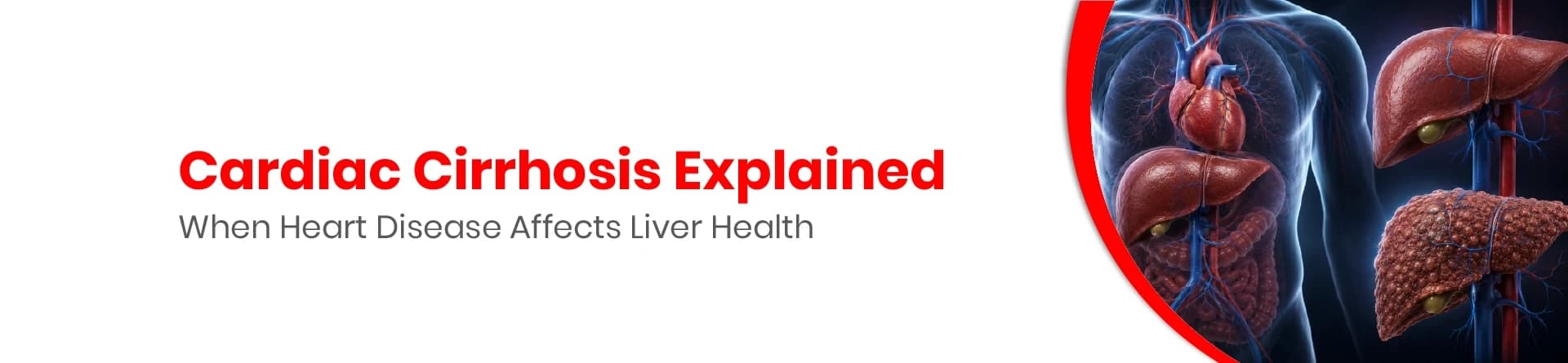
Cardiac cirrhosis is a form of liver damage caused by long-term heart failure, particularly right-sided heart failure, which leads to blood congestion in the liver. Early diagnosis and treatment of the underlying heart condition can reduce liver damage, improve symptoms, and help prevent progression to advanced cirrhosis.
Most people think of heart disease and liver disease as two separate health problems. However, the heart and liver work closely together, and when the heart cannot pump blood effectively, it can also affect the liver. Over time, this may lead to a condition known as cardiac cirrhosis.
Despite its name, cardiac cirrhosis of the liver is different from cirrhosis caused by alcohol or chronic liver disease. Instead, it develops because long-term heart problems reduce blood flow and cause blood to back up into the liver, leading to liver damage.
Cardiac cirrhosis is liver damage that develops due to long-standing heart disease, especially chronic right-sided heart failure or advanced congestive heart failure. It occurs when blood cannot flow efficiently through the heart, causing increased pressure in the veins that drain into the liver.
Over time, this constant congestion reduces oxygen supply to liver cells and causes scarring (fibrosis). If the condition continues untreated, the liver may gradually develop cirrhosis.
Unlike liver cirrhosis caused by alcohol, viral hepatitis, or fatty liver disease, cardiac cirrhosis of the liver is primarily the result of poor heart function.
Understanding how heart disease affects liver health begins with knowing how these organs work together.
The liver receives a large amount of blood every minute. It depends on a healthy heart to maintain a steady blood supply. When the heart becomes weak and cannot pump blood efficiently, blood starts to back up into the veins connected to the liver.
This causes:
If the underlying heart problem is not treated, the liver damage may gradually worsen.
The main cardiac cirrhosis causes are conditions that lead to long-term congestion of blood in the liver. Common causes include:
Right-Sided Heart Failure: This is the most common cause. When the right side of the heart cannot pump blood effectively, blood backs up into the liver and other organs.
Congestive Heart Failure: Advanced heart failure affecting both sides of the heart can reduce blood flow throughout the body and increase pressure inside the liver.
Heart Valve Disease: Diseases affecting the tricuspid or mitral valves may increase pressure in the heart and liver circulation.
Pulmonary Hypertension: High blood pressure in the lungs forces the right side of the heart to work harder, eventually leading to right-sided heart failure.
Constrictive Pericarditis: This rare condition causes thickening of the sac around the heart, restricting normal heart filling and increasing pressure in the liver.
In all these conditions, long-term congestion is the key reason behind liver damage.
In the early stages, cardiac cirrhosis symptoms may be mild or absent. Many patients first notice symptoms related to heart failure rather than liver disease.
As the condition progresses, symptoms may include:
Symptoms of heart failure often occur alongside liver problems, such as:
If you have heart disease and develop these symptoms, consult your doctor promptly.
Diagnosing cardiac cirrhosis requires evaluating both heart and liver function.
Your doctor will ask about:
The doctor may check for:
Blood tests help assess liver and heart function. These may include:
Doctors may recommend:
Since heart disease is the underlying cause, you may also need:
There is no single test that confirms cardiac cirrhosis diagnostic criteria. Doctors make the diagnosis by combining:
In some cases, a liver biopsy may be recommended if the diagnosis remains uncertain.
The main goal of cardiac cirrhosis treatment is to improve heart function and reduce liver congestion. Treating the underlying heart disease is the most effective way to slow or prevent further liver damage.
Your doctor may prescribe medicines to:
Take all medications exactly as prescribed.
Healthy habits play an important role in treatment. These include:
Depending on the cause, treatment may include:
Improving heart function often helps improve liver congestion as well.
Regular blood tests and imaging help doctors monitor liver function and detect complications early.
One common question is cardiac cirrhosis reversible. The answer depends on how early the condition is diagnosed.
If liver congestion is treated before significant scarring develops, much of the liver damage may improve. However, once advanced cirrhosis and permanent fibrosis have developed, the damage cannot usually be completely reversed. This is why early diagnosis and treatment of heart failure are so important.
Cardiac cirrhosis life expectancy varies from person to person. It mainly depends on:
In many cases, the outlook is determined more by the underlying heart condition than by the liver disease itself. Early treatment, regular follow-up, and good control of heart failure can improve long-term outcomes.
You can reduce the risk of complications by:
Cardiac cirrhosis is an uncommon but important condition that shows how Heart Disease Affects Liver Health. When the heart cannot pump blood effectively, long-term congestion can damage the liver and eventually lead to scarring.
The good news is that early diagnosis and proper treatment of the underlying heart disease can slow or even prevent further liver damage. If you have heart failure and develop symptoms such as abdominal swelling, jaundice, or persistent fatigue, don't ignore them. Timely medical care can help protect both your heart and your liver and improve your overall quality of life.
Yes, in some cases. Early treatment of heart failure and other heart conditions can prevent liver damage or even reverse early congestion before permanent scarring develops.
No. Cardiac cirrhosis of the liver is caused by long-term heart disease and poor blood flow, whereas alcohol-related cirrhosis results from chronic alcohol-related liver damage.
Not always. Mild liver congestion may improve when the heart condition is treated. However, advanced cirrhosis with significant scarring is usually permanent.
People with cardiac cirrhosis should generally avoid salty foods, processed foods, alcohol, and foods high in saturated fat. Follow the diet recommended by your doctor or dietitian.
Yes. If left untreated, ongoing liver damage can progress and increase the risk of liver failure, although this is less common than in other forms of cirrhosis.
A liver transplant alone is usually not the first treatment because the underlying heart disease must also be addressed. In selected cases with severe heart and liver disease, specialised centres may consider combined treatment options.
Written and Verified by:

Dr. Anil Mishra is the Director of Cardiology Dept. at BM Birla Heart Hospital, Kolkata. He specializes in complex angioplasties, pacemaker & AICD implantation, CRT-D, TAVI, and was the first in Eastern India to perform rotablation and implant leadless pacemakers.
Similar Cardiology Blogs
Book Your Appointment TODAY
© 2024 BMB Kolkata. All Rights Reserved.