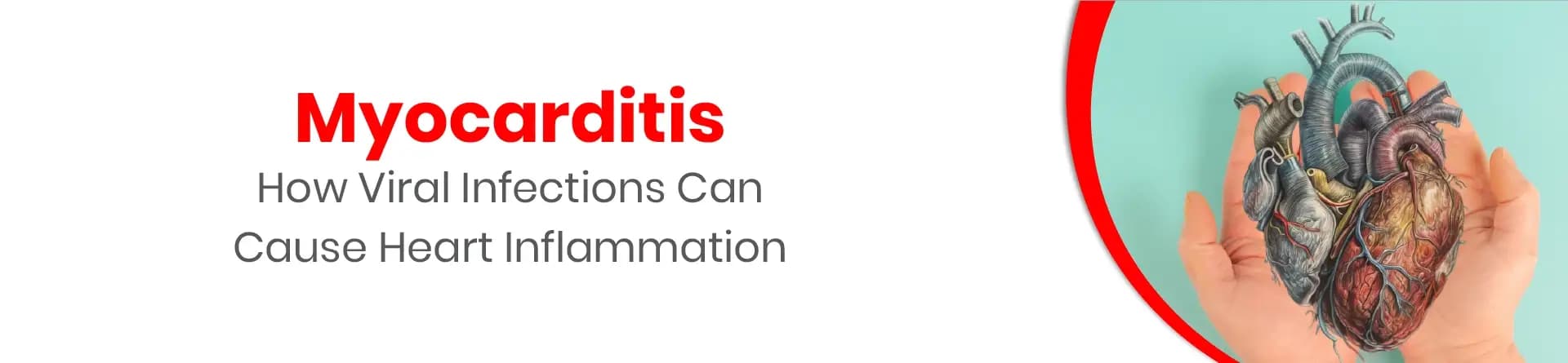
Understand what myocarditis is and how viral infections can cause inflammation of the heart muscle.
Explore common causes, including viral infections such as influenza, adenovirus and COVID-19.
Identify warning signs such as chest pain, breathlessness, fatigue and irregular heartbeat.
Learn about diagnostic tests, including ECG, blood tests, echocardiogram and cardiac MRI.
Discover treatment options, possible complications and when to consult a cardiologist.
A viral infection can sometimes affect more than your respiratory system. In some cases, it can cause inflammation of the heart muscle, a condition known as myocarditis. This inflammation can affect how well your heart pumps blood and may cause symptoms such as chest pain, breathlessness, fatigue and an irregular heartbeat.
Myocarditis can develop after infections caused by certain viruses, including those responsible for the common cold and flu. While some people recover with proper treatment and rest, others may develop complications that require medical attention. Recognising the warning signs early can help prevent further damage to the heart.
Myocarditis is a condition in which the heart muscle, called the myocardium, becomes inflamed. The myocardium is responsible for contracting and relaxing to pump blood throughout your body.
When inflammation affects this muscle, it can interfere with the heart's normal functioning. The heart may become weaker, making it difficult to pump enough blood to meet the body's needs. In some cases, inflammation can also affect the electrical signals that control your heartbeat.
The severity of myocarditis varies. Some people experience mild symptoms and recover without long-term problems, while others may develop serious complications.
Myocarditis can affect people of different ages, including those who were previously healthy. It is sometimes difficult to identify because its early symptoms may resemble those of a common viral infection.
Viral infections are among the recognised causes of myocarditis. When a virus enters the body, the immune system responds by fighting the infection. Sometimes, the virus can affect the heart muscle directly. In other cases, the body's immune response to the infection contributes to inflammation and damage to heart tissue.
This inflammation of cardiac muscle can affect the heart's ability to pump blood and maintain a regular heartbeat.
Some viruses associated with myocarditis include:
However, not everyone who develops a viral infection will develop myocarditis. The condition is relatively uncommon, and the exact reason why it affects some people but not others is not always clear.
Apart from viruses, other heart inflammation causes include bacterial or fungal infections, autoimmune conditions, certain medicines and exposure to some harmful substances. In some patients, the exact cause remains unknown.
Myocarditis symptoms can vary depending on the severity of inflammation and how much the heart is affected. Some people may experience mild symptoms, while others develop sudden and severe problems.
Common myocarditis signs and symptoms include:
Sometimes, myocarditis causes no noticeable symptoms and is detected only during medical investigations.
Important: Chest pain, severe breathlessness, fainting or a rapid or irregular heartbeat accompanied by weakness requires urgent medical assessment. Do not assume these symptoms are caused by a recent viral infection.
Diagnosing myocarditis can be challenging because its symptoms overlap with other heart and respiratory conditions. Doctors use a combination of medical history, physical examination and specialised tests to identify inflammation of the heart muscle.
Common diagnostic tests include:
The choice of tests depends on the patient's symptoms, medical history and overall heart function.
Myocarditis treatment depends on the cause, severity of inflammation and whether the heart's pumping ability or electrical activity has been affected.
Many patients with mild myocarditis recover with medical supervision, rest and temporary restrictions on physical activity. However, severe cases may require hospitalisation and specialised treatment.
Treatment options may include:
Regular follow-up is important to monitor heart function and check for ongoing inflammation or other complications. Patients should return to physical activity only after their cardiologist confirms that it is safe.
You should consult a cardiologist if you experience unexplained chest discomfort, breathlessness, unusual fatigue or palpitations, particularly after a recent viral infection.
Medical evaluation is especially important if these symptoms persist, worsen or interfere with your everyday activities.
Seek emergency medical care if you experience severe chest pain, difficulty breathing at rest, fainting or a sustained rapid or irregular heartbeat.
Early evaluation helps doctors identify possible cardiac inflammation and assess whether the heart's pumping function or electrical activity has been affected. If myocarditis is suspected, your cardiologist can recommend the appropriate tests and treatment based on your condition.
Myocarditis is an inflammation of the heart muscle that can sometimes develop following a viral infection. Although some people recover without lasting complications, the condition can affect the heart's pumping ability and electrical activity in more severe cases.
Do not ignore persistent chest pain, breathlessness, unusual fatigue or irregular heartbeats, especially after a recent infection. Timely diagnosis, appropriate treatment and regular follow-up with a cardiologist can help protect your heart health.
Myocarditis can sometimes lead to complications such as heart failure, abnormal heart rhythms, reduced heart pumping ability and cardiomyopathy. In rare severe cases, it may cause cardiogenic shock or sudden cardiac arrest. The risk depends on the extent of heart muscle damage and the patient's response to treatment.
Myocarditis may develop during a viral infection or in the days and weeks following it. The timing varies depending on the virus and the body's immune response. Some people may notice heart-related symptoms after their fever, cough or other infection symptoms have improved.
Several viruses have been associated with myocarditis, including Coxsackievirus, influenza virus, adenovirus, parvovirus B19, HHV-6 and SARS-CoV-2. These viruses may affect the heart directly or trigger an immune response that causes inflammation.
Yes. Severe or persistent inflammation can weaken the heart muscle and reduce its ability to pump blood effectively. This may lead to heart failure. However, many people with mild myocarditis recover without developing long-term heart problems.
Yes. Chest pain caused by myocarditis can feel similar to a heart attack. It may include pressure, tightness or sharp pain in the chest. Since the symptoms can overlap, medical evaluation is necessary to identify the cause and rule out a heart attack.
Yes. Inflammation can affect the electrical signals that control the heartbeat, leading to abnormal heart rhythms called arrhythmias. These may cause palpitations, dizziness, fainting or, in severe cases, life-threatening complications.
Written and Verified by:

Dr. Anil Mishra is the Director of Cardiology Dept. at BM Birla Heart Hospital, Kolkata. He specializes in complex angioplasties, pacemaker & AICD implantation, CRT-D, TAVI, and was the first in Eastern India to perform rotablation and implant leadless pacemakers.
Similar Cardiology Blogs
Book Your Appointment TODAY
© 2024 BMB Kolkata. All Rights Reserved.


