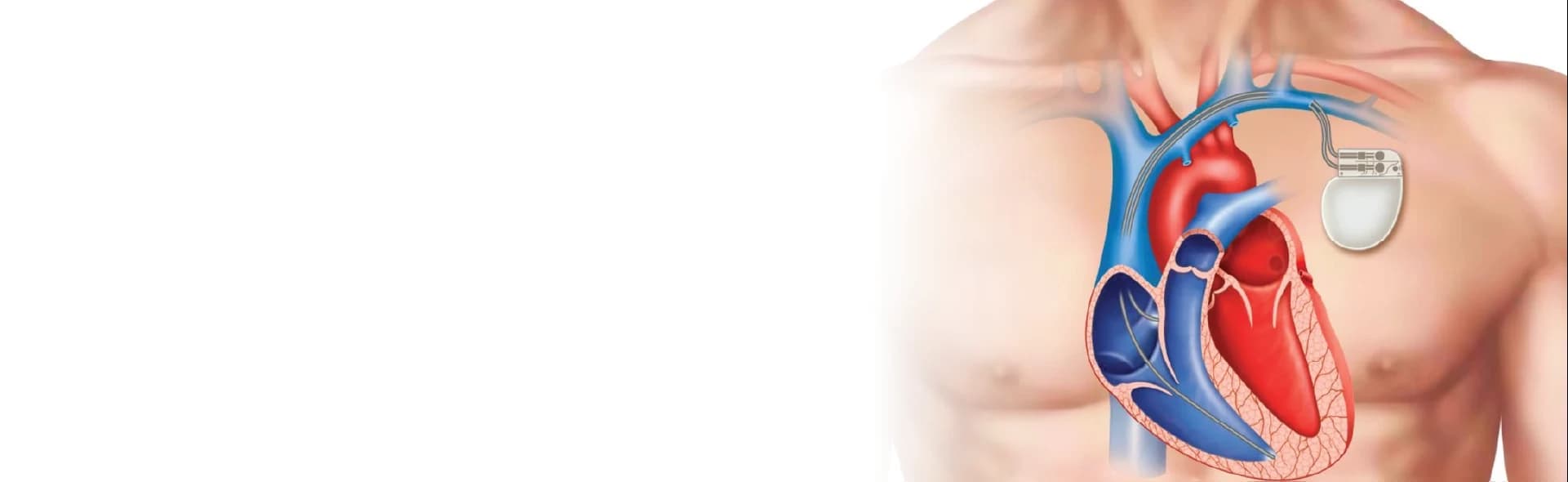
CRT-D implantation is an advanced treatment for patients with heart failure who are at risk of life-threatening abnormal heart rhythms. The procedure involves implanting a cardiac resynchronisation therapy device that helps the heart beat in a more coordinated way while also delivering life-saving therapy if dangerous heart rhythms occur.
At CMRI Hospital, Kolkata, our experienced cardiologists and electrophysiologists perform CRT-D device implantation using advanced technology and evidence-based techniques. We provide comprehensive care, from diagnosis and implantation to long-term device monitoring, helping patients improve their heart function, manage heart failure symptoms, and enhance their quality of life.
A CRT-D (Cardiac Resynchronisation Therapy Defibrillator) is a specialised implantable device used to treat certain patients with heart failure and abnormal heart rhythms.
It combines two important functions:
If you are wondering what cardiac resynchronisation therapy is, it is a treatment that uses small electrical impulses to improve the timing of heart contractions. This helps the heart pump blood more efficiently and reduces symptoms of heart failure.
The cardiac resynchronisation therapy device is placed under the skin near the collarbone and connected to the heart through thin insulated wires called leads.

In many patients with heart failure, the right and left ventricles do not contract at the same time. This lack of coordination makes the heart less efficient at pumping blood.
A cardiac resynchronisation therapy device restores synchronised heartbeats by sending carefully timed electrical signals to both ventricles.
CRT-D helps by:
Many patients experience significant improvement in their daily activities after successful CRT-D implantation.
Not everyone with heart failure requires a CRT-D device. Your cardiologist will evaluate your condition carefully before recommending treatment.
You may be a suitable candidate for CRT-D implantation if you:
Before recommending the procedure, your doctor may perform:
Based on these findings, your heart specialist will determine whether CRT-D implantation is the right treatment option for you.
The CRT-D implant procedure is a minimally invasive procedure that is performed in a specialised cardiac catheterisation laboratory under local anaesthesia with sedation.
Before the CRT-D procedure, your doctor will:
Certain blood-thinning medicines may need to be adjusted before surgery.
The CRT-D surgery usually takes between two and four hours.
During the procedure:
Since the procedure is minimally invasive, it does not require open-heart surgery.
Most patients remain in the hospital for one to two days for monitoring.
During recovery:
Your doctor may advise avoiding heavy lifting or raising the affected arm above shoulder level for a few weeks.
The benefits of CRT-D implantation include:
Many patients notice gradual improvement in symptoms within weeks to months after the procedure.
Recovery is generally smooth, and most patients return to their normal routine within a few weeks.
To support recovery:
Regular device checks are essential to ensure the CRT-D continues to function effectively.
Like any medical procedure, CRT-D device implantation carries some risks, although serious complications are uncommon.
Potential risks include:
At CMRI Hospital, every precaution is taken to minimise these risks through careful planning, advanced technology, and experienced specialists.
CMRI Hospital is one of Kolkata's leading centres for advanced cardiac care, offering comprehensive diagnosis and treatment for heart rhythm disorders and heart failure.
Experienced Cardiac Specialists
Our team includes highly experienced cardiologists, electrophysiologists, and cardiac surgeons with expertise in performing complex CRT-D implantation procedures.
Advanced Cardiac Technology
We use modern imaging systems, advanced electrophysiology equipment, and the latest cardiac resynchronisation therapy devices to ensure precise treatment.
Comprehensive Heart Failure Care
From diagnosis and device implantation to rehabilitation and long-term follow-up, we provide complete care under one roof.
Personalised Treatment Plans
Every patient receives an individualised treatment plan based on their heart condition, lifestyle, and overall health.
Multidisciplinary Approach
Our cardiologists work closely with cardiac surgeons, anaesthetists, critical care specialists, and rehabilitation experts to deliver seamless care throughout your treatment journey.
Focus on Patient Safety
We follow internationally accepted protocols to ensure high standards of safety, infection control, and post-procedure monitoring.
If you or a loved one has heart failure and may benefit from cardiac resynchronization therapy, consult the experienced heart specialists at CMRI Hospital, Kolkata. Our experts will evaluate your condition, explain the available treatment options, and provide personalised care to help you achieve the best possible heart health.
The procedure is performed under local anaesthesia with sedation, so you should not feel pain during the implantation. Mild discomfort around the incision site is common for a few days.
Most CRT-D devices last between 5 and 10 years, depending on how often the device delivers therapy. Your doctor will monitor the battery during regular follow-up visits.
Yes. Most patients can return to work, exercise, and daily activities after recovery. Your doctor will advise when it is safe to resume specific activities.
Yes. Regular follow-up visits are important to check the functioning of the device, monitor battery life, and ensure your heart condition remains well controlled.
Yes. CRT-D implantation is a well-established and commonly performed procedure. When carried out by experienced specialists, it has a high success rate and can significantly improve the quality of life in suitable patients.
© 2024 BMB Kolkata. All Rights Reserved.


