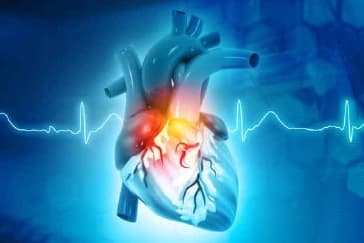
Cardiac MRI is a powerful, radiation-free scan that captures highly detailed images of your heart to detect hidden damage early. It offers unmatched accuracy when routine tests fail to give clear answers.
Chest discomfort, unexplained breathlessness, constant fatigue—heart symptoms are often confusing and easy to ignore. Many people undergo multiple tests yet still walk away without clear answers, leaving them anxious and unsure about their heart health. This uncertainty is worrying, especially when heart disease continues to rise sharply.
In fact, reports highlight that nearly 20% of heart attack deaths worldwide now occur in India, making early and accurate diagnosis more important than ever.
This is where Cardiac MRI plays a crucial role. It is a non-invasive, radiation-free test that provides highly detailed images of the heart’s structure, blood flow, and muscle health. Unlike routine scans, Cardiac MRI can detect hidden damage, inflammation, and early-stage heart disease with greater accuracy—often when symptoms or other tests fail to give clarity.
A cardiac MRI scan uses magnets and radio waves to create detailed pictures of your heart. It shows your heart muscles, valves, blood flow, and even scarring from past heart attacks.
The test is non-invasive, which means there is no surgery or incision. Sometimes a contrast dye is injected into your vein to see certain areas more clearly. Most people tolerate the dye well.
Think of it as a high-definition camera for your heart. It helps doctors see problems that other tests may miss.
Doctors usually suggest a cardiac MRI test when other tests like an ECG or echocardiograms are not enough. You may need this test if you have:
A cardiac MRI can also check your blood supply to the heart. It can find reduced blood flow that causes chest pain (angina) or coronary heart disease.
Here’s why doctors prefer a cardiac MRI scan for heart problems:
The benefits of cardiac MRI make it a reliable choice for diagnosing heart disease accurately.
If you are nervous, don’t worry. Here’s what happens during a cardiac MRI procedure:
If you feel claustrophobic, ask your doctor if a cardiac MRI can be done in an open MRI. Some hospitals offer this option for comfort.
A traditional MRI can scan many parts of the body, like the brain, spine, or joints, and mainly shows structural details. A cardiac MRI, on the other hand, is specialised for the heart. It not only shows the heart’s structure but also provides information about blood flow, heart muscle function, valve movement, and scarring. This makes it much more useful for diagnosing heart problems accurately.
Here’s a simple comparison:
|
Feature |
Traditional MRI |
Cardiac MRI |
|
Purpose |
General imaging of body parts |
Focused on the heart and blood vessels |
|
Heart Function |
Cannot measure pumping or blood flow |
Measures how well the heart pumps and blood moves |
|
Detail |
Shows structural anatomy |
Shows structure, muscle health, valves, scars, and blood flow |
|
Techniques |
Standard MRI sequences |
Specialised heart imaging sequences for motion and circulation |
|
Use |
Brain, spine, joints, organs |
Heart disease diagnosis, cardiomyopathy, heart attack damage, congenital defects |
A cardiac MRI scan can detect heart problems early, sometimes before you notice symptoms. Early detection helps doctors treat the condition promptly.
A cardiac MRI test is safe, painless, and highly accurate. It provides detailed images of your heart and helps doctors detect problems early. If you have chest pain, breathlessness, or heart concerns, discuss a cardiac MRI with your doctor.
Taking this test can help protect your heart and give you peace of mind. Remember, understanding your heart is the first step to keeping it healthy.
Most modern pacemakers and implants are MRI-compatible, but your doctor must check before the scan.
A cardiac MRI usually takes 30–60 minutes, depending on the images needed.
Yes, it can show heart muscle damage from a heart attack and reduced blood flow in the arteries.
Cardiac MRI provides more detailed images of heart structure and function than echocardiograms or CT scans.
Coverage depends on your policy; many health insurance plans cover it with a doctor’s prescription.
Contrast dye is generally safe; mild reactions like nausea or headache may occur, but serious side effects are rare.
Written and Verified by:

Dr. Shuvo Dutta is a Senior Consultant in Cardiology Dep. at BM Birla Heart Hospital, Kolkata, with over 47 years of experience. He specializes in radial and femoral angioplasty, complex cardiac interventions, and was the first in India to perform carotid artery stenting to prevent brain stroke.
Similar Cardiology Blogs
Book Your Appointment TODAY
© 2024 BMB Kolkata. All Rights Reserved.