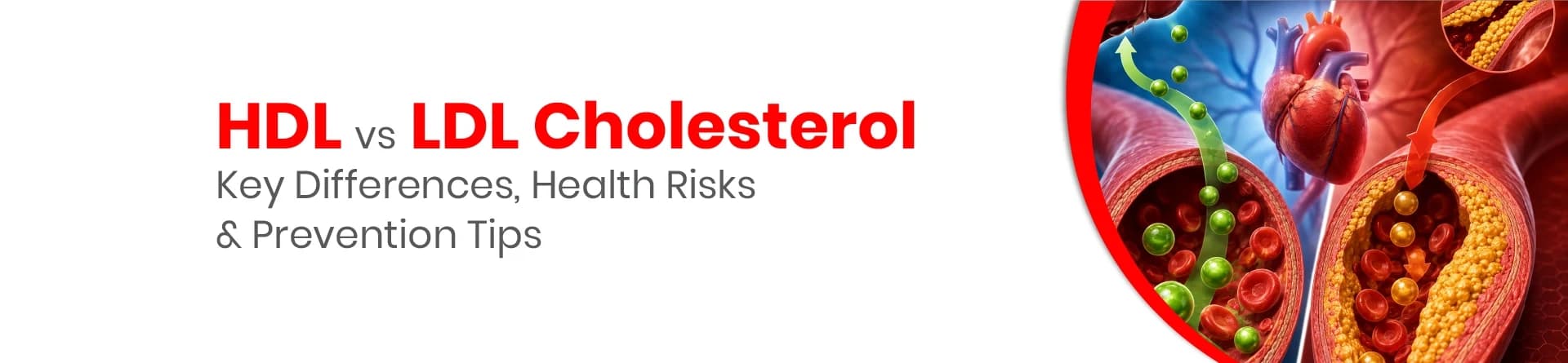
HDL and LDL are two types of cholesterol that affect heart health differently. LDL can build up in artery walls and increase the risk of heart disease and stroke, while HDL helps remove excess cholesterol. Learn about healthy cholesterol levels, causes of high LDL, lifestyle changes, and treatment options.
When you get a cholesterol test, two numbers often stand out: HDL and LDL cholesterol. You may have heard that HDL is “good” cholesterol and LDL is “bad” cholesterol. But what do these terms actually mean?
The main difference is how these lipoproteins handle cholesterol in your body. LDL can contribute to cholesterol build-up in the artery walls, while HDL helps carry some cholesterol back to the liver for removal. A high LDL level can increase your risk of heart disease and stroke. However, having a high HDL level does not cancel out the risks linked to high LDL.
Understanding your HDL and LDL cholesterol levels can help you take better care of your heart.
HDL stands for high-density lipoprotein, while LDL stands for low-density lipoprotein. Both are lipoproteins that carry cholesterol through your bloodstream. Cholesterol itself is the same. What differs is the lipoprotein carrying it.
|
HDL cholesterol |
LDL cholesterol |
|
Often called “good” cholesterol |
Often called “bad” cholesterol |
|
Helps carry some cholesterol back to the liver |
Can contribute to cholesterol build-up in artery walls |
|
Higher levels are generally associated with better heart health |
Lower levels are generally better for heart health |
|
Is not usually treated with cholesterol-lowering medicines |
May require medicines when levels and overall heart risk are high |
When LDL contributes to plaque build-up, the arteries can become narrower. This condition is called atherosclerosis. Over time, it can raise the risk of heart attack and stroke.
HDL, on the other hand, helps carry some cholesterol away from the arteries and back to the liver. The liver then processes it and removes it from the body.
The terms “good” and “bad” are useful for remembering the basic difference, but they are a little oversimplified.
LDL carries cholesterol throughout the body. When there is too much LDL cholesterol in the blood, it can contribute to plaque formation in the artery walls.
This plaque can narrow the arteries and make it harder for blood to flow. If plaque becomes unstable and causes a blood clot, it can lead to a heart attack or stroke.
That is why lower LDL cholesterol is generally better, especially for people who already have a higher risk of cardiovascular disease.
HDL helps transport some cholesterol away from the arteries and back to the liver.
A healthy HDL level is associated with a lower risk of heart disease and stroke. However, HDL is not a “clean-up crew” that can completely remove the effects of high LDL.
In fact, a high HDL level does not cancel out the risk of having high LDL. Lowering LDL remains an important part of reducing cardiovascular risk.
High LDL cholesterol can develop for several reasons. Your diet and lifestyle can play a role, but they are not the only factors.
Common causes and risk factors include:
You can have high cholesterol even if you eat well and exercise regularly. Genetics and other health conditions can also affect your cholesterol levels.
Usually, high cholesterol does not cause noticeable symptoms.
You may feel completely healthy while having high LDL cholesterol. The only reliable way to know your cholesterol levels is to have a blood test.
This is one reason regular cholesterol testing is important. Your doctor can look at your results along with factors such as your age, blood pressure, smoking status and medical history to assess your overall cardiovascular risk.
There is no single HDL or LDL cholesterol target that is right for everyone. For many adults, an LDL level below 100 mg/dL is considered a good general target. However, people with a higher risk of heart disease may need to aim for a lower LDL level.
For HDL, Cleveland Clinic lists a general healthy range of:
HDL levels below 40 mg/dL in men and below 50 mg/dL in women are considered low. Very high HDL levels, particularly above 80 mg/dL, are not necessarily better and may sometimes be associated with increased cardiovascular risk.
HDL vs LDL Cholesterol Chart
|
Cholesterol type |
General guide |
Why it matters |
|
HDL in men |
40–80 mg/dL |
Higher levels are generally associated with better heart health |
|
HDL in women |
50–80 mg/dL |
Higher levels are generally associated with better heart health |
|
LDL |
Below 100 mg/dL for most adults |
Lower levels are generally better |
These are general ranges, not personalised targets. Your doctor may recommend a different LDL goal depending on your cardiovascular risk.
You may have heard about the HDL to LDL cholesterol ratio. This compares the amount of HDL with LDL in your blood.
However, it should not be used on its own to decide whether your cholesterol is healthy.
Your doctor will usually consider your LDL, HDL, triglycerides and other health factors together. Your overall cardiovascular risk matters more than focusing on one ratio or number.
Lifestyle changes can help improve your cholesterol levels. They may also reduce your overall risk of heart disease.
Focus on foods that are naturally high in fibre and healthier fats.
Good choices include:
Try to reduce foods that are high in saturated fat, such as fatty meats, butter and some processed foods. Choosing healthier fats and more fibre can help support better cholesterol levels.
Regular physical activity can help improve your cholesterol profile. It may help lower LDL and can also support healthier HDL levels.
Aim for at least 150 minutes of moderate-intensity physical activity each week, unless your doctor has advised you to follow a different exercise plan. Activities such as brisk walking, cycling, swimming and dancing can be good options.
If you are overweight, losing even a modest amount of weight may help improve cholesterol and other heart disease risk factors. Focus on sustainable changes rather than crash diets.
Smoking damages your blood vessels and increases your risk of heart disease. Quitting can improve your overall cardiovascular health. If you smoke, speak to a healthcare professional about support to help you quit.
Excessive alcohol intake can affect triglycerides and overall heart health. It is better not to start drinking alcohol for the purpose of increasing HDL.
Some foods can support healthier HDL levels and overall heart health.
These include:
However, the goal should not be to increase HDL at any cost. A heart-healthy diet is more important than trying to raise one cholesterol number.
Lifestyle changes are an important part of cholesterol management. However, they are not always enough.
Your doctor may recommend cholesterol-lowering medicine if your LDL is high or if you have other factors that put you at greater risk of heart disease.
This may be particularly important if you have:
Medicines are generally used to lower LDL rather than to raise HDL because lowering LDL has been shown to reduce cardiovascular risk.
Do not stop or change cholesterol medicine without speaking to your doctor.
You cannot control every factor that affects cholesterol. Your genes, age and family history can play a role.
But there are several things you can control.
Try to:
Regular cholesterol testing can help identify problems early, even when you do not have any symptoms.
The main difference between HDL vs LDL cholesterol is how their lipoprotein particles handle cholesterol in the body. LDL can contribute to plaque build-up in the arteries, while HDL helps carry some cholesterol back to the liver.
A healthy cholesterol profile is about more than having a high HDL number. Keeping LDL at a healthy level is particularly important for reducing the risk of heart disease and stroke.
Eating a balanced diet, staying active, avoiding smoking and getting regular cholesterol checks can help protect your heart. If your LDL is high, speak with your doctor about your overall cardiovascular risk and whether lifestyle changes, medication or both may be appropriate.
Usually, no. High cholesterol does not normally cause noticeable symptoms. A blood test is needed to check your cholesterol levels.
Foods such as fatty fish, nuts, flaxseeds, avocado, whole grains and legumes can support healthier HDL levels. However, it is better to focus on an overall heart-healthy diet rather than trying to increase HDL alone.
You can help lower LDL by eating more fibre-rich foods, limiting saturated fat, exercising regularly, maintaining a healthy weight and avoiding smoking. Some people may still need cholesterol-lowering medicine.
Yes. Regular physical activity can help improve your cholesterol profile. It may lower LDL and support healthier HDL levels. Aim for at least 150 minutes of moderate-intensity activity each week, unless your doctor recommends otherwise.
Yes. Young adults can have high cholesterol. Diet, weight, lifestyle, medical conditions and genetics can all play a role. Some inherited conditions can cause very high LDL levels from a young age.
No. HDL is generally considered beneficial, but higher is not always better. Very high HDL levels may sometimes be linked with increased cardiovascular risk. More importantly, high HDL does not cancel out the risks associated with high LDL.
Written and Verified by:

Dr. Anjan Siotia is the Director of Cardiology Department at BM Birla Heart Hospital, Kolkata, with over 24 years of experience. He specializes in complex angioplasty, chronic total occlusion, TAVI, CRT & ICD pacemaker surgery, and radial interventions.
Similar Cardiology Blogs
Book Your Appointment TODAY
© 2024 BMB Kolkata. All Rights Reserved.