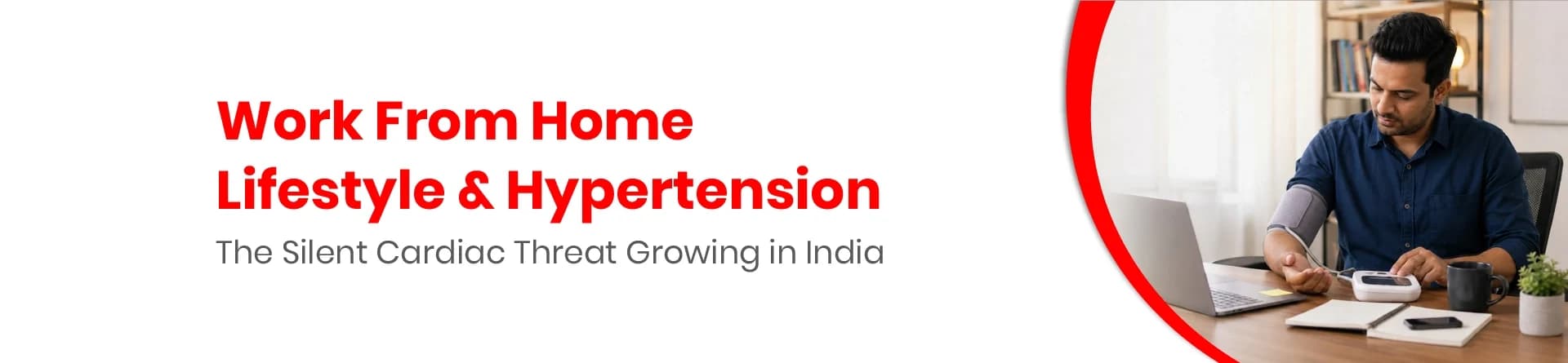
Working from home does not directly cause hypertension, but prolonged sitting, chronic stress, poor sleep, unhealthy eating habits, and physical inactivity can significantly increase the risk of high blood pressure and heart disease, particularly among young adults in India.
Adopting heart-healthy habits such as regular physical activity, a balanced diet, stress management, adequate sleep, and routine blood pressure monitoring can help prevent hypertension and support long-term cardiovascular health.
The work-from-home (WFH) culture has transformed the way millions of Indians work. While it offers flexibility, saves commuting time and improves work-life balance, it has also brought unexpected health challenges. Long hours in front of a laptop, fewer opportunities to move, irregular eating habits and increased stress can silently affect heart health.
One of the biggest concerns is the growing prevalence of hypertension in India. According to the World Health Organization (WHO), around 1.28 billion adults worldwide have hypertension, and nearly 46% are unaware that they have the condition. In India, an estimated 220–250 million adults have high blood pressure, which is one of the leading risk factors for heart disease and stroke.
What is even more worrying is that hypertension in India is no longer limited to older adults. Cardiologists are seeing more cases of high blood pressure among young adults, many of whom spend long hours working from home.
Working from home does not directly cause hypertension. However, it can encourage unhealthy habits that are known to increase blood pressure over time.
Many remote workers spend 8 to 10 hours, or even longer, sitting at their desks. Back-to-back virtual meetings, skipped exercise sessions and unhealthy snacking have become common. At the same time, work and personal life often overlap, making it difficult to switch off and manage stress.
Medical experts identify several lifestyle factors linked to hypertension, including:
When these factors come together, they can significantly increase the risk of developing high blood pressure.
One of the biggest health concerns associated with remote work is prolonged sitting.
In a traditional office setting, people may naturally move throughout the day by walking to meetings, climbing stairs or commuting. Working from home often removes these small but important opportunities for movement.
Sitting continuously for long periods can:
Research suggests that prolonged sedentary behaviour increases the risk of cardiovascular disease, even among people who exercise regularly. This is because sitting for several hours without movement can affect how blood vessels function and how the body regulates blood pressure.
Experts recommend standing up and moving for a few minutes every 30 to 60 minutes to improve circulation and reduce health risks.
Working from home has blurred the boundaries between professional and personal life. Many employees start work early, finish late and remain connected through emails, chats and virtual meetings throughout the day.
This constant pressure can contribute to stress, which is closely linked to high blood pressure.
When you experience stress, your body releases hormones such as adrenaline and cortisol. These hormones temporarily increase your heart rate and narrow blood vessels, causing blood pressure to rise. If stress becomes chronic, it may contribute to persistent hypertension.
Many remote workers stay up late using laptops or smartphones. Reduced sleep affects the body's ability to regulate blood pressure and increases the risk of heart disease. Excessive screen time may also contribute indirectly by:
Over time, these habits can affect both physical and emotional wellbeing.
Early Signs of Hypertension Remote Workers Often Ignore
Hypertension is often called the "silent killer" because it usually develops without obvious symptoms. Many people feel perfectly healthy until complications occur. However, some people may notice:
These symptoms do not always indicate hypertension, but they should never be ignored. The only reliable way to know whether your blood pressure is high is to check it regularly.
Doctors across India are seeing more young professionals being diagnosed with hypertension.
The rise in high blood pressure among young adults is linked to several lifestyle factors, including:
These lifestyle factors can increase the risk of high blood pressure in young adults. Many young adults assume that hypertension only affects older people. Unfortunately, uncontrolled high blood pressure at a younger age increases the risk of heart attack, stroke, kidney disease and heart failure later in life.
Early lifestyle changes can significantly reduce these risks.

The good news is that small daily habits can make a big difference in maintaining healthy blood pressure. Here are some practical tips:
Move regularly: Avoid sitting continuously for long hours. Stand, stretch or walk for two to five minutes every 30 to 60 minutes.
Exercise most days: Aim for at least 150 minutes of moderate physical activity every week, such as brisk walking, cycling or swimming.
Eat a heart-healthy diet: Choose fresh fruits, vegetables, whole grains, pulses and other healthy sources of protein. Limit processed foods, sugary drinks and foods high in salt.
Reduce salt intake: The WHO recommends consuming less than 5 grams of salt per day. Reading food labels and reducing packaged snacks can help lower sodium intake.
Sleep well: Aim for 7 to 9 hours of quality sleep every night. Avoid using electronic devices just before bedtime.
Manage stress: Practise meditation, yoga, deep breathing or mindfulness exercises. Taking short breaks during work can also improve mental wellbeing.
Stay hydrated: Drinking enough water throughout the day supports overall health and can help prevent fatigue.
Maintain a healthy weight: Even a modest reduction in body weight can help lower blood pressure in people who are overweight.
One of the biggest challenges with hypertension is that many people do not know they have it. Routine blood pressure monitoring allows early diagnosis before complications develop. Young adults should especially consider regular blood pressure checks if they:
Checking your blood pressure takes only a few minutes, but it can help prevent serious health problems in the future.
The flexibility of working from home has many advantages, but it should not come at the cost of your heart health. The growing prevalence of hypertension in India, particularly among younger adults, highlights the importance of adopting healthier daily habits.
Remember, working from home itself is not the problem. The real concerns are prolonged sitting, chronic stress, poor sleep, unhealthy eating and a lack of physical activity. These unhealthy habits can quietly increase your risk of hypertension without causing noticeable symptoms.
By moving more, eating a balanced diet, managing stress and checking your blood pressure regularly, you can protect your heart while continuing to enjoy the benefits of remote work. Small lifestyle changes today can help reduce the risk of serious cardiovascular disease in the future.
Written and Verified by:

Dr. Joy Shome is a Senior Consultant in Cardiology at BM Birla Heart Hospital, Kolkata with over 17 years of experience. His expertise includes TAVR/TAVI, complex angioplasty, atherectomy, CTO techniques, intra-coronary imaging, ultra-low contrast PCI, and pacemaker implantation.
Similar Cardiology Blogs
Book Your Appointment TODAY
© 2024 BMB Kolkata. All Rights Reserved.


