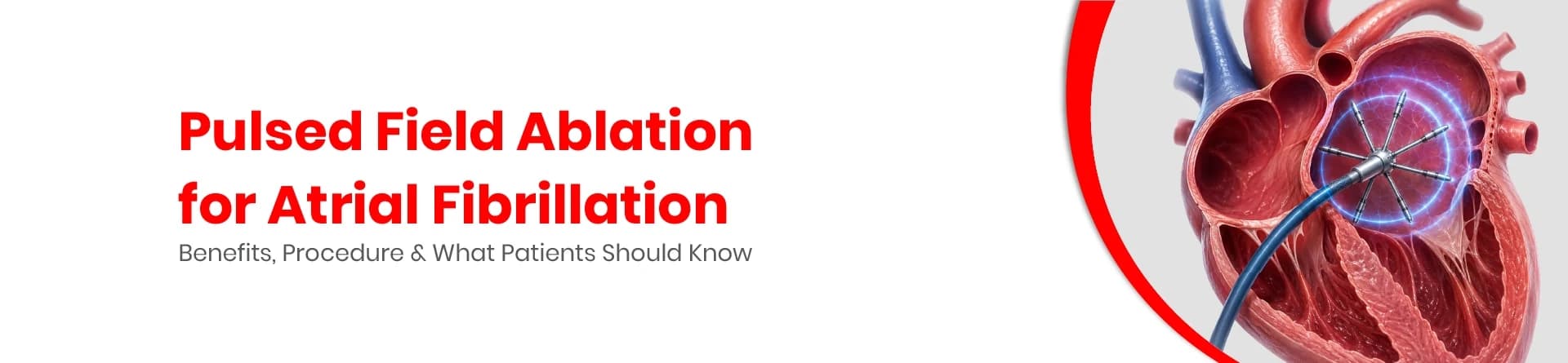
Pulsed Field Ablation (PFA) is an advanced, minimally invasive treatment for atrial fibrillation (AFib) that uses targeted electrical pulses to eliminate abnormal heart cells causing irregular heart rhythms. Compared to traditional heat- or cold-based ablation, it offers greater precision, protects surrounding healthy tissue, and supports faster recovery for eligible patients.
Atrial fibrillation (AFib) is one of the most common heart rhythm disorders. It causes the heart to beat irregularly and often too fast. If left untreated, AFib can increase the risk of stroke, heart failure, and other heart-related complications.
While medicines can help control the condition, they may not work for everyone. In such cases, doctors may recommend an advanced atrial fibrillation treatment called 'pulsed field ablation for atrial fibrillation. This newer technique is designed to treat abnormal heart rhythms while reducing damage to nearby healthy tissues.
In this blog, we'll explain what pulsed field ablation is, how it works, who can benefit from it, what happens during the procedure, and its advantages over traditional ablation methods.
Pulsed field ablation (PFA) is an advanced treatment used to manage atrial fibrillation. It uses short bursts of high-energy electrical pulses to target and destroy the abnormal heart cells responsible for irregular heart rhythms.
Unlike traditional ablation methods that use heat (radiofrequency ablation) or extreme cold (cryoablation), pulsed electric field ablation works through a process called irreversible electroporation. This process creates tiny openings in the abnormal heart cells, causing them to stop functioning while preserving most nearby healthy tissues.
Because of its precision, PFA is becoming an important option for treating AFib safely and effectively.
In atrial fibrillation, abnormal electrical signals usually begin in the pulmonary veins, which carry blood from the lungs to the heart. These faulty signals disrupt the heart's normal rhythm.
Pulsed Field Ablation for Atrial Fibrillation works by isolating these abnormal electrical pathways. During the procedure, a specialised catheter delivers controlled electrical pulses to the targeted heart tissue.
The electrical pulses selectively destroy the cells causing the irregular rhythm without relying on heat or freezing. Once these abnormal pathways are interrupted, the heart's normal electrical system can function more effectively.
This helps:
Not every patient with AFib needs an ablation procedure. Your cardiologist or electrophysiologist will assess your symptoms, medical history, and heart condition before recommending PFA.
You may be a suitable candidate if you:
PFA may not be suitable for everyone. Patients with certain heart conditions or other medical problems may require alternative treatment options.
A detailed consultation with a heart rhythm specialist is essential to determine the most appropriate atrial fibrillation treatment.
The afib ablation procedure is performed in a specialised cardiac catheterisation laboratory by an experienced electrophysiologist.
Before treatment, your doctor may recommend:
You will usually be asked not to eat or drink for several hours before the procedure.
The procedure generally takes one to three hours. Here's what happens:
No surgical cuts are required.
Most patients stay in the hospital for observation and may go home the same day or the following day.
Your doctor will advise you about:
Many people notice gradual improvement in their symptoms over the following weeks.
One of the biggest advantages of pulsed field ablation is its ability to target abnormal heart tissue more precisely.
PFA mainly affects heart muscle cells while reducing injury to nearby structures such as:
This makes the procedure potentially safer than heat- or cold-based ablation techniques.
Since PFA does not rely on thermal energy, it may reduce the risk of complications related to heat or freezing injury.
Many PFA procedures can be completed more quickly than traditional catheter ablation, reducing time spent in the procedure room.
Clinical studies have shown promising success rates in maintaining normal heart rhythm after Pulsed Field Ablation for Atrial Fibrillation, especially in patients with paroxysmal AFib.
Because the procedure is minimally invasive, most patients recover quickly and return to normal daily activities within a few days.
The electrical pulses selectively affect abnormal cells, helping preserve surrounding healthy heart structures.
Like any medical procedure, pulsed field ablation carries some risks, although serious complications are uncommon.
Possible risks include:
Your doctor will discuss the benefits and risks before the procedure.
Recovery is generally smooth.
Most patients should:
Your doctor may recommend wearing a heart rhythm monitor during follow-up to assess treatment success.
To improve long-term heart health:
These measures can reduce the chances of AFib returning.
Pulsed Field Ablation for Atrial Fibrillation represents a significant advancement in modern atrial fibrillation treatment. By using targeted electrical pulses instead of heat or freezing, it offers a precise and minimally invasive way to treat abnormal heart rhythms while protecting surrounding healthy tissue.
If you continue to experience AFib symptoms despite medication, talk to your cardiologist about whether pulsed field ablation may be the right treatment option for you. Early diagnosis and timely treatment can improve your quality of life and reduce the risk of long-term heart complications.
No. The procedure is performed under sedation or general anaesthesia, so you should not feel pain during treatment. Mild soreness at the catheter insertion site may occur afterwards.
Early clinical studies show encouraging success rates, particularly for patients with paroxysmal AFib. However, outcomes vary depending on the individual's heart condition and overall health.
The afib ablation procedure usually takes between one and three hours, depending on the complexity of the case.
Yes. Although pulsed field ablation is highly effective, AFib can return in some patients. Additional treatment or repeat ablation may occasionally be required.
Most people can resume light daily activities within a few days. Your doctor will advise when it is safe to return to work, exercise, and other routine activities.
Written and Verified by:

Dr. Anil Mishra is the Director of Cardiology Dept. at BM Birla Heart Hospital, Kolkata. He specializes in complex angioplasties, pacemaker & AICD implantation, CRT-D, TAVI, and was the first in Eastern India to perform rotablation and implant leadless pacemakers.
Similar Cardiology Blogs
Book Your Appointment TODAY
© 2024 BMB Kolkata. All Rights Reserved.


