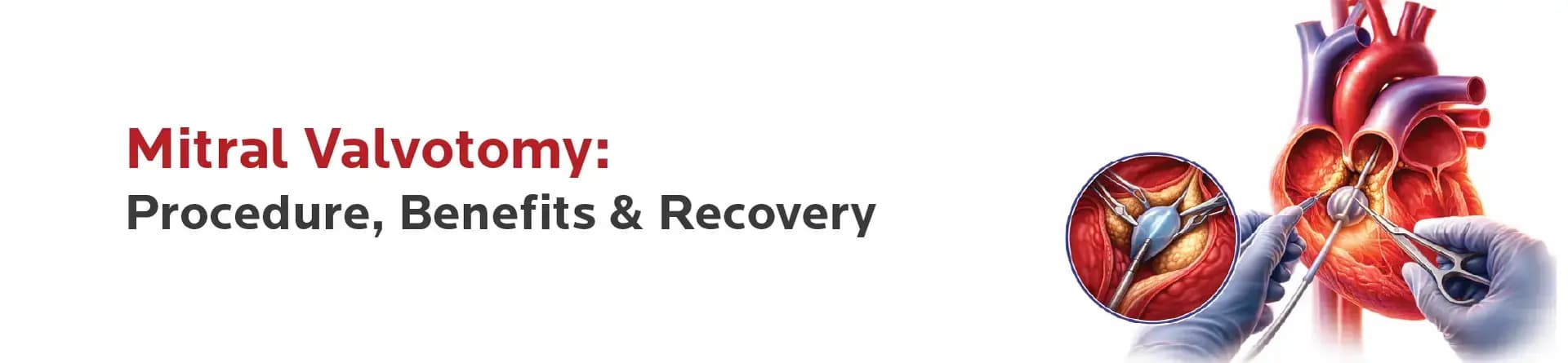
Mitral valvotomy widens narrowed mitral valve (stenosis) via balloon (PBMV), closed/open methods—relieves breathlessness, fatigue in rheumatic cases. Indicated for suitable valves pre-surgery. Procedure: groin catheter inflates balloon. Benefits: better flow/exercise. Risks: bleeding/rhythm issues (low). Recovery: 1-3 days hospital (balloon), weeks normalcy. Vs valvuloplasty: similar, balloon-focused. Long-term relief with lifestyle.
Heart valve problems are quite common in India, especially among people who have had rheumatic fever in the past. One such condition affects the mitral valve, which controls blood flow between two chambers of the heart. When this valve becomes narrow, it can make daily activities tiring and uncomfortable.
In many such cases, doctors recommend a procedure called mitral valvotomy. If you or your family member has been advised of this treatment, it is natural to feel worried or confused. This blog will explain everything you need to know about mitral valvotomy in a simple and easy way – what it is, when it is needed, how the procedure is done, its benefits, risks, and what recovery looks like.
The heart has four valves, and the mitral valve is one of them. It helps blood flow smoothly from the left upper chamber to the left lower chamber of the heart.
Sometimes, this valve becomes narrow or stiff, a condition called mitral stenosis. When this happens, blood cannot flow properly, and pressure builds up in the heart and lungs.
Mitral valvotomy is a medical procedure used to widen the narrowed mitral valve. During this procedure, the fused or stiff valve leaflets are gently opened so blood can flow more easily.
You may also hear terms like 'mitral valve valvotomy' or 'balloon mitral valvotomy procedure' – they all refer to ways of opening the narrowed valve.
Doctors usually suggest mitral valvotomy when symptoms start affecting daily life. It is commonly recommended if a person has:
Mitral valvotomy is most helpful when:
Your cardiologist will decide the right time for the procedure after tests like echocardiography.
There are different types of mitral valvotomy, depending on how it is performed.
This is the most commonly used method today and is also called balloon mitral valvotomy procedure.
How it is done:
This method does not require open-heart surgery and usually has a faster recovery.
Closed mitral valvotomy is an older technique but is still used in selected cases.
Open mitral valvotomy is done during open-heart surgery.
Your doctor will recommend the best option based on valve condition, age, and overall health.
Many people get confused between mitral valvotomy vs valvuloplasty.
In practice, balloon mitral valvotomy is a type of valvuloplasty. Both aim to improve blood flow, but the technique may differ slightly.
Mitral valvotomy offers several benefits, especially when done at the right time.
Many patients feel a noticeable improvement in their symptoms within weeks of the procedure.
Like any medical procedure, mitral valvotomy has some risks, but it is generally considered safe when done by experienced doctors.
Possible risks include:
The risk depends on:
Your doctor will explain the risks clearly before the procedure.
Recovery depends on the type of mitral valvotomy performed.
Most patients experience long-term relief when they follow medical advice carefully.
Mitral valvotomy is a proven and effective treatment for people suffering from mitral valve narrowing. With modern techniques like percutaneous balloon mitral valvotomy, the procedure has become safer and less invasive, offering quicker recovery and better quality of life.
If you or a loved one has been advised a mitral valvotomy, speak openly with your cardiologist, understand the options, and don’t delay treatment. Early intervention can make a big difference in heart health and daily comfort.
Taking care of your heart today can help you lead a healthier and more active life tomorrow.
Yes, for patients with suitable valve anatomy and minimal leakage, mitral valvotomy can be a safer option that avoids valve replacement.
In many patients, the benefits last for several years, especially when the procedure is done early and followed by regular medical care.
Most patients can travel within 1–2 weeks after balloon mitral valvotomy, once cleared by their doctor.
Healthy eating, regular light exercise, stress management, quitting smoking, and regular follow-ups are strongly advised.
Yes, it can be safe for elderly patients, especially with minimally invasive balloon procedures, if they are carefully evaluated beforehand.
Blood thinners are not always required, but they may be prescribed if you have conditions like atrial fibrillation or clot risk.
Written and Verified by:

Dr. Sabyasachi Pal is a Senior Consultant in Cardiology Dept. at BM Birla Heart Hospital, Kolkata, with over 19 years of experience. He specializes in coronary interventions and heart failure management.
Similar Cardiology Blogs
Book Your Appointment TODAY
© 2024 BMB Kolkata. All Rights Reserved.