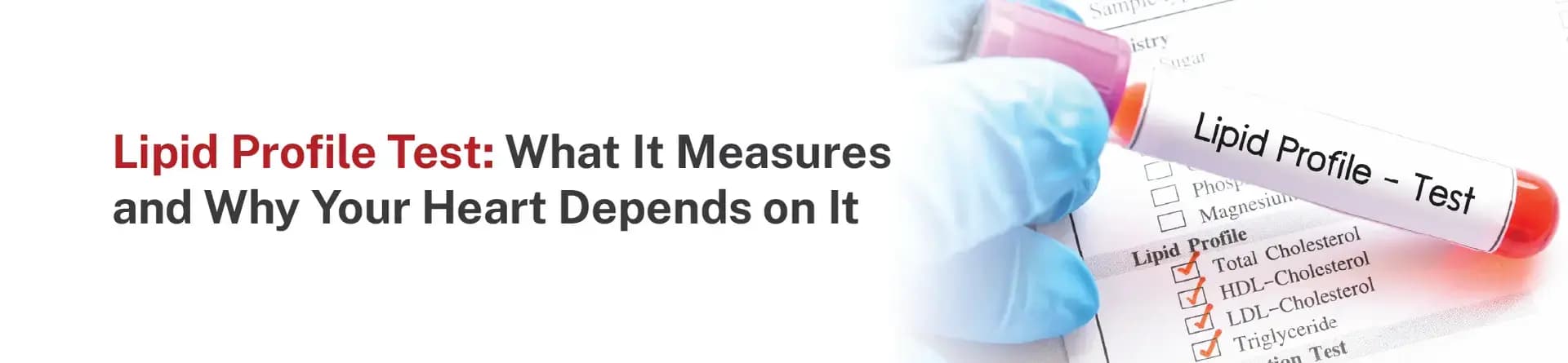
Heart disease often develops silently, long before symptoms appear. A lipid profile test is one of the simplest yet most important ways to understand what’s happening inside your heart. By measuring cholesterol and other fats in your blood, this test helps identify hidden risks of heart attack and stroke early—when they’re still preventable.
In this blog, we explain what a lipid profile test measures, why each number matters, and how this small blood test can play a big role in protecting your heart. If you want clarity, early answers, and better control over your heart health, this is a test you shouldn’t ignore.
A lipid profile blood test is a routine blood test that measures different types of fats present in your blood. These fats include cholesterol and triglycerides, which play a major role in heart health.
While your body needs some amount of fat to function properly, too much “bad” cholesterol can lead to blocked arteries, heart attacks, and strokes. That’s why understanding why the lipid profile test is done is so important—it helps detect problems early, even before symptoms appear.
Doctors commonly recommend a complete lipid profile test as part of regular health check-ups or if you have risk factors like:
To understand the lipid profile test details, let’s look at what the test includes. The lipid profile test parameters usually measure:
This is the overall amount of cholesterol in your blood. High levels can increase the risk of heart disease.
LDL carries cholesterol to your arteries. Excess LDL can stick to artery walls, forming plaque and causing blockages.
HDL helps remove extra cholesterol from your bloodstream. Higher HDL levels are protective for your heart.
These are fats that come from extra calories you don’t use. High triglyceride levels increase heart disease risk. Together, these values help doctors understand your heart health clearly.
Knowing the lipid profile test normal range helps you understand your results better. While ranges may vary slightly by lab, the general normal lipid profile test values are:
Your doctor will interpret these numbers based on your age, health condition, and risk factors.
The lipid profile test is directly linked to heart health because cholesterol buildup in arteries happens slowly and silently. You may feel perfectly fine while damage is already occurring inside your body.
This test helps to:
In short, your heart depends on this test to catch trouble before it becomes serious.
Doctors generally recommend:
Regular testing helps track changes and prevents long-term complications.
The lipid profile test procedure is simple and quick:
Most labs provide results within 24–48 hours.
Proper lipid profile test preparation ensures accurate results:
Your report will list each cholesterol type with its value and reference range. Rather than focusing on one number, doctors look at the overall pattern.
For example:
Always discuss results with your doctor instead of self-diagnosing.
Cholesterol issues can be managed naturally:
At least 30 minutes of walking or exercise most days of the week.
Even small weight loss improves cholesterol levels.
Both badly affect cholesterol balance.
The lipid profile test is more than just numbers on a report—it’s a powerful window into your heart’s health. By understanding what it measures, preparing correctly, and acting on results early, you can protect your heart and live a longer, healthier life. A small blood test today can prevent a major health problem tomorrow.
The normal range includes total cholesterol below 200 mg/dL, LDL below 100 mg/dL, HDL above 40–50 mg/dL, and triglycerides below 150 mg/dL.
Yes, plain water is allowed and recommended during fasting.
High LDL increases the risk of blocked arteries, heart attack, and stroke. Lifestyle changes and medications may be needed.
Yes, most labs require 9–12 hours of fasting for accurate results.
Results are usually available within 24 to 48 hours.
Yes, medicines like steroids, birth control pills, or cholesterol-lowering drugs may affect results. Always inform your doctor.
Written and Verified by:

Dr. Raja Dhar is the Director & Head of Pulmonology Dept. at BM Birla Heart Hospital and CMRI Hospital, Kolkata, with over 32 years of experience. He specializes in interstitial lung disease, asthma & allergy, COPD, sleep medicine, advanced lung function services, interventional & diagnostic pulmonology, rare stroke & orphan lung diseases, and all disciplines of respiratory medicine.
Similar Cardiology Blogs
Book Your Appointment TODAY
© 2024 BMB Kolkata. All Rights Reserved.