An atrial septal aneurysm (ASA) is a bulging atrial septum, often congenital and mild in adults, causing no symptoms or fatigue, palpitations, and dizziness; it risks stroke if paired with PFO or clots. Doctors diagnose it via echo, TEE, or CT, classifying types as right-, left-, or bidirectional. Treatment involves monitoring and meds for rhythm or BP, with rare repair needed. Consult a cardiologist for breathlessness or stroke history, while maintaining a healthy diet, activity, and no smoking keeps it manageable—usually not serious alone
Most of us don’t think about our heart unless something goes wrong. We feel tired, short of breath, or get a few palpitations and assume it’s because of stress, age, or our busy lifestyle. During a routine heart test, some people suddenly hear a new term from their doctor — atrial septal aneurysm. Naturally, it can sound worrying.
If this has happened to you or someone in your family, take a deep breath. In many cases, this condition is mild and manageable. Let’s talk about atrial septal aneurysm in adults in a simple way, without medical jargon, so you clearly understand what it means and when you should be concerned.
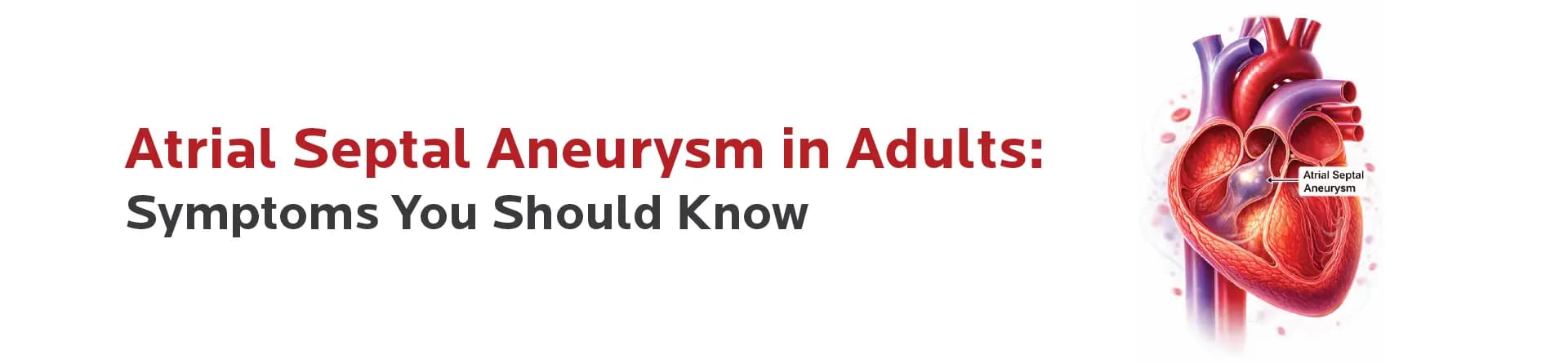
To put it simply, the heart has four chambers, and there is a thin wall between the two upper chambers. This wall is called the atrial septum.
An atrial septal aneurysm (ASA) happens when a small part of this wall becomes loose and bulges more than normal. Instead of staying flat, it moves back and forth with blood flow. This is what doctors refer to when they talk about what an atrial septal aneurysm is.
It is important to know that an ASA is not the same as a hole in the heart. Many people are born with it and may never have symptoms their entire life.
One of the first questions people ask is, “Is this dangerous?”
In most adults, atrial septal aneurysm is not serious by itself. Many people live with it for years without any problem. It becomes important only if it is associated with other heart conditions, such as:
That’s why doctors usually suggest regular follow-ups, even if you feel fine.
Many people with ASA don’t feel anything at all. The condition is often found during an echocardiogram done for some other reason.
However, some adults may notice symptoms like:
In rare cases, ASA may be linked to a stroke, especially if a blood clot forms and travels to the brain. This is known as atrial septal aneurysm stroke, and it needs immediate medical attention. If something doesn’t feel right, it’s always better to get checked rather than ignore it.
Doctors may talk about different atrial septal aneurysm types, depending on which side the bulge moves toward—the right side, the left side, or both. For patients, this classification mainly helps doctors assess risk and decide follow-up plans.
Most of the time, ASA is something a person is born with, even though it may be discovered much later in life.
Some factors that may increase risk include:
Sometimes, doctors also detect ASA in unborn babies during pregnancy scans. In many such cases, foetal atrial septal aneurysm treatment is not required, as it often settles on its own after birth.
ASA is usually diagnosed during routine heart tests.
This is the most common test. Doctors use atrial septal aneurysm echo criteria to see how much the septum bulges and how it moves.
This test gives a closer look at the heart and may be advised if there is concern about clots or stroke.
A CT scan may be done in selected cases to get a detailed view of the heart’s structure.
Many people are relieved to know that not everyone with ASA needs treatment.
If there are no symptoms or complications, doctors may only suggest periodic check-ups.
Medicines may be given to:
Atrial septal aneurysm repair is rarely required. It may be considered only if:
You should consult a cardiologist near you if:
Early advice can prevent complications and give peace of mind.
Most adults with atrial septal aneurysm live a normal and active life. A few simple habits can help:
Hearing the term 'atrial septal aneurysm' can be unsettling, but for most people, it is not something to panic about. With proper medical guidance, regular check-ups, and a healthy lifestyle, the condition can be managed well.
If you have symptoms or doubts, don’t hesitate to speak to a cardiologist. Your heart works hard for you every day — taking a little care of it goes a long way.
In most people, it is not dangerous and causes no symptoms, but it needs monitoring if linked with other heart conditions.
Yes, in some cases—especially when associated with a PFO or blood clots—it can slightly increase the risk of stroke or TIA.
It is most often diagnosed during an echocardiogram (2D echo) done as part of a routine heart check-up.
Most cases do not require surgery and can be managed with regular follow-ups and medicines if needed.
Yes, it can sometimes occur along with ASD or PFO, which may increase the risk of complications.
Maintaining a healthy diet, staying physically active, avoiding smoking, managing stress, and regular doctor visits are advised.
Written and Verified by:

Dr. Ashok B. Malpani is a Senior Consultant in Cardiology Dept. at BM Birla Heart Hospital, Kolkata, with over 39 years of experience. He specializes in complex angioplasty, primary angioplasty, and pacemaker implantation.
Similar Cardiology Blogs
Book Your Appointment TODAY
© 2024 BMB Kolkata. All Rights Reserved.