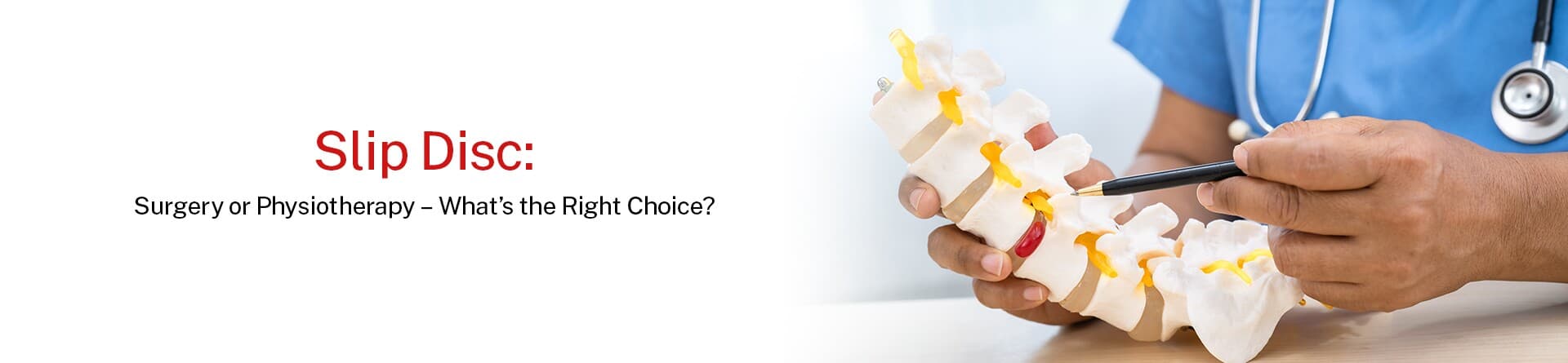
A slip disc doesn't always require surgery. This guide explains when physiotherapy is enough, when surgery becomes necessary, and how doctors decide the best treatment based on your symptoms, nerve compression, and overall spinal health.
A slip disc can turn simple everyday activities like sitting, walking or even getting out of bed into a painful experience. If you've been diagnosed with a slipped disc, one of the first questions that may come to mind is: Do I need surgery, or can physiotherapy treat it?
The good news is that not every slip disc requires an operation. In fact, many people recover with physiotherapy for slip disc and other non-surgical treatments. However, some cases involve severe nerve compression or persistent symptoms, where slipped disc surgery may offer the best chance of long-term relief.
Understanding the difference between these treatment options is important for making informed decisions about your care. In this blog, we'll explain when physiotherapy is enough, when surgery becomes necessary and how doctors choose the most appropriate treatment based on your symptoms and the severity of your condition.
A slip disc, also known as a herniated or prolapsed disc, happens when one of the soft cushions between the bones of your spine becomes damaged. The soft inner part of the disc pushes through its outer layer and may press against nearby nerves. This pressure can cause pain, numbness, tingling or weakness in different parts of the body.
Your spine is made up of small bones called vertebrae. Between these bones are flexible discs that act as shock absorbers. These discs help your spine bend, twist and move comfortably. As you age or experience an injury, a disc may weaken or tear, leading to a slip disc.
A slip disc can affect any part of the spine, but it is most common in the lower back (lumbar spine) and neck (cervical spine). While the condition can be painful, many people recover with conservative care such as physiotherapy for slip disc. In some cases, however, slipped disc surgery may be the best option.
A slip disc usually develops due to gradual wear and tear. As the discs lose water content with age, they become less flexible and are more likely to tear.
Other common causes include:
Although anyone can develop a slip disc, it is more common in adults between 30 and 50 years of age.
The symptoms of a slip disc depend on its size, location and whether it is pressing on a nerve. Some people experience only mild discomfort, while others develop severe nerve-related symptoms.
Common symptoms include:
In many people, these symptoms improve with conservative slipped disc treatment.
However, certain warning signs require immediate medical attention. These include:
These symptoms may indicate significant nerve compression and often require urgent evaluation for slipped disc surgery.
For most people, physiotherapy for slip disc is the first line of treatment. In fact, many patients recover without an operation when treatment begins early and exercises are performed correctly.
Physiotherapy aims to reduce pain, improve movement and strengthen the muscles that support the spine. A personalised rehabilitation programme also helps prevent future episodes.
Your physiotherapist may recommend:
The treatment plan is adjusted based on your symptoms and recovery.
Physiotherapy is generally recommended if you have:
Many people ask, can slip disc be cured without surgery? The answer is yes, in many cases. The body can gradually reduce inflammation around the affected nerve, while physiotherapy helps restore strength, flexibility and normal movement. Most patients experience noticeable improvement within a few weeks to a few months.
Although conservative treatment works for many patients, it may not be enough for everyone. Slipped disc surgery is usually considered when symptoms persist despite several weeks of appropriate treatment or when nerve compression becomes severe.
Your doctor may recommend surgery if:
The aim of surgery is to remove the part of the disc pressing on the nerve and relieve symptoms.
The most commonly performed procedure is a microdiscectomy, where the damaged portion of the disc is removed through a small incision. Depending on the location and severity of the condition, other minimally invasive or open procedures may also be recommended.
Many patients wonder, is slip disc surgery safe? When performed by an experienced spine surgeon in appropriately selected patients, slip disc surgery is generally considered safe and has a high success rate in relieving nerve pain. Like any surgical procedure, it carries certain risks, which your doctor will discuss before treatment.
Both surgery and physiotherapy are effective slipped disc treatment options. The right choice depends on the severity of your symptoms and the extent of nerve involvement.
|
Physiotherapy |
Slipped Disc Surgery |
|
Non-surgical treatment |
Surgical procedure |
|
Usually the first treatment option |
Recommended when conservative treatment fails or nerve damage is severe |
|
Focuses on reducing pain and strengthening the spine |
Removes pressure from the affected nerve |
|
Recovery is gradual over weeks or months |
Nerve pain often improves more quickly after surgery, though recovery still takes time |
|
No surgical risks |
Includes the usual risks associated with surgery |
|
Helps reduce the risk of future back problems |
May still require physiotherapy after surgery for complete rehabilitation |
Even after surgery, physiotherapy remains an important part of recovery. Rehabilitation helps improve flexibility, strengthen the back muscles and reduce the chances of another disc problem.
There is no single treatment that is right for everyone. The best approach depends on several factors, including:
If your symptoms are mild or moderate, your doctor will usually recommend physiotherapy for slip disc along with medications, activity modification and lifestyle changes.
If you continue to experience severe pain, worsening weakness or significant nerve compression despite conservative care, slipped disc surgery may offer better long-term relief.
It is important not to delay medical evaluation if your symptoms become worse. Early diagnosis allows your healthcare team to choose the most appropriate treatment before permanent nerve damage occurs.
Many people worry that a slip disc automatically means an operation. Fortunately, this is not true.
Most patients improve with slipped disc treatment without surgery, especially when treatment begins early. Physiotherapy, pain management, proper posture, weight management and regular exercises often provide excellent results.
The key is to follow your treatment plan consistently and avoid activities that place excessive strain on your spine during recovery.
Choosing between slipped disc surgery and physiotherapy depends on the severity of your condition rather than personal preference alone. While most patients recover successfully with physiotherapy for slip disc, surgery becomes necessary when severe nerve compression, progressive weakness or persistent pain does not respond to conservative treatment.
The sooner a slip disc is diagnosed, the more treatment options are available. If you are experiencing persistent back pain, leg pain, numbness or weakness, consult a spine specialist. A thorough clinical examination and appropriate imaging can help determine the most suitable treatment plan and support a safe recovery.
Yes, many slip discs improve without surgery through physiotherapy, medications, activity modification and time, especially if nerve compression is mild.
Recovery varies, but most people notice improvement within 6 to 12 weeks with consistent treatment and guided physiotherapy.
Physiotherapy cannot repair the damaged disc itself, but it can relieve symptoms, improve spinal function and help many people recover without surgery.
You may experience some discomfort after surgery, but pain is usually well managed with medications, and many patients notice relief from nerve pain soon after the procedure.
Avoid high-impact activities, heavy lifting, deep forward bends and twisting exercises unless your doctor or physiotherapist advises they are safe.
Written and Verified by:

Senior Orthopaedic Surgeon & Traumatologist Exp: 51 Yr
Orthopedics & Joint Replacement
Dr. Ashok Kumar Das is a Senior Orthopaedic Surgeon & Traumatologist at CMRI Hospital, Kolkata. He specializes in orthopaedic trauma, joint replacement, and spine surgery.
Similar Orthopedics & Joint Replacement Blogs
Book Your Appointment TODAY
© 2024 CMRI Kolkata. All Rights Reserved.


