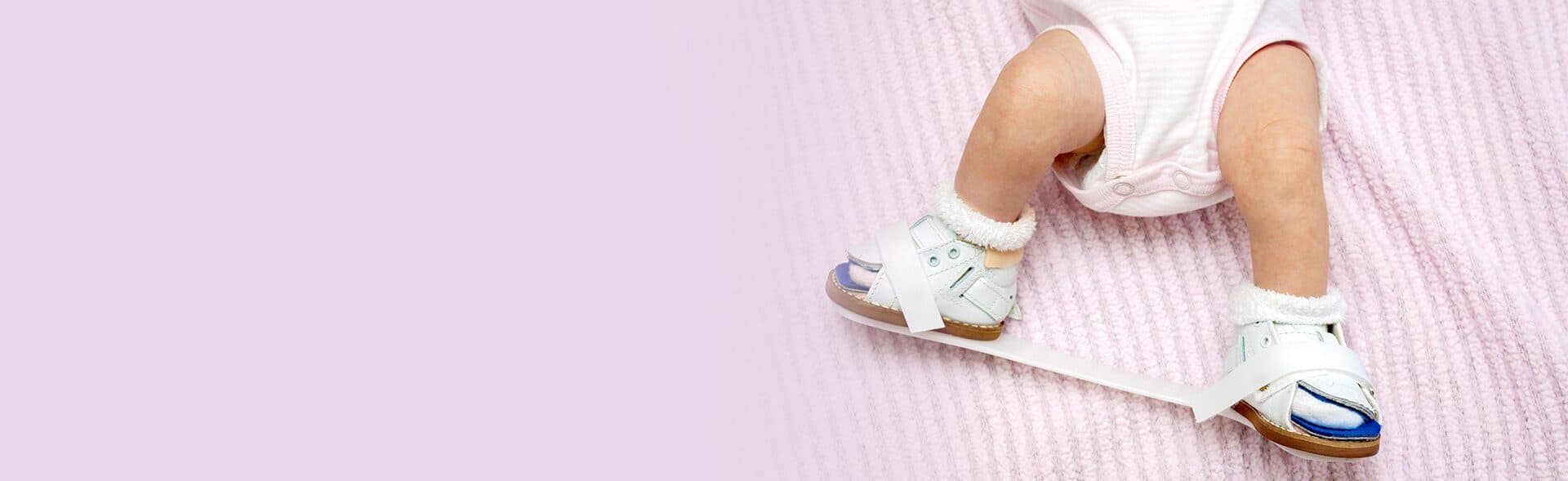
Clubfoot is a condition in which a baby’s foot is twisted out of its normal shape or position. The foot may point downward, inward, or both, making walking or standing difficult if left untreated. Clubfoot treatment aims to correct the foot’s alignment, improve function, and allow children to walk and run normally. Early intervention usually leads to the best results.
Clubfoot deformity is present at birth in some babies and can affect one or both feet. In this condition, the bones, muscles, and tendons in the foot are tighter than normal, causing the foot to turn inwards or downwards.
There are several forms of clubfoot:
If left untreated, clubfoot can lead to difficulty walking, pain, and abnormal posture. This makes clubfoot treatment in babies essential for a child’s normal development.

Early diagnosis of clubfoot is crucial for effective correction. Paediatricians and orthopaedic specialists examine:
Sometimes, X-rays or ultrasound may be used to study the bones and joints of the foot. Once the diagnosis is confirmed, a tailored clubfoot baby treatment plan is created.
The goal of clubfoot treatment is to correct the foot’s position, improve flexibility, and prevent recurrence. Treatment methods vary depending on age, severity, and response to therapy.
Non-surgical methods are preferred, especially in babies and young children.
Clubfoot physiotherapy treatment supports non-surgical correction by improving flexibility, strengthening muscles, and preventing relapse.
Surgery may be recommended if non-surgical methods do not fully correct the foot or in severe cases. Surgical clubfoot treatment involves:
In older children or adults, clubfoot treatment in adults may involve more extensive surgery to restore function and correct deformities.
Early intervention provides the best outcomes. A typical clubfoot treatment timeline is:
Following this timeline ensures the foot develops normally, allowing children to walk and run without difficulty.
At CMRI, Kolkata, we provide comprehensive clubfoot treatment with experienced paediatric orthopaedic specialists. Our approach focuses on:
By choosing CMRI, Kolkata, families receive expert care in a supportive environment, ensuring the best possible outcomes for children with clubfoot.
Yes, most cases can be corrected with non-surgical methods like the Ponseti casting method if started soon after birth.
The ideal time is within the first few weeks of life, as early treatment leads to faster and more effective correction.
Non-surgical treatment may cause mild discomfort during stretching or casting, but it is generally well-tolerated; pain is managed carefully.
Correction usually takes 6–12 weeks of casting, followed by months of bracing and physiotherapy for maintenance.
Untreated clubfoot can lead to difficulty walking, pain, abnormal gait, and long-term foot deformities.
With proper treatment, long-term complications are rare, though some children may need bracing or minor follow-up procedures.
Success rates are very high, with over 90% of babies achieving normal foot function when treated early with proper methods.
© 2024 CMRI Kolkata. All Rights Reserved.


