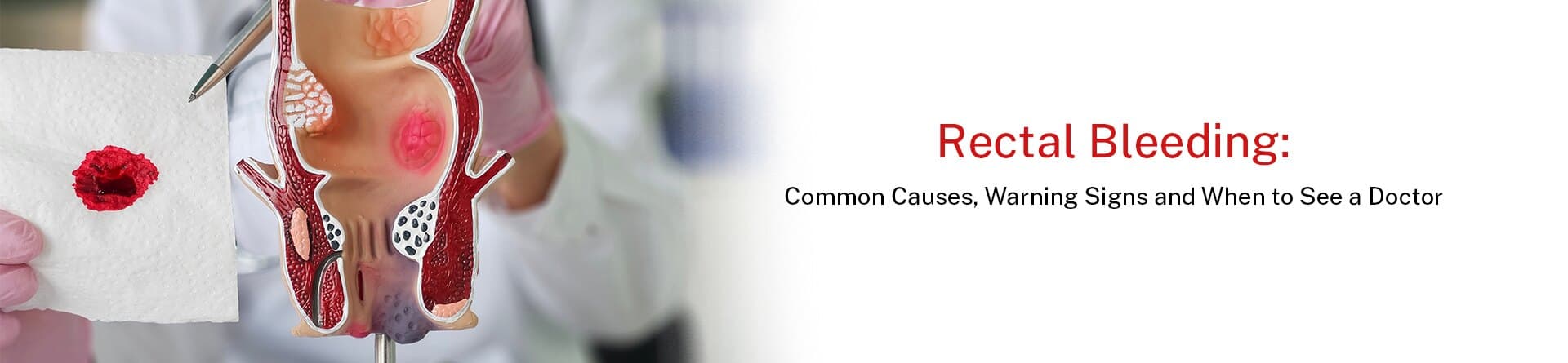
Rectal bleeding may not always be serious, but it is never something to ignore and always deserves attention.
Seeing blood when you go to the bathroom can be unsettling. You might notice it on the toilet paper or in your stool, and your first thought is often worry.
Take a moment to pause.
In many cases, rectal bleeding is not serious. But sometimes, it can be a sign that your body needs attention. The important thing is not to ignore it or make assumptions.
Let’s understand what it means and when you should take it seriously.
Rectal bleeding simply means blood coming from your anus or lower digestive tract. You might notice it in different ways. Sometimes it’s just a small amount on toilet paper. Other times, it may be visible in the stool or even in the toilet bowl.
The colour of the blood can vary. Bright red blood usually comes from the lower part of your digestive system, while darker blood may come from deeper inside. But this is only a clue - not a diagnosis.
In simple terms, if you see blood while passing stool, that’s rectal bleeding.
Most of the time, rectal bleeding happens due to conditions that are manageable and not dangerous.
One of the most common causes is haemorrhoids, also known as piles. These are swollen veins in the rectum that can bleed, especially if you strain during bowel movements.
Another common reason is an anal fissure, which is a small tear in the skin around the anus. This often happens when you pass hard stool and can cause both pain and slight bleeding.
Constipation is also a major factor. When your stool is hard and difficult to pass, it puts pressure on the rectal area, leading to irritation or small tears.
In some cases, infections or mild inflammation in the digestive tract can also cause bleeding, usually along with symptoms like diarrhoea or discomfort.
These are the most common rectal bleeding causes, and they are often treatable with simple care.
While many causes are mild, some situations need more attention. Conditions like colorectal cancer, inflammatory bowel disease (IBD), or colon polyps can also lead to rectal bleeding. These are less common but more serious.
What’s important to understand is this: Bleeding doesn’t always come with pain.
You might experience rectal bleeding without pain and still have an underlying issue that needs evaluation. That’s why even painless rectal bleeding should not be ignored. If the bleeding keeps happening or is combined with other symptoms, it’s always better to get it checked.
Rectal bleeding may not always appear alone. Your body might give you other signs along with it.
You may notice:
These rectal bleeding symptoms help doctors understand what might be causing the problem.
There are certain situations where you should not wait.
If you experience:
These could be signs of something serious. In such cases, it’s important to seek medical help immediately rather than waiting for it to improve on its own.
If you decide to see a doctor, the process usually starts with a simple conversation about your symptoms.
They may ask:
Based on this, they may recommend further tests such as blood tests or a colonoscopy to get a clearer picture. The goal is not just to stop the bleeding but to understand why it’s happening.
The right rectal bleeding treatment depends on the cause. For mild conditions like haemorrhoids or fissures, simple steps can make a big difference. These include improving your diet, staying hydrated, and avoiding strain during bowel movements.
If the cause is related to infection or inflammation, medications may be required. In more serious cases, advanced treatments or procedures may be needed. But the good news is that early diagnosis often makes treatment much easier.
If your symptoms are mild, you can start with small lifestyle changes.
Focus on:
These habits help reduce pressure on your digestive system and support healing. However, if the bleeding continues, these steps alone may not be enough.
This is the most important part. You should see a doctor if:
Even if the bleeding is small or painless, it’s better to be cautious. Your body is giving you a signal. Ignoring it can delay proper care.
Rectal bleeding can feel frightening, but not every case is serious. At the same time, it’s not something you should ignore.
The key is balance - don’t panic, but don’t dismiss it either.
Pay attention to your symptoms. Notice any changes. And most importantly, don’t hesitate to seek help when needed. Because when it comes to your health, acting early is always better than waiting too long.
No, it can be caused by minor issues like haemorrhoids but sometimes indicates serious conditions.
It usually suggests bleeding from the lower digestive tract, such as Anal fissure or haemorrhoids.
Yes, haemorrhoids are a common cause of painless bright red bleeding.
Doctors may use tests like Colonoscopy or stool analysis to find the cause.
Yes, a high-fibre diet, hydration, and avoiding straining can reduce the risk of conditions like haemorrhoids.
Written and Verified by:
-Dr.-Saswata-Chatterjee-(-Gastroenterology-).webp&w=256&q=75)
Dr. Saswata Chatterjee is a Consultant in Gastroenterology & Hepatology Dept. at CMRI Hospital, Kolkata. He specializes in liver diseases, inflammatory bowel disease, gastrointestinal infections, and advanced endoscopic procedures.
Similar Gastro Sciences Blogs
Book Your Appointment TODAY
© 2024 CMRI Kolkata. All Rights Reserved.