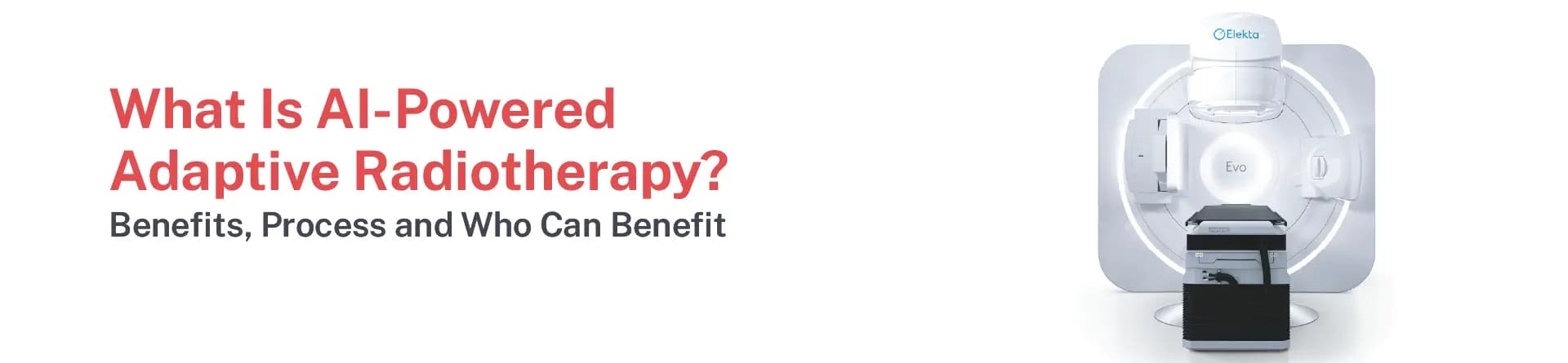
Radiation therapy is an important part of cancer treatment. It uses high-energy radiation to kill cancer cells or slow their growth. However, the tumour and nearby organs can change during the course of treatment. The tumour may become smaller, while nearby organs and tissues can move or change position.
Adaptive radiotherapy helps doctors account for these changes. It uses new images taken during treatment to assess the patient's anatomy. The treatment plan can then be adjusted when needed to better match the patient's anatomy on that day.
With AI in radiation therapy, some of these steps can be performed more efficiently. AI can assist with image analysis, treatment planning and identifying changes in the patient's anatomy. The radiation therapy team remains responsible for reviewing the plan and making treatment decisions.
AI-powered adaptive radiotherapy is an advanced form of radiation treatment. It uses imaging, specialised software and artificial intelligence to help adjust the radiation plan when the patient's anatomy changes.
In conventional radiation therapy, the treatment plan is usually created before treatment begins. The same plan may then be used throughout the treatment course.
However, the body can change during cancer treatment. A tumour may change in size or shape. Nearby organs can also move due to breathing, digestion or changes in bladder or bowel filling.
Adaptive radiotherapy helps account for these changes. A new scan is taken during treatment to assess the patient's anatomy. The treatment plan can then be updated when needed. AI may assist with image analysis and other steps in this process.
The process starts with detailed imaging of the tumour and nearby organs. These images help the radiation team create an initial treatment plan.
Before a treatment session, another scan may be taken. The new image is compared with the earlier plan. This helps the team see whether the tumour or nearby organs have changed.
If a change could affect treatment, the radiation plan may be adapted.
AI can support several parts of this process. It can help analyse images, identify important structures and assist with treatment planning. This can help the radiation team work with the new information more efficiently.
The updated plan is then reviewed by the radiation specialists before treatment is given.
AI can support different steps of radiation treatment. Its role may include:
AI does not replace the radiation oncologist or other members of the treatment team. The specialists review the information and decide whether a treatment plan should be changed.
The main aim of adaptive radiotherapy is to deliver radiation according to the patient's anatomy at that time. This can be useful when the tumour or nearby organs change during treatment.
Some possible benefits of AI-powered adaptive radiotherapy include:
The treatment plan can be adjusted when the tumour or nearby organs change. This may help radiation reach the intended area more accurately.
Radiation can affect healthy tissues near a tumour. By accounting for changes in anatomy, adaptive treatment may help limit unnecessary radiation exposure to nearby organs.
A tumour may shrink during treatment. Organs can also move or change position. Adaptive radiotherapy allows the treatment team to consider these changes instead of relying only on the original plan.
AI can help analyse images and support treatment planning. This may make some parts of the adaptive process faster and more efficient.
When healthy tissues receive less unnecessary radiation, there may be a lower risk of some treatment-related side effects. However, this depends on the cancer type, treatment area and individual patient.
These advantages of adaptive radiotherapy do not mean that every patient needs adaptive treatment. Your radiation oncologist can decide if it is appropriate for you.
The treatment process can vary between cancer centres and treatment machines. In general, it may involve the following steps:
Your radiation oncologist reviews your cancer diagnosis, scans and overall health.
Imaging is used to locate the tumour and nearby healthy organs. An initial radiation plan is then prepared.
New images may be taken before a treatment session. These images help the team check your current anatomy.
If there are important changes, the treatment plan may be adjusted. AI and specialised software can support this process.
The updated plan is checked by the radiation team before treatment.
Once the plan is approved, radiation is delivered to the planned area.
This process may be repeated during the treatment course when needed.
Adaptive radiotherapy is designed to provide more precise treatment while reducing unnecessary radiation to nearby healthy tissues. However, it is still a form of radiation therapy and can have side effects.
The treatment also has some limitations. It may require additional imaging, advanced radiation equipment and specialised software. The planning process can also be more complex than standard radiation therapy.
Not every tumour changes in a way that requires adaptive treatment. It may also not be suitable for every patient.
For example, adaptive radiotherapy in head and neck cancer may be useful when changes in the tumour or nearby tissues affect the original treatment plan. However, the decision depends on the individual case.
AI-powered adaptive radiotherapy allows the treatment team to respond to changes in your body during cancer treatment. It combines imaging, advanced planning tools and AI to support more precise radiation delivery. However, it is not needed for every patient. Your radiation oncologist can assess your cancer and treatment plan to decide whether adaptive radiotherapy is appropriate for you.
Written and Verified by:

Additional Director Exp: 14 Yr
Radiation Oncology & Radiosurgery
Dr. Ruchir Bhandari is a highly experienced Clinical Oncologist with over 14 years of expertise in advanced cancer care.
Similar Oncology Blogs
Book Your Appointment TODAY
© 2024 RBH Jaipur. All Rights Reserved.


