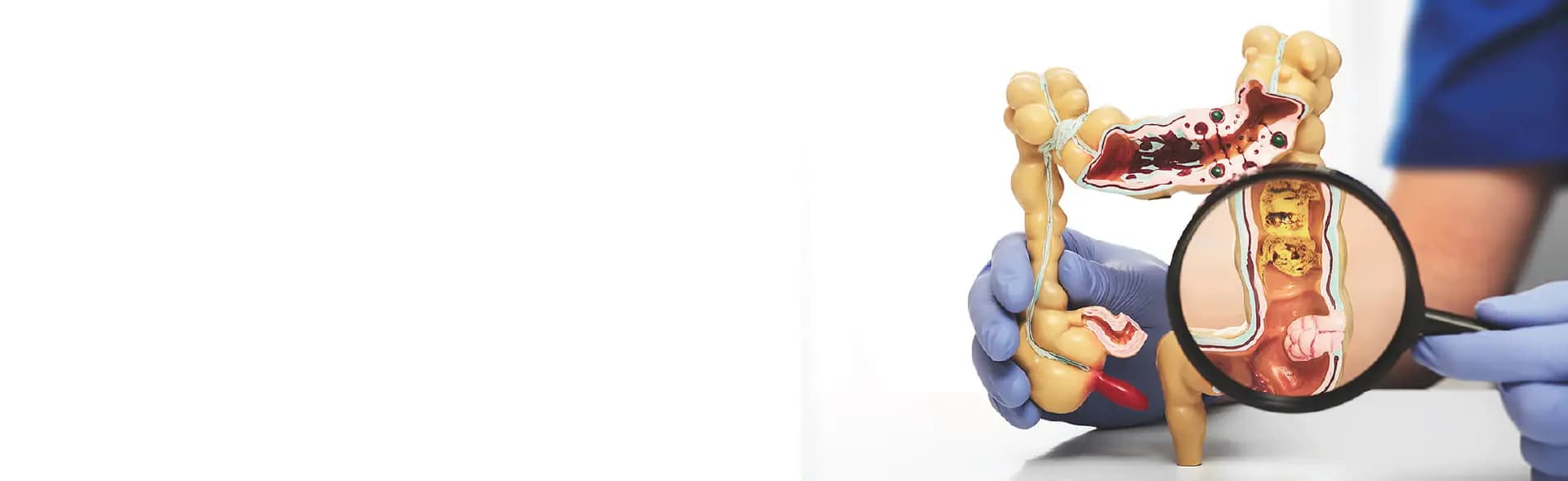
Colorectal cancer affects the colon or rectum and often develops from precancerous polyps. Surgery is one of the most effective treatments for localised colorectal cancer, helping remove the tumour and nearby affected tissues. Depending on the cancer stage and location, surgery may be combined with chemotherapy, radiation therapy, or other treatments.
Colorectal cancer is a type of cancer that develops in the colon or rectum, which are parts of the large intestine. Most colorectal cancers develop from polyps, which are abnormal growths in the lining of the colon or rectum that may become cancerous over time. Colorectal cancer may not cause symptoms in its early stages, but as it grows, it can lead to changes in bowel habits, blood in the stool, abdominal pain, unexplained weight loss, or fatigue.
Surgery for colorectal cancer is one of the most effective treatment options for removing cancer and reducing the risk of disease progression and spread. The procedure is performed to remove the tumour and nearby tissues that may contain cancer cells. In many cases, surgery offers the best chance of cure, particularly when the cancer is diagnosed before it has spread to other organs.
The need for surgery depends on the stage of cancer, the location of the tumour, and the patient's overall health. Some patients may undergo surgery as their primary treatment, while others may require chemotherapy, radiation therapy, targeted therapy, or immunotherapy before or after surgery as part of a comprehensive treatment plan.

The type of surgery recommended depends on the location of the cancer, its stage, and the patient's overall health. Treatment may involve procedures for colon cancer, rectal cancer, or advanced colorectal cancer, depending on the extent of the disease.
Colon cancer surgery involves removing the section of the colon affected by cancer, along with nearby lymph nodes that may contain cancer cells.
Colectomy
A colectomy removes the cancerous segment of the colon along with associated blood vessels and nearby lymph nodes. Whenever possible, the healthy ends of the colon are reconnected to restore normal bowel function.
Depending on the tumour's location, surgery may involve removing either a small section of the colon or a larger segment.
Robotic Surgery for Colon Cancer
Robotic-assisted surgery for colon cancer is an advanced minimally invasive approach that provides surgeons with enhanced dexterity, three-dimensional visualisation, and improved instrument control during complex procedures.
Potential advantages may include:
Not all patients are suitable candidates for robotic surgery. The most appropriate surgical approach is determined after a thorough evaluation by the surgical team.
Rectal cancer surgery is performed to remove tumours located in the rectum while preserving bowel function whenever possible.
Local Excision
For selected patients with small, early-stage rectal cancers, local excision may be performed through the rectum without requiring large abdominal incisions.
Low Anterior Resection (LAR)
This procedure removes the affected portion of the rectum while preserving the anal sphincter, allowing patients to pass stool through the anus and avoid a permanent colostomy in many cases.
Abdominoperineal Resection (APR)
For cancers involving or located very close to the anal sphincter, the rectum and anus may need to be removed. In these cases, a permanent colostomy is required.
Laparoscopic surgery for colorectal cancer is a minimally invasive technique performed through small incisions using a camera and specialised surgical instruments. It may be used for selected patients with either colon or rectal cancer.
Potential benefits may include:
Some patients require more complex procedures depending on tumour size, location, or stage of disease. Our surgical team performs advanced colorectal cancer surgeries using modern techniques tailored to each patient's condition and treatment goals.
Every colorectal cancer diagnosis is unique. Before recommending surgery, specialists perform a detailed evaluation to determine the most appropriate treatment approach. This evaluation may include:
Several factors influence surgical planning, including:
For some patients, particularly those with rectal cancer, chemotherapy and radiation therapy may be recommended before surgery. These treatments can help shrink the tumour and improve surgical outcomes. In selected patients with rectal cancer, they may also increase the likelihood of preserving normal bowel function.
The goal of treatment is to completely remove the tumour with appropriate surgical margins while preserving bowel function and quality of life whenever possible.
Recovery after colorectal surgery varies from person to person and depends on the type of procedure performed, the surgical approach used, and the patient's overall health.
The duration of a hospital stay varies depending on the procedure performed and individual recovery progress. During this time, the healthcare team closely monitors healing, bowel function, pain control, and overall recovery. Patients are encouraged to begin walking as soon as it is safe to do so, as early movement can help reduce complications and support recovery.
Nutrition plays an important role in healing and recovery. Depending on recovery progress, patients may initially be advised to consume soft or easily digestible foods, including:
The ideal diet after colorectal cancer surgery depends on the type of procedure performed and each patient's digestive tolerance. Your healthcare team will provide personalised dietary recommendations based on your recovery needs.
Like any major operation, colorectal surgery may cause temporary side effects. Common side effects may include:
Most side effects improve gradually as the body heals.
Follow-up appointments are an important part of colorectal cancer treatment. These visits allow doctors to:
Some patients may require chemotherapy after surgery to reduce the risk of cancer recurrence.
CK Birla Hospitals, Jaipur, provides comprehensive colorectal cancer care through a multidisciplinary team focused on delivering personalised treatment and long-term support.
Surgery is usually recommended when the cancer is confined to the colon or rectum and can be safely removed. It is often the primary treatment for localised colorectal cancer, although treatment plans vary depending on the stage and location of the disease.
Yes, robotic-assisted surgery is available for selected patients and may offer technical advantages in certain cases. Outcomes depend on several factors, including tumour characteristics, surgical complexity, and the patient's overall health.
Not all patients require a permanent colostomy. The need depends on the tumour location, the type of surgery performed, and whether bowel continuity can be safely restored. In some cases, a temporary stoma may be required during the healing process.
Many patients can resume routine daily activities within a few weeks. However, complete recovery and a return to normal activity levels may take several weeks to months depending on the procedure performed and individual recovery factors.
Some patients may receive chemotherapy before surgery to help shrink the tumour and improve treatment outcomes, while others may require chemotherapy after surgery to reduce the risk of cancer recurrence. The decision depends on the stage, location, and characteristics of the cancer.
© 2024 RBH Jaipur. All Rights Reserved.


