Asthma Symptoms You Should Never Ignore in Summer
Home >Blogs >Asthma Symptoms You Should Never Ignore in Summer

Asthma Symptoms You Should Never Ignore in Summer

Summary

Asthma symptoms can worsen during summer due to heat, humidity, pollution, dust, pollen, and poor air quality. Persistent coughing, wheezing, chest tightness, and shortness of breath should never be ignored, as early diagnosis and proper asthma management can help prevent severe asthma attacks and life-threatening complications.

Asthma is one of the most common non-communicable diseases affecting people of all ages. It is a chronic respiratory condition that causes the airways to swell and narrow, making it difficult to breathe. According to Pulmonologists, Heat, humidity, dust, pollen, smoke, and rising air pollution levels during summer can easily trigger asthma symptoms in both children and adults.

Symptoms like persistent coughing, wheezing, chest tightness, and shortness of breath should never be ignored during summer. Recognizing these warning signs early can help prevent severe asthma attacks and serious health complications.

Key Takeaway

  • According to the World Health Organization (WHO), around 363 million people were affected by asthma in 2023, and nearly 442,000 people lost their lives due to this disease. Source 
  • The Global Burden of Disease (GBD) report states that India accounts for around 13% of the global asthma burden and more than 42% of asthma-related deaths worldwide. Source
  • Reports from The Global Asthma Network (GAN) also reveal that asthma often goes undiagnosed in the country. Nearly 82% of people with early asthma symptoms and 70% of people with severe asthma do not even know they have the condition. Source

Why Asthma Symptoms Can Worsen in Summer

Many people think summer is a safe season for asthma, but that is not always true. If you have asthma, hot weather can sometimes make breathing even more difficult. Here are some common reasons why asthma symptoms may become worse during summer: 

  • Hot and humid weather: During summer, the air feels heavy because of humidity. This can make it harder for your lungs to work properly. Hot air may also tighten the airways and lead to breathing discomfort.
  • Poor air quality and pollution: Have you ever noticed breathing problems getting worse on extremely hot days? That happens because heat increases ozone and smog levels in the air. Poor air quality can irritate your lungs and trigger asthma symptoms.
  • Pollen and mold in the air: Summer brings more pollen from grass, trees, and weeds. Warm and damp weather also increases mould growth. If you are allergic to pollen or mold, your asthma symptoms may flare up more often during this season.
  • Sudden weather changes: Thunderstorms and sudden temperature changes can also affect asthma. Storm winds can spread tiny pollen particles into the air, making them easier to breathe in. This may trigger sudden asthma attacks in some people.
  • Outdoor exercise and activities: Summer is the time when people spend more time outside. Activities like running, cycling, or sports can expose you to more heat, dust, and pollution, which may worsen breathing problems.
  • Swimming pool chlorine: Swimming is often considered good for asthma, but chlorine in pools can sometimes irritate the airways. Indoor pools may affect breathing more because the chlorine smell stays trapped in the air.

If you notice frequent coughing, wheezing, or shortness of breath during summer, do not ignore these signs. Understanding your triggers can help you manage asthma better and avoid serious flare-ups.

Asthma Symptoms You Should Never Ignore

Asthma symptoms can vary from mild to severe. Some people experience occasional symptoms, while others may have frequent flare-ups. Here are some important asthma warning signs you should never ignore during summer:
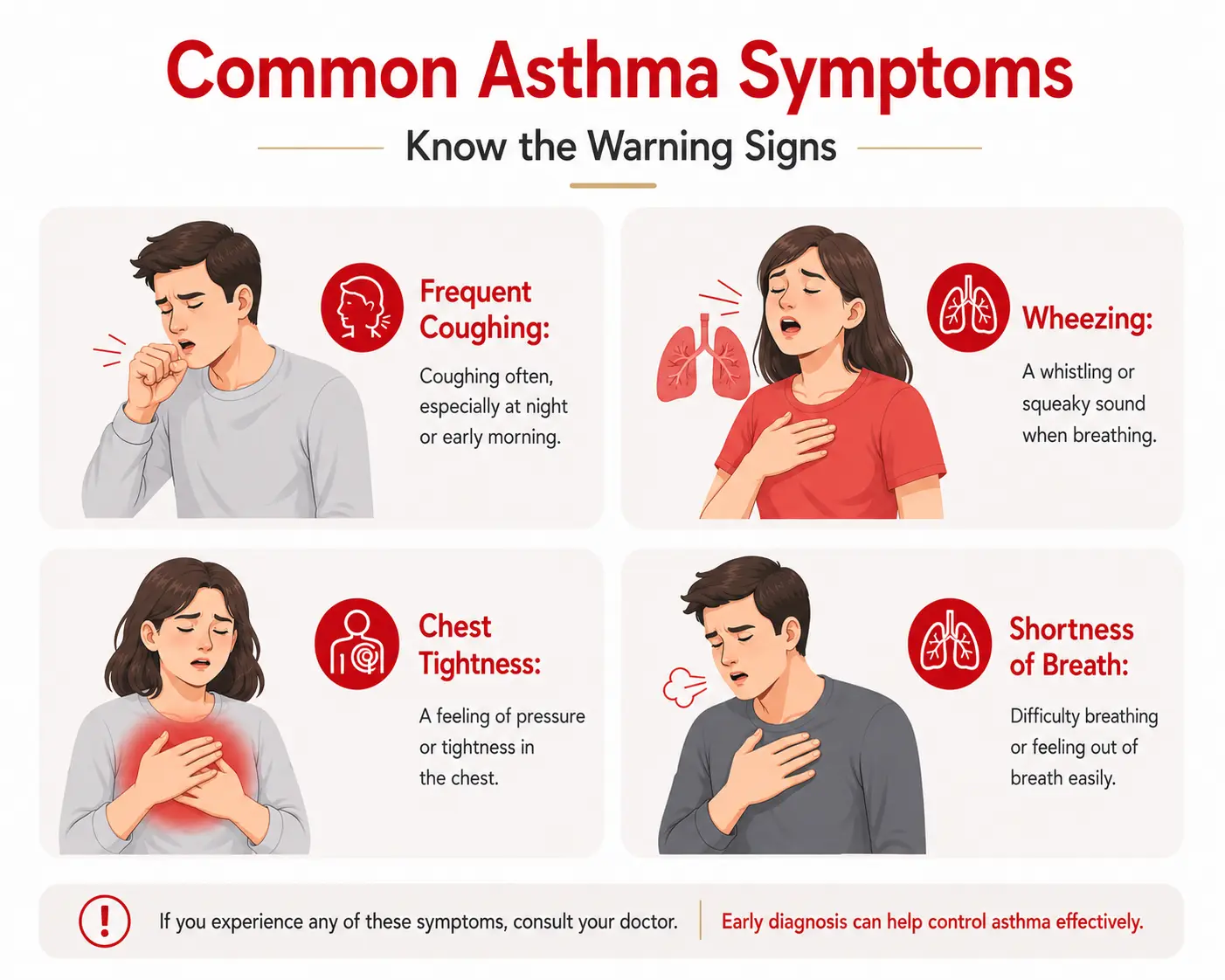
Symptoms of asthma

How to Manage Asthma During Hot Weather

Managing asthma during summer requires proper planning and regular symptom monitoring. Following your treatment plan can help reduce the risk of severe flare-ups.

  • Take Medications as Prescribed: Continue using maintenance inhalers and other prescribed medications regularly, even if symptoms seem controlled. Do not stop medications without consulting your doctor.
  • Carry Your Rescue Inhaler: Always keep your rescue inhaler with you, especially when travelling or spending time outdoors. Quick access to medication can help control sudden asthma symptoms.
  • Stay Hydrated: Drinking enough water may help keep the airways moist and reduce irritation caused by heat and dry air.
  • Limit Outdoor Exposure During Peak Heat: Avoid outdoor activities during the hottest part of the day. Early mornings or evenings may be safer for exercise and outdoor work.
  • Monitor Air Quality and Pollen Levels: Check weather updates and air quality reports regularly. Staying indoors on high-pollution or high-pollen days can help prevent asthma flare-ups.
  • Keep Indoor Air Clean: Use air purifiers if needed and clean fans, air conditioners, and filters regularly to reduce dust and allergens indoors.

When Asthma Symptoms Become an Emergency

Some asthma attack symptoms can become life-threatening if not treated quickly. Seek immediate medical attention if you notice:

  • Severe wheezing and shortness of breath
  • Difficulty speaking or walking due to breathlessness
  • Bluish lips or fingernails
  • Chest pain or severe tightness
  • Rapid breathing that does not improve
  • No relief after using a rescue inhaler
  • Confusion, panic, or extreme weakness

Delaying treatment during a severe asthma attack can reduce oxygen levels and become dangerous.

Prevention Tips to Stay Safe with Asthma in Summer

Preventing asthma flare-ups is often easier than managing severe symptoms later. These simple habits may help reduce asthma risks during hot weather:

  • Avoid known asthma triggers whenever possible
  • Wear a mask in dusty or polluted environments
  • Keep windows closed during high-pollen days
  • Avoid smoking and secondhand smoke exposure
  • Exercise indoors during extreme heat
  • Maintain regular follow-ups with your doctor
  • Use medications exactly as prescribed
  • Keep emergency contact numbers available

Final Thoughts

Summer weather can worsen asthma symptoms and increase the risk of asthma attacks if proper precautions are not taken. Recognizing early symptoms of asthma, understanding common summer triggers, and following a proper treatment plan can help keep symptoms under control.

Do not ignore asthma warning signs like wheezing and shortness of breath, chest tightness, frequent coughing, or difficulty breathing. Early medical attention and proper asthma management can help prevent emergencies and improve quality of life during the summer season.

FAQs

Can heat trigger an asthma attack?

Yes. Hot weather and humid air can irritate the airways and make breathing difficult, which may trigger asthma symptoms or asthma attacks in some people.

Is wheezing always a sign of an asthma flare-up?

Wheezing is a common asthma symptom, but it may also happen due to allergies, infections or other breathing conditions. Frequent wheezing should be checked by a doctor.

Can humidity worsen asthma symptoms?

Yes. High humidity can make the air feel heavy and trap allergens, dust and pollution, which may worsen asthma symptoms and breathing problems.

Should I exercise outdoors if I have asthma in summer?

You can exercise, but avoid outdoor activities during extreme heat or high pollution levels. Early mornings or evenings are usually safer.

How often should I use my inhaler in summer?

Use your inhaler exactly as prescribed by your doctor. If you need your rescue inhaler more often than usual, it may mean your asthma is not well controlled.

Written and Verified by:

Dr. Shivani Swami

Dr. Shivani Swami

Additional Director Exp: 17 Yr

Pulmonology

Book an Appointment

Dr. Shivani Swami is a highly accomplished pulmonologist with over 16 years of clinical experience, specializing in Pulmonology, Sleep Medicine, and Allergy & Immunology. She holds a MD, along with prestigious international fellowships including FCCP (USA) and Fellowship in Interventional Pulmonology (UK).

Related Diseases & Treatments

Treatments in Jaipur

Pulmonology Doctors in Jaipur

NavBook Appt.WhatsappWhatsappCall Now