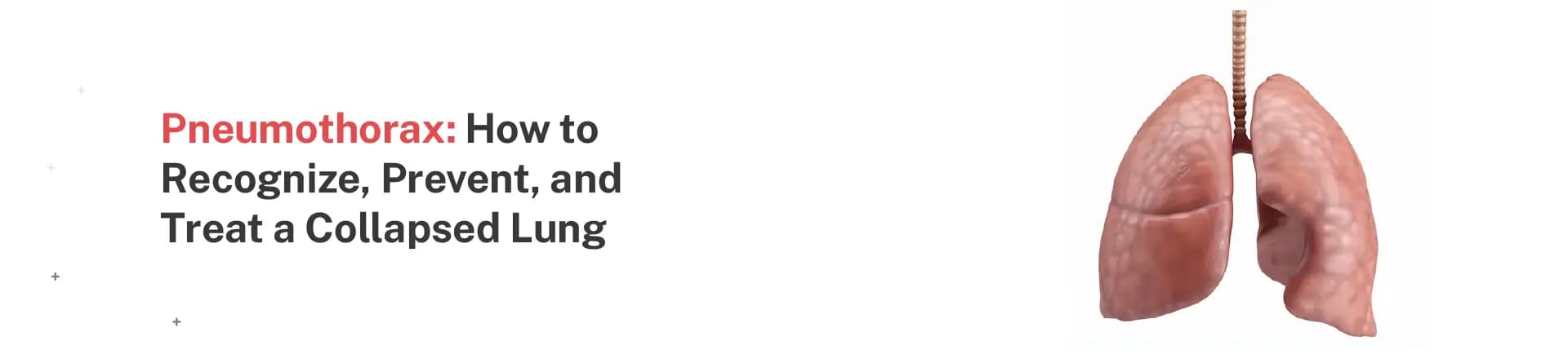
A collapsed lung (pneumothorax) happens when air enters the chest cavity and puts pressure on the lung, leading to sharp pain and breathlessness. Knowing the warning signs and seeking urgent treatment can be lifesaving.
A pneumothorax occurs when air leaks into the space around your lungs, creating pressure that causes the lung to collapse either partially or completely. It can happen due to chest injuries, certain lung diseases, or even during some medical procedures. If you experience warning signs such as sudden chest pain, trouble breathing, or a bluish tint on your lips, nails, or skin, seek emergency medical care immediately.
These numbers may sound technical, but they highlight a simple truth — pneumothorax is not rare, and awareness can save lives.
A pneumothorax, also known as a collapsed lung, occurs when air enters the space between the lung and the chest wall (the pleural space). This trapped air creates pressure on the lung, causing it to shrink or collapse partially or completely. Some people also refer to it as a punctured lung.
A pneumothorax can be serious and may require urgent medical attention. If you suspect a collapsed lung, visit the nearest emergency department without delay.
India’s environmental and lifestyle factors make its population more vulnerable to lung problems — and pneumothorax is no exception. Leading causes and risk factors include:
TB is one of the top causes of secondary pneumothorax in India. The infection damages lung tissue, creating weak areas that may rupture.
Cigarette and bidi smoking weaken the lung structure. According to NFHS-5, nearly 28% of Indian men smoke — contributing to a higher rate of spontaneous pneumothorax in men.
Asthma, COPD, bronchitis, and lung infections make the lungs fragile and prone to air leaks.
Road accidents, sports injuries, or strong blows to the chest can cause traumatic pneumothorax.
Tall, thin young men are statistically more likely to develop spontaneous pneumothorax, even without underlying lung disease.
Some procedures involving the chest, ventilators, or lung surgery may unintentionally cause pneumothorax.
Common signs and symptoms of pneumothorax include:
If you notice these symptoms or suspect a collapsed lung, seek emergency medical help immediately.
If someone around you shows signs of a collapsed lung:
Every minute matters. The sooner the patient reaches the hospital, the better the chances of recovery.
Doctors confirm the diagnosis using a chest X-ray or CT scan. Treatment depends on the extent of lung collapse.
Most patients recover fully within a few weeks when treated promptly.
While not every case can be prevented, these habits can lower your risk:
Pneumothorax may sound like a complicated medical term, but it relates to something basic and essential — your ability to breathe. With rising pollution, smoking habits, and lung infections in India, understanding this condition is more important than ever.
Knowing the early signs, seeking timely treatment, and taking care of your lungs can make a lifesaving difference.
Remember — your breath is your life. If you ever experience sudden chest pain or shortness of breath, get checked immediately.
Yes. Severe or tension pneumothorax can put pressure on the heart and lungs and is a medical emergency.
Small collapses may heal naturally with rest and oxygen therapy, but larger ones need treatment.
Usually 2 to 6 weeks, depending on the cause and severity.
Yes — tall, thin young men and people with lung diseases like COPD or TB are at higher risk.
Absolutely. Smoking weakens lung tissue and greatly increases pneumothorax risk.
In some cases, yes. Certain inherited conditions or a family history may raise the risk.
Written and Verified by:
.webp&w=256&q=75)
Dr. Rakesh Godara is Additional Director of Pulmonology Dept. at CK Birla Hospital, Jaipur with over 18 years of experience. He specializes in ARDS, bronchoscopic management of hemoptysis, central airway obstruction, endobronchial ultrasound, and medical thoracoscopy/pleuroscopy.
Similar Pulmonology Blogs
Book Your Appointment TODAY
© 2024 RBH Jaipur. All Rights Reserved.


