A pancreatitis diet focuses on low-fat, nutrient-rich foods that are easy to digest, while limiting fried, fatty and processed foods, added sugars and alcohol. Eating small, balanced meals, staying hydrated and choosing lean proteins, whole grains, fruits and vegetables can support recovery and help manage symptoms. People with acute or chronic pancreatitis should follow personalised dietary advice from their doctor or dietitian.
Did you know?
India reports more new cases of acute pancreatitis than any other country in the world, including China and the United States, according to a Global Burden of Disease study published in the National Library of Medicine. Source
What's even more concerning is that the number of new pancreatitis cases in India has more than doubled over the past three decades—from around 2.3 lakh cases in 1990 to more than 5.2 lakh cases in 2021. Source
So, what do these numbers tell us?
Simply put, pancreatitis is becoming more common. Experts believe that changing lifestyles, unhealthy eating habits, obesity, alcohol use and smoking may be contributing to this rise.
Pancreatitis is inflammation of the pancreas, a gland located behind the stomach. The pancreas produces digestive enzymes that help break down food, as well as hormones such as insulin that help regulate blood sugar levels.
There are two main types of pancreatitis:
During pancreatitis, digestive enzymes become active inside the pancreas instead of the small intestine. This can irritate and inflame the pancreatic tissue. Eating heavy or high-fat meals can make digestion more demanding and may worsen symptoms such as abdominal pain, nausea and vomiting.
A carefully planned diet can help people with pancreatitis by:
A pancreatitis recovery diet should include foods that are easy to digest, nutrient-rich and naturally low in fat.
Protein supports tissue repair and recovery without placing excessive strain on the pancreas. Good choices include:
Try grilling, steaming or boiling foods instead of frying them.
Whole grains provide energy and fibre, which can support healthy digestion. Choose:
Limit refined carbohydrates, such as white bread and sugary cereals, whenever possible.
Most fruits are naturally low in fat and provide vitamins, minerals and other nutrients that support overall health. Good options include:
Choose whole, fresh fruit instead of packaged fruit juices, which may contain added sugar.
Vegetables provide fibre, vitamins, minerals and other nutrients that support overall health. Include vegetables such as:
Steamed or lightly cooked vegetables may be easier to digest than fried preparations.
If you tolerate dairy products, choose low-fat options such as:
These provide calcium and protein without adding excessive fat to the diet.
Staying well hydrated is important, especially during recovery from acute pancreatitis. Choose fluids such as:
Adequate hydration supports overall health and recovery.
Certain foods may worsen digestive symptoms and can be difficult to tolerate during pancreatitis. Following a low-fat, balanced eating plan is often recommended, particularly during recovery. Your doctor or dietitian may recommend specific dietary changes based on the type and severity of pancreatitis.
High-fat foods can be difficult to tolerate during pancreatitis and may worsen digestive symptoms. A low-fat diet is commonly recommended as part of pancreatitis management.
Avoid or limit:
Fatty and processed meats are high in saturated fat and may be difficult to tolerate during recovery.
Limit or avoid:
Choose lean protein sources instead.
Many packaged and processed foods can be high in saturated fat, salt and added sugars. Limit foods such as:
Whenever possible, choose fresh, minimally processed foods.
People with chronic pancreatitis may develop problems with blood sugar regulation because damage to the pancreas can affect insulin production. Choosing foods and drinks with less added sugar can help support a balanced diet.
Limit:
Avoid alcohol completely if you have pancreatitis. Alcohol can contribute to pancreatitis and may increase the risk of further pancreatic damage or recurrent episodes. Healthcare professionals strongly advise people with pancreatitis not to drink alcohol, even after symptoms improve.
Although smoking is not a food, it is important to avoid it if you have pancreatitis. Smoking is a recognised risk factor for pancreatitis and can contribute to disease progression and pancreatic damage. Stopping smoking is an important part of managing pancreatitis and protecting pancreatic health.
A pancreatitis diet chart should include small, balanced meals throughout the day rather than two or three heavy meals.
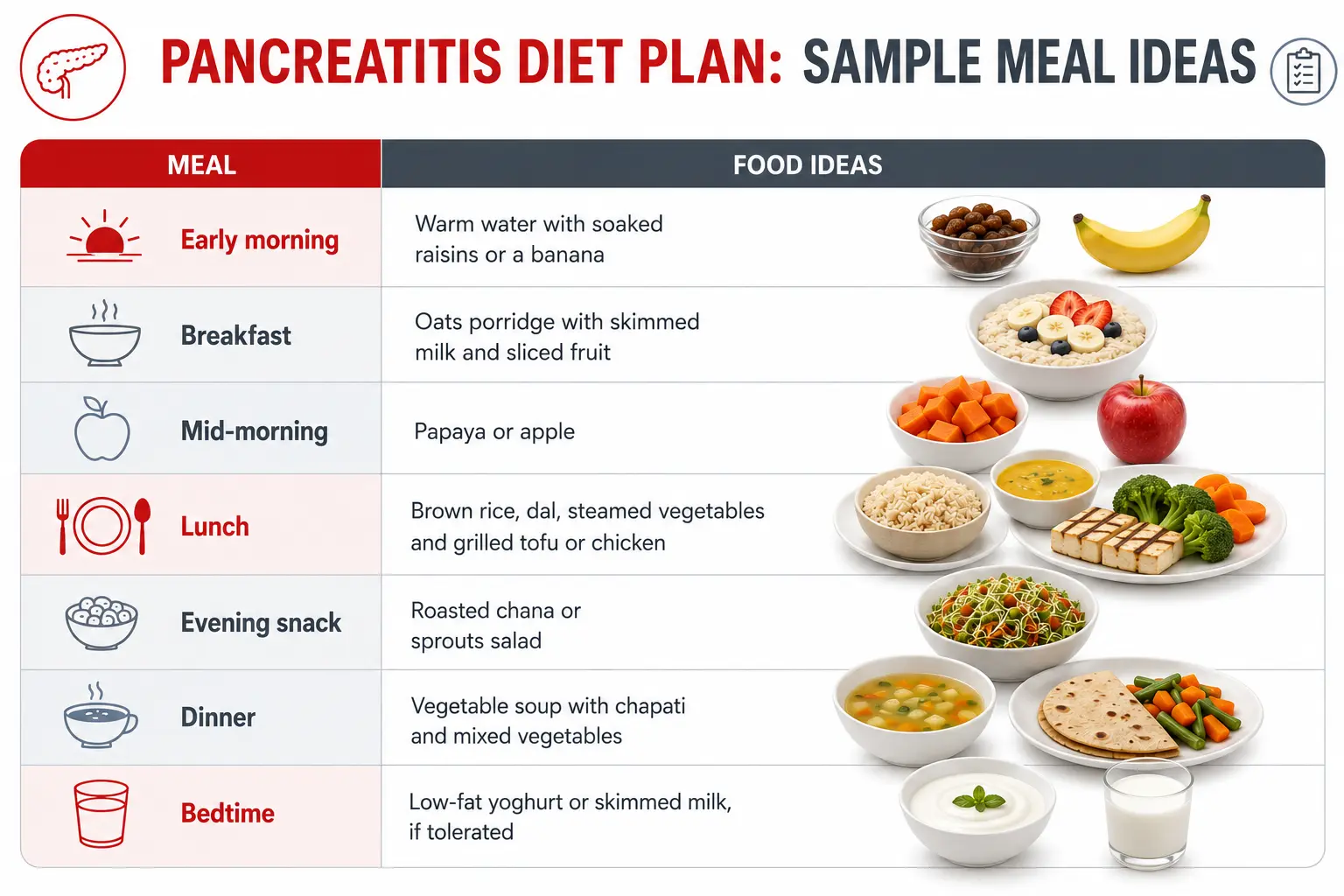
|
Meal |
Food Ideas |
|
Early morning |
Warm water with soaked raisins or a banana |
|
Breakfast |
Oats porridge with skimmed milk and sliced fruit |
|
Mid-morning |
Papaya or apple |
|
Lunch |
Brown rice, dal, steamed vegetables and grilled tofu or chicken |
|
Evening snack |
Roasted chana or sprouts salad |
|
Dinner |
Vegetable soup with chapati and mixed vegetables |
|
Bedtime |
Low-fat yoghurt or skimmed milk, if tolerated |
This diet chart for pancreatitis patients is only an example. Individual nutritional needs vary depending on age, symptoms and overall health.
Following healthy eating habits is an important part of managing pancreatitis and supporting recovery. Your dietary needs may vary depending on whether you have acute or chronic pancreatitis and whether you have complications such as pancreatic insufficiency.
Pancreatic enzyme replacement therapy may be needed when chronic pancreatitis causes exocrine pancreatic insufficiency. If you have chronic pancreatitis or pancreatic insufficiency, your doctor or dietitian may recommend vitamin or other nutritional supplements to prevent or treat deficiencies.
People with chronic pancreatitis may develop problems with blood sugar regulation over time. Regular monitoring and follow-up with your healthcare provider may therefore be recommended.
Seek medical advice if you experience:
These symptoms may indicate worsening pancreatitis, pancreatic insufficiency or another complication that requires medical evaluation.
A healthy pancreatitis diet can support recovery, help meet your nutritional needs and improve digestive health. Choosing nutrient-rich foods, following an appropriate fat intake, staying hydrated and avoiding alcohol can form an important part of overall management. However, dietary needs vary from person to person, particularly in chronic pancreatitis or when pancreatic insufficiency is present.
If you have acute or chronic pancreatitis, consult your doctor or a registered dietitian before making major dietary changes. A personalised pancreatitis diet plan based on your nutritional needs, symptoms and medical condition can help ensure that you receive adequate nutrition while managing the condition.
Yes, egg whites are an excellent source of lean protein and are generally recommended. Whole eggs should be eaten in moderation, depending on your doctor's advice and fat tolerance.
Fasting may be advised for a short period during severe acute pancreatitis in the hospital. Once symptoms improve, a low-fat diet is gradually introduced under medical supervision.
Low-fat, nutrient-rich fruits such as bananas, apples, papaya, berries and melons are generally safe and easy to digest.
Yes, staying well hydrated supports digestion, prevents dehydration and aids the body's healing process during recovery.
Some protein supplements may be suitable, but they should only be taken after consulting a doctor or dietitian to ensure they meet your nutritional needs.
The recommended fat intake varies depending on the severity of pancreatitis and individual health needs. Your doctor or dietitian can suggest the appropriate amount for your condition.
Written and Verified by:

Consultant - GI & Hepato-Biliary Surgeon Exp: 27 Yr
Gastro Sciences
Dr. Ajay Mandal is a Consultant GI & Hepato-Biliary Surgeon at CMRI Hopsital, Kolkata, with over 20 years of experience. He specializes in liver, pancreatic, and colorectal cancers, performing complex surgeries including laparoscopic and robotic procedures.
Similar Gastro Sciences Blogs
Book Your Appointment TODAY
© 2024 CMRI Kolkata. All Rights Reserved.