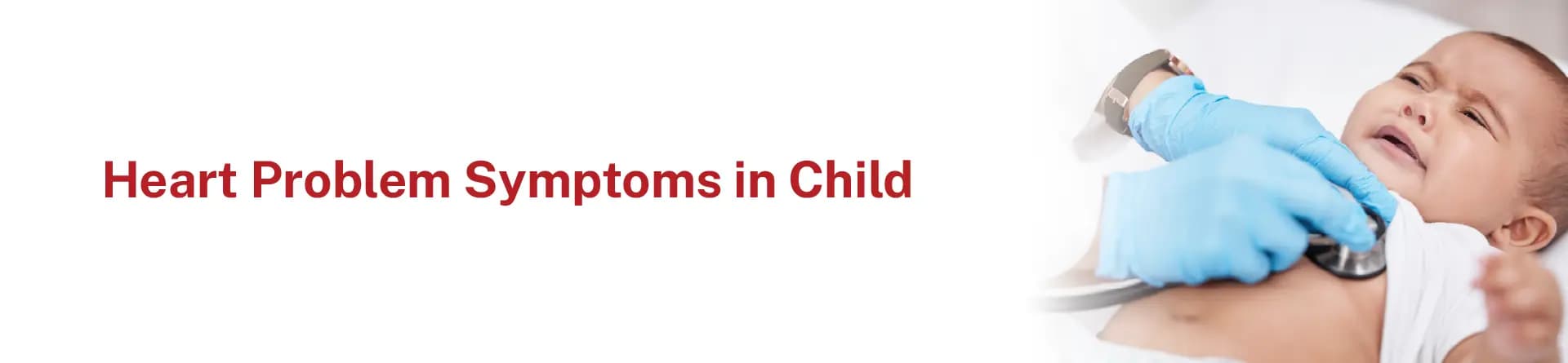
Heart problems in children often show subtle signs like easy fatigue, breathlessness, poor growth, or bluish lips that parents may mistake for normal childhood issues. Recognizing these early symptoms and seeking timely medical care can be life-saving and helps children with heart conditions lead healthy, active lives.
As parents, we worry about every small change in our child’s health. A cough, fever, or poor appetite usually gets attention quickly. But heart problems in children are often harder to notice because the symptoms may look like common childhood issues.
Many parents believe heart disease happens only to adults. In reality, heart disease in kids is more common than we think. Some children are born with heart defects, while others develop heart problems later due to infections or other conditions.
Knowing the heart problems in child symptoms can help parents act early and protect their child’s health.
Heart problems in children are also called pediatric heart disease. The most common type is pediatric congenital heart disease, which means the child is born with a heart defect.
These defects happen when the heart does not form properly during pregnancy. Some defects are mild and may not need treatment. Others can be serious and require medicines, procedures, or surgery.
The good news is that early detection saves lives and allows most children to live healthy, active lives.
Some heart-related symptoms are subtle and easy to miss. Parents should be alert if they notice:
These may be early heart problems in child symptoms, especially if they happen repeatedly.
Newborn babies cannot tell us how they feel, so parents must watch closely.
Many parents think the baby is “weak” or “colicky,” but these signs may indicate pediatric congenital heart disease.
If symptoms appear within the first few weeks of life, medical attention is urgent.
As children grow, symptoms become slightly easier to spot.
Toddlers may not complain, but their activity level gives clues. If your child avoids physical play or tires quickly, it could be one of the heart problems in children.
Older children and teenagers may be able to explain what they feel.
Fainting during physical activity is a serious red flag and should never be ignored.
In teenagers, symptoms are sometimes mistaken for stress, anxiety, or laziness. But they may actually indicate pediatric heart disease.
There are several reasons why heart disease in kids goes unnoticed:
Because children grow fast, early signs are often brushed aside until symptoms become severe.
You should consult a pediatric cardiologist if your child has:
Early evaluation may include tests like ECG, echocardiogram (Echo), or oxygen level checks.
Seeing a specialist early does not mean your child has a serious problem—it means you are being careful.
Early diagnosis makes a huge difference.
Many children with pediatric congenital heart disease go to school, play sports, and grow up healthy after proper treatment.
Delayed diagnosis, on the other hand, can lead to:
Yes. Treatment depends on the type and severity of the condition.
India has excellent pediatric heart care facilities, and outcomes have improved greatly in recent years.
Parents play a key role in early detection.
Your attention can save your child’s life.
Hearing the words “heart problem” about your child can be frightening. But remember, heart problems in children are treatable, especially when found early.
Understanding heart problems in child symptoms, recognizing warning signs at different ages, and consulting the right doctor can make all the difference.
With timely care, love, and support, most children with heart disease grow up to live happy, healthy lives.
Bluish lips or skin, difficulty feeding, fast breathing, excessive sweating, and poor weight gain are early warning signs.
Yes, some heart problems cause no symptoms initially and are found during routine check-ups or tests.
No, it can be normal during fever, crying, or activity, but a persistent or very fast heartbeat needs evaluation.
Some heart problems are genetic or inherited, while many occur without a clear family history.
Doctors use physical exams, ECGs, echocardiograms (Echo), and oxygen level tests to diagnose heart problems.
Most chest pain in children is harmless, but frequent pain during activity should be checked for heart causes.
Written and Verified by:

Dr. Satarupa Mukherjee is an Consultant in Pediatric Cardiology at BM Birla Heart Hospital, Kolkata with over 13 years of experience. She specializes in post-op care after neonatal & pediatric cardiac surgery, extracorporeal life support, and pediatric cardiac transplantation.
Similar Pediatric Cardiology Blogs
Book Your Appointment TODAY
© 2024 BMB Kolkata. All Rights Reserved.