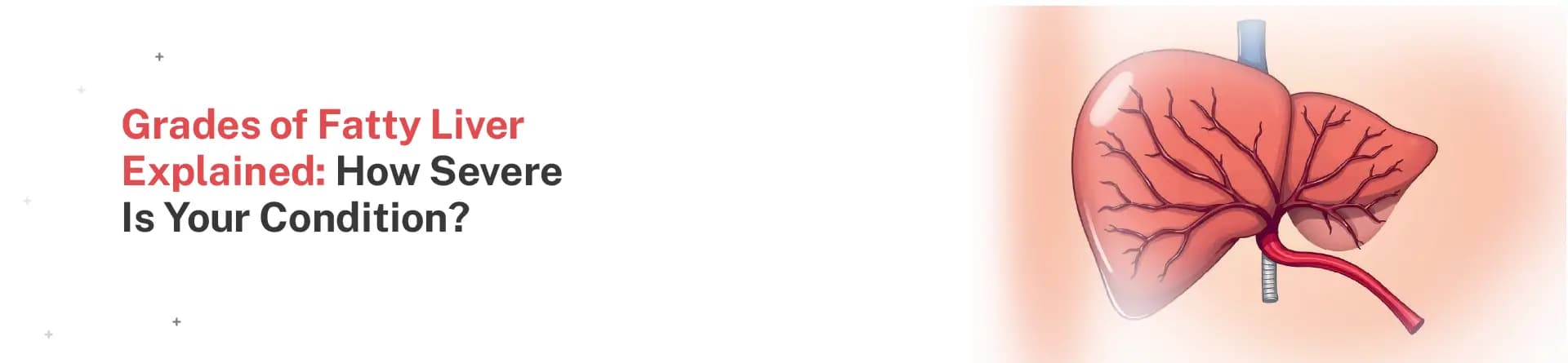
Fatty liver is increasingly common, affecting both adults and children, and can lead to serious health issues if ignored. Early detection and lifestyle changes can reverse mild to moderate stages and protect liver health.
Fatty liver is no longer just an adult problem — it is now being seen in children and teenagers too. Recent studies show that nearly 35–40% of Indian adults have fatty liver, and the numbers are rising fast.
Our modern lifestyle — too much junk food, no physical activity, late-night meals, and stress — is a big reason behind this silent health issue. Fatty liver is not just about the liver. It often comes with other serious conditions like obesity, diabetes, heart disease, high cholesterol, and kidney problems.
If ignored, it can lead to liver cirrhosis, liver cancer, and severe metabolic diseases. Understanding the fatty liver treatment and its grades can helps you know how serious it is and what steps you can take to protect your liver and overall health.
Your liver is one of the most important organs in your body. It helps digest food, stores energy, and removes toxins. But when too much fat builds up in the liver cells, it becomes a condition called fatty liver disease (also known as hepatic steatosis).
Normally, a healthy liver may have a small amount of fat. But when more than 5% of liver cells contain fat, it is considered a fatty liver.
There are two main types:
The good news is that fatty liver can often be reversed with proper lifestyle changes if it is detected early.
Doctors usually classify fatty liver into three grades based on how much fat is stored in the liver and how the liver looks on an ultrasound scan.
|
Grade |
Meaning |
Fat Percentage in Liver Cells (Approx.) |
|
Grade 1 |
Mild |
5–33% |
|
Grade 2 |
Moderate |
34–66% |
|
Grade 3 |
Severe |
More than 66% |
These grades help to understand how serious the condition is and what kind of care is needed.
This is the early stage of fatty liver. A small amount of fat is seen in the liver cells. Usually, there are no major symptoms at this point, and the liver still works normally.
Many people with Grade 1 fatty liver do not even realise they have it until an ultrasound shows it during a regular health check-up.
Common causes:
What to do:
This stage is completely reversible. You can bring your liver back to normal by:
This is when fat has spread to a larger part of the liver (around 34–66% of liver cells). The liver becomes slightly enlarged and its function may start to slow down.
Symptoms may include:
If not treated, fatty liver grade 2 can progress to inflammation (called NASH – Non-Alcoholic Steatohepatitis) and fibrosis (scarring of liver tissue).
What to do:
This stage still has a high chance of recovery, but you need to act fast:
With discipline and lifestyle changes, many people reverse Grade 2 fatty liver in 6–12 months.
This is the most serious stage. More than 66% of liver cells are filled with fat, and the liver’s structure and function start to get affected.
In this stage, the liver may become inflamed and scarred, a condition called fibrosis. If this continues for a long time, it can progress to cirrhosis, which is permanent and life-threatening damage to the liver.
Symptoms may include:
At this stage, regular monitoring and specialist care (hepatologist or gastroenterologist) are very important.
What to do:
The ultrasound scan is the most common test to find out the grade of fatty liver. It shows how bright the liver looks compared to the kidney — more brightness means more fat.
Sometimes, doctors may ask for:
Remember, the grade shows how much fat is in your liver, but the fibrosis stage shows how much damage or scarring has happened. Both are important for your long-term liver health.
|
Stage |
Common Symptoms |
|
Grade 1 |
Usually no symptoms, sometimes mild tiredness |
|
Grade 2 |
Fatigue, heaviness or dull pain on the right side of abdomen, bloating |
|
Grade 3 |
Weakness, pain,loss of appetite, yellow eyes or skin (if severe) |
Sometimes, fatty liver causes no symptoms at all, which is why routine health check-ups are so important.
Yes, if ignored, fatty liver can become worse over time.
Here is how it may progress:
However, the good news is that you can stop or reverse this process by taking the right steps early — especially in Grade 1 or Grade 2 stages.
You should visit a doctor if:
Even if you feel fine, don’t ignore a fatty liver report. Early action can save your liver from long-term damage.
Fatty liver is very common today, but it is not something to panic about. It’s a warning sign that your lifestyle needs attention. By eating healthy food, staying active, avoiding alcohol, and keeping weight under control, you can protect your liver and live a healthy life.
Remember — early stages (Grade 1 and Grade 2) are reversible. Your liver has a great power to heal, but only if you give it a chance.
Yes, if untreated, fatty liver can lead to inflammation, fibrosis, cirrhosis, and even liver cancer, but early detection makes it reversible.
Mild to moderate fatty liver should be monitored every 6–12 months with ultrasound and liver function tests, or as advised by a doctor.
Maintain a healthy weight, eat a balanced fatty liver diet, exercise regularly, avoid alcohol, and control diabetes and cholesterol.
Through lifestyle changes like weight loss, healthy diet, regular exercise, and managing underlying conditions; medications may be used in specific cases.
Diagnosis is made with ultrasound, liver function tests (LFTs), FibroScan, or MRI, sometimes supported by blood tests for related metabolic conditions.
Written and Verified by:
.webp&w=256&q=75)
Dr. Anil Kumar Jangid is a Senior Consultant in Gastroenterology Dept. at CK Birla Hospital, Jaipur with over 13 years of experience. He specializes in treating acidity, abdominal pain, jaundice, and ulcers.
Similar Gastro Science Blogs
Book Your Appointment TODAY
© 2024 RBH Jaipur. All Rights Reserved.


