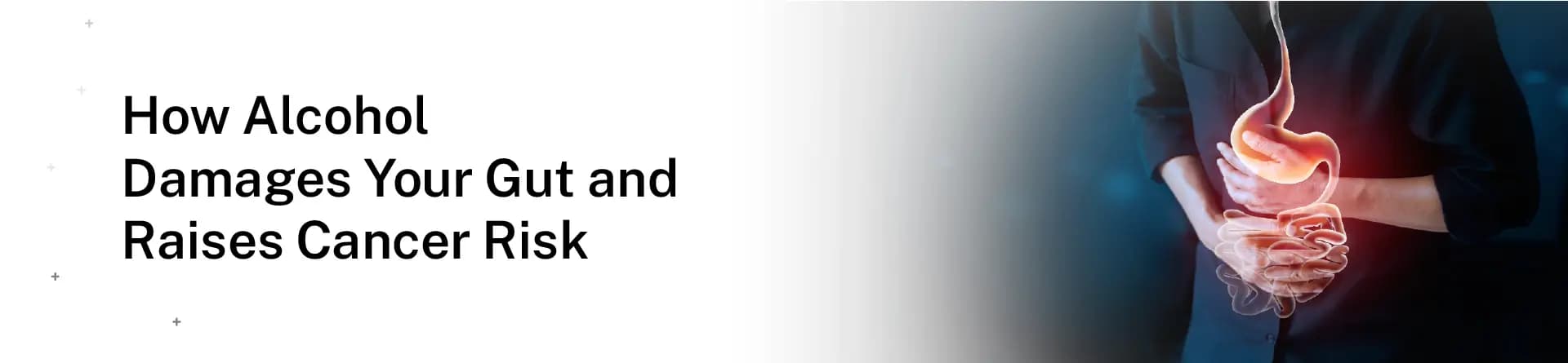
Regular alcohol intake doesn’t just cause a hangover- it slowly damages your gut lining and disrupts gut bacteria, leading to inflammation and poor digestion. Over time, this internal damage can increase the risk of cancers like liver, stomach, colon, and breast cancer.
A glass of wine with friends, a few beers over the weekend, or a cocktail at a party may feel harmless. But have you ever thought about how alcohol affects your body in the long run? It’s not just about a headache the next day; regular drinking can drastically harm your gut health and may increase the risk of cancer.
According to the 2024 Cancer Progress Report by the American Association for Cancer Research (AACR), alcohol is found in more than 5% of all cancer cases.
After obesity and smoking, alcohol is the third major risk factor. Drinking too much alcohol can increase the risk of several cancers, such as liver, stomach, colorectal, and breast cancer.
The role of your gut is much more than just digesting food. It influences immunity, mood, nutrient absorption, and even your energy levels.
Drinking alcohol regularly may irritate the lining of your stomach and intestines, leading to chronic inflammation. And this inflammation can damage your protective barrier of the gut.
As a result, toxins and harmful bacteria pass into the bloodstream, which affects your digestion and gut health.
Yes. Your gut is home to trillions of bacteria that play a vital role in digestion and immunity. A healthy balance of good and bad bacteria is essential for proper gut function. Alcohol disturbs this balance. It may also kill beneficial bacteria and allow harmful bacteria to grow.
This imbalance often referred to as damage to the gut microbiome—can cause bloating, diarrhoea, constipation, and poor nutrient absorption. It also weakens your immunity, making infections more likely and inflammation more persistent.
For women, the side effects of alcohol in women may include hormonal disruptions that further affect gut health, making them more susceptible to digestive issues and inflammation. Over time, persistent changes in gut bacteria can make it harder for your digestive system to function properly, creating a vicious cycle of gut discomfort.
Understanding the link between alcohol and gut bacteria is crucial. By recognising the signs early, you can take steps to restore balance and protect your digestive health.
Alcohol is a major risk factor for several types of cancer. When your body processes alcohol, it produces acetaldehyde, a toxic chemical that damages DNA and affects how cells repair themselves. Chronic inflammation caused by alcohol use makes matters worse, creating an environment where abnormal cells can grow unchecked.
This combination increases the risk of cancers of the stomach, liver, and colon. Even moderate alcohol intake has been linked to a higher risk of cancer, making it one of the most serious adverse effects of alcohol on health.
Research also shows that alcohol interacts with other risk factors. For example, combining alcohol with smoking or a poor diet amplifies the risk of cancer significantly. Women are particularly at risk for certain cancers, such as breast cancer, because alcohol can influence oestrogen levels.
Limiting or avoiding alcohol reduces these risks. According to experts, cutting back on drinking can lower the chance of alcohol-related cancers by as much as 8% and even reduce the overall risk of all cancers by 4%.
Damage to the gut doesn’t happen overnight. Often, the first signs are subtle. Some early warning symptoms include:
If you notice one or more of these symptoms regularly, it may be time to evaluate your drinking habits. Ignoring these signs can worsen long-term damage, making it harder for your gut to heal later.
Other common side effects of drinking alcohol include nausea, reduced appetite, and irregular bowel movements. These issues may seem minor at first but can indicate that your gut barrier and microbiome are under stress.
The gut has an amazing ability to repair itself—but it needs support. Here’s how you can help your digestive system recover:
This is the most important step. Even small reductions in alcohol intake can lower inflammation and allow the gut lining to start repairing.
Include vegetables, fruits, whole grains, yoghurt, and fermented foods in your diet. These foods help restore healthy bacteria and improve digestion.
Drinking enough water helps flush toxins from your system and supports nutrient absorption.
Stress worsens gut inflammation. Practices like meditation, yoga, or deep breathing can calm your nervous system and promote gut healing.
Gastroenterologists and dietitians in areas like Wakad can guide you with personalised plans. They can recommend tests, diet adjustments, and treatments tailored to your gut health needs.
With consistent care, your gut lining can repair itself, and beneficial bacteria can return. Over time, this reduces long-term health risks and improves digestion, energy, and overall well-being.
Alcohol may feel harmless in social situations, but its long-term effects on your gut and cancer risk are serious. Regular drinking can quietly disrupt digestion, weaken your gut microbiome, and increase the risk of cancers like liver cancer, stomach cancer, and colon cancer.
The good news is that your gut can heal. By reducing alcohol, eating gut-friendly foods, staying hydrated, and seeking medical guidance, you can restore gut health and lower your cancer risk.
Your gut works hard for you every day. Paying attention to it, especially in relation to alcohol and gut health, is one of the best ways to protect your long-term health. Small lifestyle changes today can make a big difference tomorrow.
Occasional drinking may cause mild gut irritation, but serious damage usually occurs with regular or heavy alcohol consumption.
Spirits like whisky, rum, and locally brewed hard liquor tend to be harsher on the gut than moderate consumption of wine or beer.
Yes, with sustained abstinence, a healthy diet, and lifestyle changes, the gut can often heal, though severe cases may take longer.
Blood tests, liver function tests, endoscopy, colonoscopy, and gut microbiome analysis can help assess alcohol-related damage.
Gut recovery can begin within a few weeks, but full healing may take several months depending on the extent of damage.
Yes, genetic factors, alcohol type, diet, and combined habits like smoking can make alcohol-linked cancer risk relatively higher in India.
Curd, buttermilk, kefir, homemade pickles, and fermented foods like idli/dosa batter are excellent for restoring gut bacteria.
Written and Verified by:
.webp&w=256&q=75)
Dr. Anil Kumar Jangid is a Senior Consultant in Gastroenterology Dept. at CK Birla Hospital, Jaipur with over 13 years of experience. He specializes in treating acidity, abdominal pain, jaundice, and ulcers.
Similar Gastro Science Blogs
Book Your Appointment TODAY
© 2024 RBH Jaipur. All Rights Reserved.


