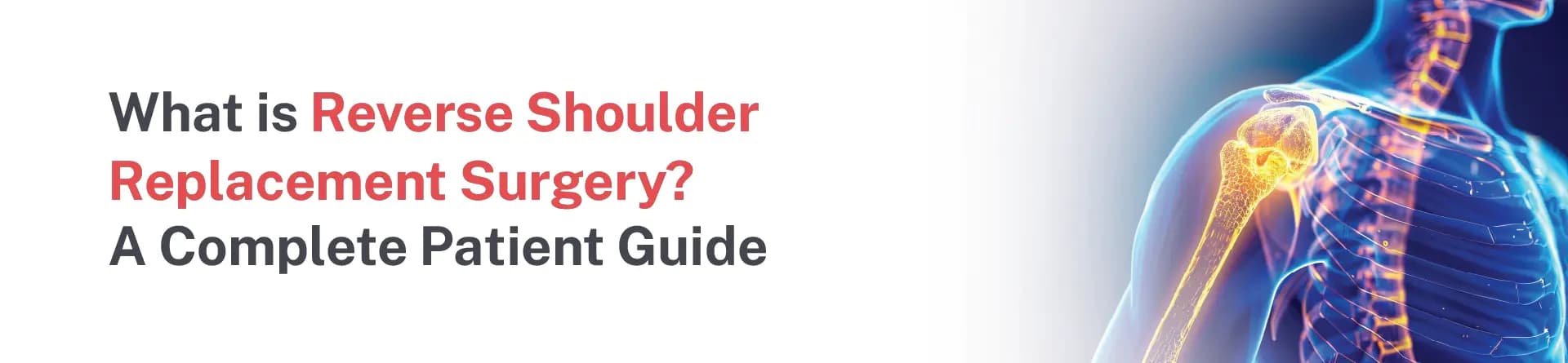
Reverse shoulder replacement surgery is an advanced procedure designed for patients with severe shoulder damage and rotator cuff tears, helping restore arm movement and reduce chronic pain. By reversing the shoulder joint structure, it improves stability, function, and quality of life with long-term relief.
Shoulder pain can make even simple daily tasks - like lifting your arm, combing your hair, or reaching for something - very difficult. For some people, especially those with severe joint damage, medicines and therapy may no longer help. That’s where reverse shoulder replacement surgery comes in.
Reverse shoulder replacement surgery is a type of arthroplasty, which means replacing a damaged joint with an artificial one.
In a normal shoulder:
But in reverse total shoulder replacement surgery, this structure is switched:
This “reverse” design helps people who have severe shoulder damage, especially when the rotator cuff muscles are not working properly.
Not everyone with shoulder pain needs surgery. Doctors usually recommend reverse shoulder replacement surgery only when other treatments don’t work. You may need this surgery if you have:
👉 Doctors usually recommend this surgery when:
To understand reverse shoulder arthroplasty, let’s look at how your shoulder normally works.
Understanding the procedure can help reduce fear and anxiety.
The procedure usually takes about 1 to 2 hours
Recovery is a very important part of reverse shoulder replacement surgery recovery time. Proper care and exercises help you get the best results.
Immediately After Surgery:
First Few Weeks:
Shoulder Surgery Rehabilitation: Physiotherapy starts slowly and increases over time. Exercises After Reverse Shoulder Replacement Surgery:
Always follow your physiotherapist’s guidance. Do not rush.
Recovery Timeline:
Many patients experience life-changing improvements.
Key Benefits:
Most patients can:
Like any surgery, there are some risks involved. Common Risks:
These complications are rare, especially when surgery is done by an experienced surgeon and followed by proper rehabilitation.
After recovery, most people return to a more active and comfortable life. What You Can Expect:
Some Limitations:
Reverse shoulder replacement surgery is a highly effective solution for people with severe shoulder damage, especially when the rotator cuff is no longer working.
By changing the mechanics of the shoulder, this procedure allows other muscles to take over, helping you regain movement and reduce pain.
If you are struggling with long-term shoulder pain and limited movement, talk to your doctor about whether reverse shoulder arthroplasty is right for you.
Reverse shoulder replacement switches the ball and socket positions, allowing the deltoid muscle to move the arm instead of the damaged rotator cuff.
People with severe rotator cuff tears, shoulder arthritis, failed previous surgeries, or complex fractures are ideal candidates.
You won’t feel pain during surgery due to anaesthesia, and post-surgery pain is manageable with medications and improves over time.
Most implants last around 15–20 years, and often longer in older patients with lower activity levels.
Light activities can begin in a few weeks, but full recovery and return to normal routine usually take about 3–6 months.
Yes, physiotherapy is essential for regaining strength, improving movement, and ensuring a successful recovery.
Written and Verified by:
Dr. Lalit Modi is Director of Orthopaedics & Joint Replacement Dept. at CK Birla Hospital, Jaipur with over 11 years of experience. He specializes in joint replacement, arthroscopy and sports-medicine-related shoulder, hip, and advanced reconstructive procedures.
Similar Orthopaedics & Joint Replacement Blogs
Book Your Appointment TODAY
© 2024 RBH Jaipur. All Rights Reserved.