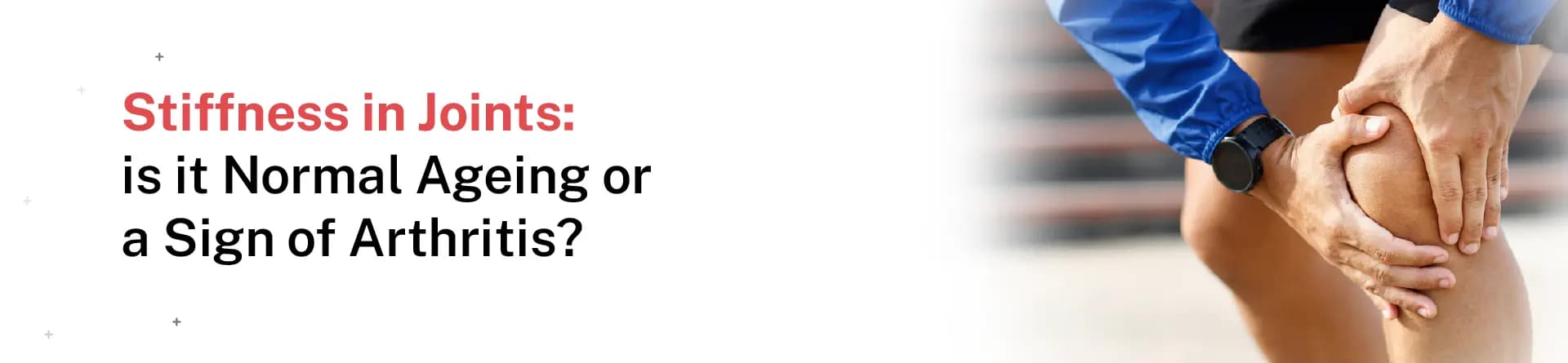
Joint stiffness is common with ageing, especially in the morning or after rest, and often improves with movement. However, stiffness lasting more than 30-60 minutes, with swelling or persistent pain, may signal arthritis and needs medical evaluation.
Many people complain that their joints feel stiff, especially as they grow older. This usually happens when you wake up in the morning, during winter, or after sitting for a long time.
Some people say their knees feel tight, others feel stiffness in their fingers, while some experience joint pain and stiffness throughout the body. This raises the question: Is joint stiffness a common sign of ageing, or does it point towards arthritis?
This blog will help you understand the causes of joint stiffness, how ageing affects the joints, and when you need to see your doctor.
As we grow older, our bodies slowly change. This includes our bones, joints, and muscles.
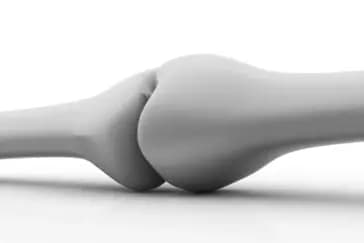
Inside each joint, there is a smooth layer that helps bones move easily. There is also fluid inside the joint that works like oil in a machine.
With age:
Because of this, joints do not move as freely as before, and it causes joint pain and stiffness. Most elderly people feel:
This kind of stiffness usually improves once you start moving.
Feeling joint stiffness in the morning is very common, especially in people over the age of 50.
Normal Morning Stiffness
Concerning Morning Stiffness
It is essential for you to understand the difference between normal ageing and arthritis.
These signs are often manageable with exercise and lifestyle changes.
If you experience the above signs often, it may point towards arthritis.
Arthritis is a condition that affects your joints, which are the areas where two bones connect. It can cause damage, pain, and stiffness in these joints.
As you get older, some joints naturally wear down over time. Many people develop arthritis because of this normal, long-term use of their joints. Other types of arthritis can develop after an injury that harms a joint. However, there are various different types of arthritis.
Let’s discuss them in detail.
This is the most common type of arthritis that is often found in elderly people. It happens due to wear and tear of joints over time. Common signs:
It usually affects knees, hips, fingers, and the back.
This is an immune-related condition where your body attacks its own joints. Its common signs include:
This type needs early treatment to prevent joint damage.
Gout happens due to high uric acid levels. Its common signs are:
Apart from ageing and arthritis, joint stiffness can also be caused by:
Sometimes, even stress and lack of sleep can increase body stiffness.
You should consult a doctor if:
Early treatment can slow down joint damage and improve quality of life.
Joint stiffness is common, especially as we age. In many cases, it is a normal part of ageing and improves with movement. But when stiffness is long-lasting, painful, or affects many joints, it may be a sign of arthritis.
Do not ignore what your body is telling you. If you or someone experiencing joint pain and stiffness feels that something is not right, it is better to get it checked early.
With the right care, exercise, and medical support, most people can manage joint stiffness and continue to live an active, comfortable life.
If morning joint stiffness lasts more than 30–60 minutes every day, it should be checked by a doctor.
Yes. Joints can feel stiff or tight without pain, especially after rest or in early joint problems.
Not always. Mild stiffness can be due to ageing or inactivity, but long-term stiffness may point to cartilage wear or arthritis.
Common tests include ESR, CRP, Rheumatoid Factor (RF), and Anti-CCP, which help detect inflammation and certain types of arthritis.
Low Vitamin D is a common cause and can lead to joint stiffness, bone pain, and muscle weakness.
Yes. Cold weather can reduce blood flow and make joints feel stiffer, especially in people with arthritis.
Mild stiffness can often improve with regular movement, stretching, warmth, weight control, and a healthy lifestyle.
Written and Verified by:

Dr. Ekshit Agarwal is a Consultant in Orthopaedics & Joint Replacement Dept. at CK Birla Hospital, Jaipur, with over 5 years of experience. He specializes in hip, knee & shoulder joint replacement, complex trauma of upper & lower limbs, and managing sports injuries.
Similar Orthopaedics & Joint Replacement Blogs
Book Your Appointment TODAY
© 2024 RBH Jaipur. All Rights Reserved.