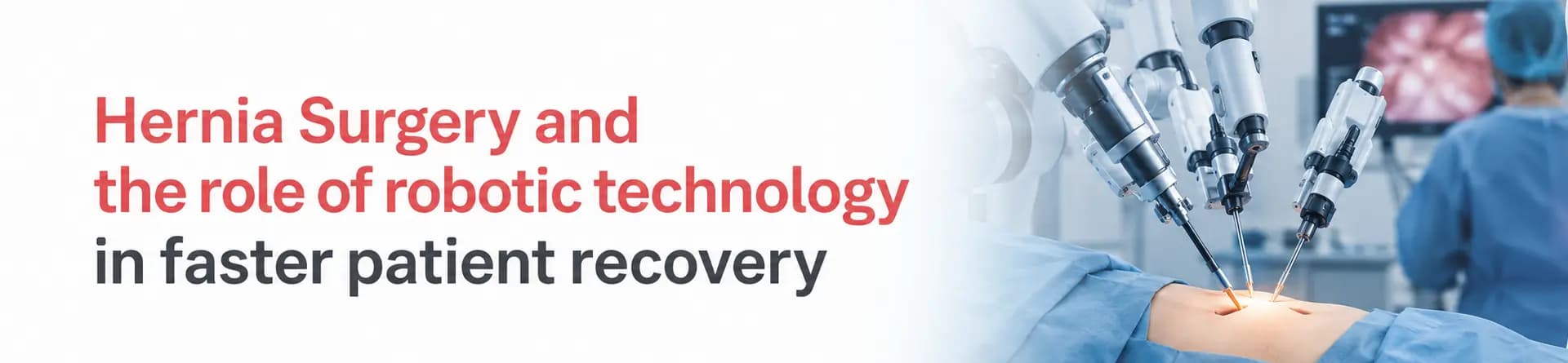
A hernia happens when an organ or tissue pushes through a weak area in the muscle or tissue around it. Hernias are most common in the abdomen or groin. You may notice a bulge or swelling, along with pain, discomfort or a feeling of heaviness. Surgery is the most common treatment for a hernia that causes symptoms.
Today, hernia surgery can be done using minimally invasive techniques, including robotic surgery. Robotic-assisted hernia surgery uses the da Vinci Surgical System to help the surgeon repair the hernia through small cuts in the skin.
During robotic hernia surgery, your surgeon sits at a console and controls the surgical instruments. The system gives the surgeon a clear, high-definition, 3D view of the area being treated.
The surgeon controls small instruments placed through tiny cuts in your abdomen. These instruments can move in different directions and help the surgeon make precise movements. The system also reduces natural hand tremors.
These features can be helpful during hernia repair. They allow the surgeon to carefully close the opening and place the surgical mesh in the right position. Mesh helps strengthen the area and reduces the chance of the hernia coming back.
Robotic hernia surgery is a minimally invasive procedure. It may offer several benefits, including:
Because the cuts are smaller than those used in open surgery, many patients may be able to move around sooner after the procedure. Recovery may also be quicker.
However, robotic surgery is not needed for every hernia. Your surgeon will decide if it is suitable for you based on the type, size and location of your hernia and your overall health.
Robotic surgery can be useful for some complex hernias. It may be considered for large ventral hernias, recurrent hernias or hernias that need a more complex repair.
The robotic system gives the surgeon a clear view of the area and allows precise movement of the surgical instruments. This can help when the surgeon needs to repair the abdominal wall or place the mesh carefully. Your surgeon will discuss the most suitable type of hernia repair based on your condition.
Robotic technology is becoming an important part of minimally invasive surgery. Systems such as the da Vinci Surgical System give surgeons a clear view of the treatment area and precise control of the surgical instruments.
Robotic surgery allows surgeons to repair some hernias through smaller cuts. This may help patients recover and return to their usual activities sooner. However, recovery and the results of surgery depend on several factors, including the type of hernia, the repair technique and your overall health.
Written and Verified by:

Director Exp: 26 Yr
General Surgery, Minimal Access & Bariatric Surgery
Dr. Rajesh Sharma is a highly acclaimed robotic and minimally invasive surgeon in Jaipur with over 20 years of experience and 15,000+ advanced surgical procedures to his credit. A pioneer in Rajasthan, he was the first surgeon in the state to be appointed as a Robotic Surgery Proctor for the da Vinci Surgical System and has performed the highest number of robotic general surgeries in Rajasthan.
Similar General Surgery Blogs
Book Your Appointment TODAY
© 2024 RBH Jaipur. All Rights Reserved.


.jpg&w=750&q=75)
.jpg&w=750&q=75)

