Monsoon increases the risk of foodborne and waterborne diseases due to contaminated food, unsafe drinking water, and rapid growth of bacteria and viruses in warm, humid conditions. The common stomach infections seen during the rainy season, their symptoms, warning signs, foods to avoid, and practical hygiene and food safety measures to help prevent illness and protect your family.
Did you know?
Around 600 million people—nearly 1 in 10 people worldwide—fall ill every year after eating contaminated food.
According to the World Health Organization (WHO), unsafe food causes an estimated 600 million illnesses and 420,000 deaths each year. During the monsoon, the risk becomes even higher.
Heavy rainfall can contaminate food and drinking water, while warm, humid conditions help harmful bacteria, viruses, and parasites grow more quickly.
As a result, stomach infections such as food poisoning, diarrhoea, typhoid, cholera, and viral gastroenteritis become more common during the rainy season. The good news is that many of these illnesses are preventable.
Internal medicine experts at Rukmani Birla Hospital, Jaipur, said, "During the monsoon, germs grow faster because of the warm and humid conditions. Heavy rains can also contaminate food and drinking water, increasing the risk of stomach infections. As a result, stomach infections become more common during the rainy season."
Let's take a closer look at why this happens:
The monsoon creates the perfect environment for disease-causing germs to grow, spread, and multiply. Common germs include:
Warm temperatures, high humidity, and excess moisture help these microorganisms multiply more quickly. Food also spoils faster during this season, especially if it is not stored or refrigerated properly. This increases the risk of food contamination, food poisoning, and gastroenteritis.
Heavy rainfall can contaminate drinking water. Sewage and wastewater may mix with water supplies through damaged pipelines, overflowing drains, or flooding.
Even water that looks clean may contain harmful microorganisms if it has not been boiled, filtered, or purified properly. Drinking contaminated water can lead to infections such as:
Foodborne and waterborne illnesses become more common during the monsoon.
A recent study found that nearly half of all disease outbreaks reported in India were linked to foodborne and waterborne infections. High humidity causes food to spoil faster, especially:
If these foods are not stored or refrigerated properly, bacteria can multiply rapidly, increasing the risk of food poisoning.
Street food is more likely to become contaminated during the rainy season. Vendors may use untreated water, and exposed food can come into contact with flies, dust, and rainwater.
Foods such as:
are especially vulnerable if they are not handled or stored properly. Eating contaminated food can increase the risk of food poisoning and other stomach infections.
Some people are more likely to develop stomach infections during the monsoon. These include:
Their immune systems may find it harder to fight off infections, making them more vulnerable to severe illness. They should be extra careful about food hygiene, drinking safe water, and washing their hands regularly.
Many stomach infections spread through unwashed hands. Germs can easily spread after using the toilet, handling raw food, or touching contaminated surfaces.
Practising good hand hygiene is one of the simplest ways to prevent these infections. Always wash your hands with soap and water before eating, before preparing food, and after using the toilet.
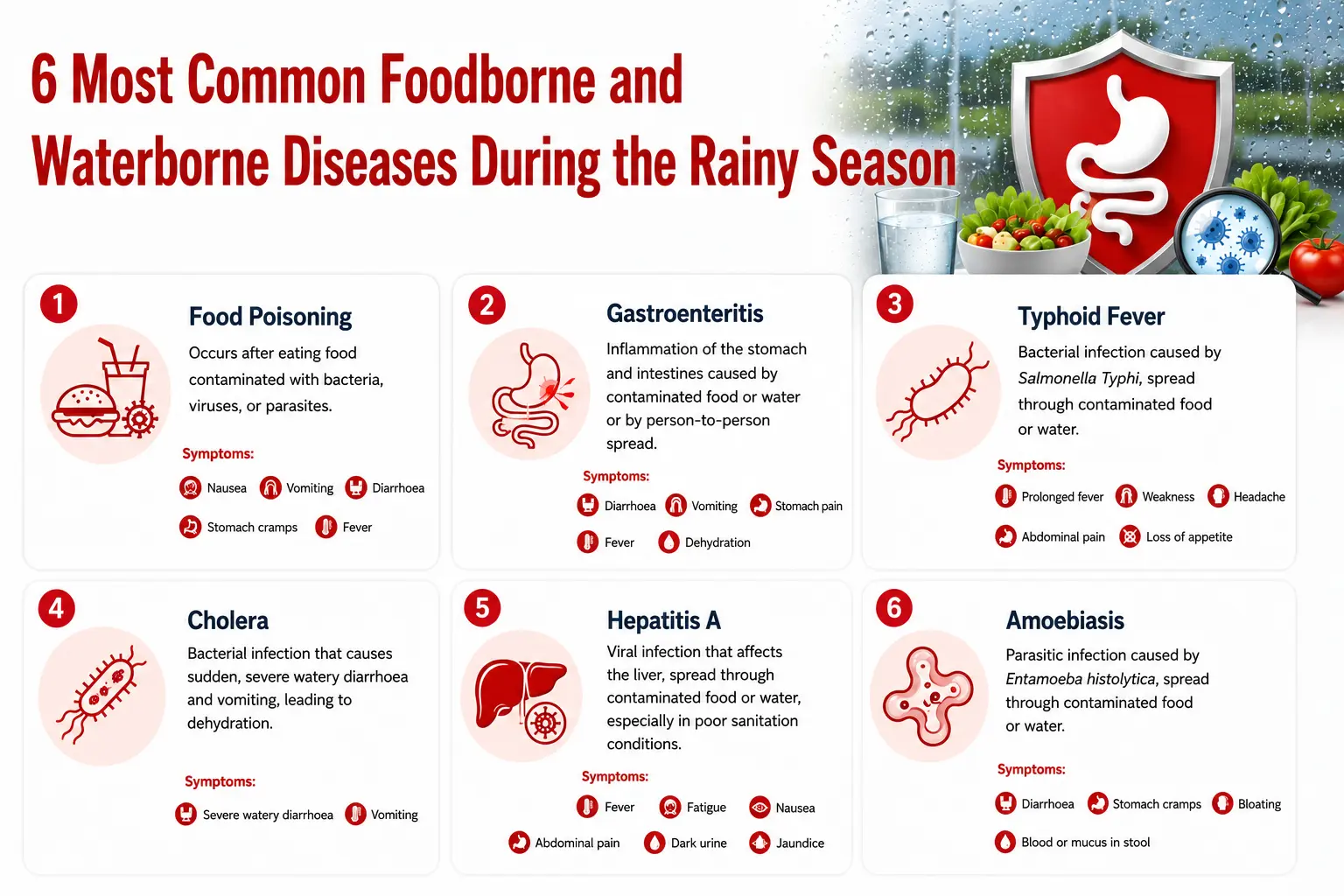
Contaminated food and drinking water become more common during the monsoon. Heavy rainfall can pollute water sources, while warm, humid weather allows harmful germs to multiply more quickly. As a result, the risk of stomach infections increases.
Here are six of the most common foodborne and waterborne diseases to watch out for during the rainy season.
Food poisoning is one of the most common illnesses during the monsoon. It usually occurs after eating food contaminated with bacteria, viruses, or parasites.
Common symptoms include:
Most people recover within a few days, but severe cases can lead to dehydration and require medical care.
Gastroenteritis, often called a stomach infection, occurs when the stomach and intestines become inflamed. It is usually caused by contaminated food or water, but it can also spread from person to person.
Symptoms include:
Young children and older adults are at a higher risk of complications.
Typhoid fever is a bacterial infection caused by Salmonella Typhi. It spreads through food or water contaminated with infected human waste.
Unlike food poisoning, its symptoms usually develop gradually and may include:
Early diagnosis and treatment help prevent serious complications.
Cholera is a bacterial infection that spreads through contaminated water or food. It causes sudden, severe watery diarrhoea and vomiting, which can quickly lead to dehydration.
Without prompt treatment, cholera can become life-threatening, especially in young children and older adults.
Hepatitis A is a viral infection that affects the liver. It spreads through contaminated food or water and is more common in areas with poor sanitation.
Symptoms may include:
Recovery usually takes a few weeks, although some people may take longer to recover.
Amoebiasis is caused by a parasite called Entamoeba histolytica. People usually become infected by drinking contaminated water or eating contaminated food.
Symptoms include:
If left untreated, the infection can spread beyond the intestines and affect the liver.
Many stomach infections improve within a few days with rest, plenty of fluids, and a light diet. However, some symptoms may indicate a more serious infection that needs medical attention.
See a doctor if you have:
Seek immediate medical care if symptoms are severe or if they occur in young children, older adults, pregnant women, or people with weakened immune systems.
The rainy season increases the risk of food contamination. Avoiding certain foods can help lower your chances of getting a stomach infection.
Simple daily habits can go a long way in preventing foodborne and waterborne diseases during the rainy season.
Stomach infections are common during the monsoon, but most can be prevented with a few simple precautions. Drinking safe water, eating freshly cooked food, maintaining good hand hygiene, and avoiding contaminated food can significantly lower your risk. It's also important to recognise the warning signs.
If symptoms such as persistent diarrhoea, vomiting, high fever, or dehydration do not improve, seek medical attention promptly. Early diagnosis and treatment can help prevent complications and support a faster recovery.
By making smart food and water choices during the rainy season, you can protect yourself and your family from foodborne and waterborne diseases and enjoy a healthier, worry-free monsoon.
Yes. Some infections, especially viral gastroenteritis, can spread through close contact, contaminated surfaces, or sharing food and utensils.
Many mild stomach infections improve within 1–3 days, but some may last up to a week depending on the cause.
Yes, but only if they are washed thoroughly and cooked properly. Raw leafy salads may carry a higher risk of contamination during the rainy season.
Not completely. Sealed, reputable bottled water is generally safer, but food hygiene and hand hygiene are also important in preventing infection.
Early signs include thirst, dry mouth, dizziness, weakness, dark urine, and urinating less often.
Probiotics may support gut health and help some people recover from diarrhoea, but they cannot replace safe food, clean water, and good hygiene practices.
Written and Verified by:

Dr. Sushil Kalra is the Director of Internal Medicine Dept. at CK Birla Hospital, Jaipur, with over 34 years of medical experience. He specializes in critical care, managing ICU and CCU patients, and acute medical conditions.
Similar Internal Medicine Blogs
Book Your Appointment TODAY
© 2024 RBH Jaipur. All Rights Reserved.


