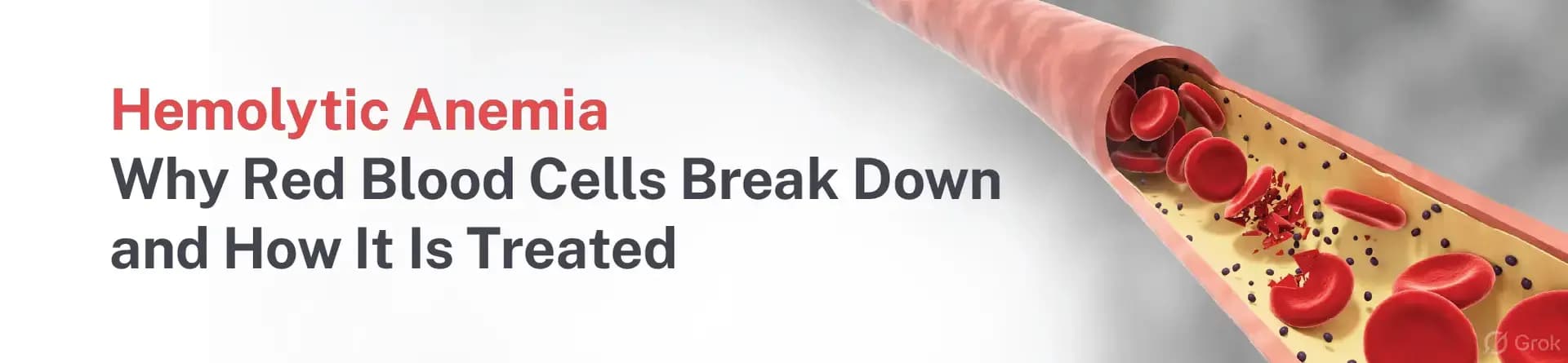
Haemolytic anaemia: Red blood cells destroy too quickly, causing fatigue, jaundice, and low oxygen. Explore inherited (sickle cell, thalassemia) and acquired causes, symptoms, diagnosis (CBC, Coombs test), treatments (meds, transfusions), and prevention. Early awareness prevents complications - empower your blood health today.
Your body depends on red blood cells every second. These cells carry oxygen from your lungs to the rest of your body. This oxygen helps your organs work properly and keeps you active.
But what happens when these cells start breaking down too quickly?
This is where haemolytic anaemia comes in. It is a condition that can affect your energy, your organs, and your overall health if not treated in time.
In this blog, we will explain what haemolytic anaemia is, why it happens, its symptoms, and the treatment options - using simple and easy-to-understand language.
Haemolytic anaemia is a condition where your red blood cells are destroyed faster than your body can replace them.
Normally, red blood cells live for about 120 days. Your body keeps making new ones to maintain a healthy balance. But in haemolytic anaemia, this balance is disturbed.
The early destruction of red blood cells leads to a shortage. As a result, your body does not get enough oxygen, which can affect how you feel and function.
The breakdown of red blood cells is called "haemolysis". In haemolytic anaemia, this process happens too quickly.
There are two main reasons why this happens:
Sometimes, the red blood cells are not shaped or formed properly. Because of this, they break down easily in the bloodstream.
In some cases, the immune system mistakenly attacks healthy red blood cells. This leads to faster destruction than normal.
When this imbalance continues, your body cannot keep up with producing new cells, leading to anaemia.
There are different haemolytic anaemia causes, and they can be broadly divided into two types:
These are genetic conditions that affect how your red blood cells are made.
In these conditions, red blood cells are weak or irregular, making them more likely to break down.
These are conditions or factors that affect your body after birth.
These causes can trigger the destruction of red blood cells even if your cells were normal before.
Understanding haemolytic anaemia types can help you know how the condition develops.
Caused by genetic conditions passed down from parents.
Develops due to external factors like illness, drugs, or immune reactions.
Both types lead to the same problem - faster breakdown of red blood cells - but the cause and treatment may differ.
The haemolytic anaemia symptoms can range from mild to severe. Some people may not notice symptoms early, while others may feel very weak.
Common symptoms include:
These symptoms happen because your body is not getting enough oxygen. If the condition becomes severe, it can lead to complications affecting the heart and other organs.
A haemolytic anaemia diagnosis usually starts with a doctor reviewing your symptoms and medical history.
After that, some basic tests are done.
These tests help confirm if haemolysis is happening and identify the cause.
Haemolytic anaemia treatment depends on the cause and severity of the condition.
If the anaemia is caused by infection, medication, or another disease, treating that condition is the first step.
Doctors may prescribe medicines to do the following:
In severe cases, blood transfusions may be needed to quickly increase red blood cell levels.
If the spleen is destroying too many red blood cells, doctors may suggest removing it (splenectomy).
Healthy habits can support recovery:
Not all cases of haemolytic anaemia can be prevented, especially genetic ones. But in many cases, you can reduce the risk.
Here are some simple steps:
Knowing how to prevent red blood cells from breaking down can help you manage the condition better and avoid complications.
Haemolytic anaemia may sound complex, but understanding it can make a big difference.
It is a condition where the destruction of red blood cells happens faster than normal. This leads to a shortage of oxygen in the body, causing fatigue and other symptoms.
The good news is that with proper haemolytic anaemia diagnosis and timely haemolytic anaemia treatment, many people can manage the condition effectively.
If you notice symptoms like unusual tiredness, yellowing of the skin, or shortness of breath, do not ignore them. Early care can prevent serious complications.
Taking care of your blood health is an important step toward a healthier life.
Some types of haemolytic anaemia can be cured if the underlying cause is treated, while others (especially inherited types) can be managed with proper care.
Yes, haemolytic anaemia can be serious if not treated, as it may lead to complications like severe fatigue, heart problems, or organ damage.
In haemolytic anaemia, red blood cells are destroyed too quickly, while in other types, the body either doesn’t produce enough cells or lacks nutrients like iron.
Common tests for haemolytic anaemia diagnosis include CBC, reticulocyte count, bilirubin levels, and the Coombs test.
Written and Verified by:

Dr. Sushil Kalra is the Director of Internal Medicine Dept. at CK Birla Hospital, Jaipur, with over 34 years of medical experience. He specializes in critical care, managing ICU and CCU patients, and acute medical conditions.
Similar Internal Medicine Blogs

Book Your Appointment TODAY
© 2024 RBH Jaipur. All Rights Reserved.


