Understand how organ-preserving cancer surgery removes tumours while retaining healthy tissue.
Explore the cancers that may be treated without removing the entire organ.
Know the factors doctors consider when deciding whether organ preservation is safe.
Learn about the benefits, risks and possible additional treatments after surgery.
Discover how follow-up care helps monitor recovery and detect cancer recurrence.
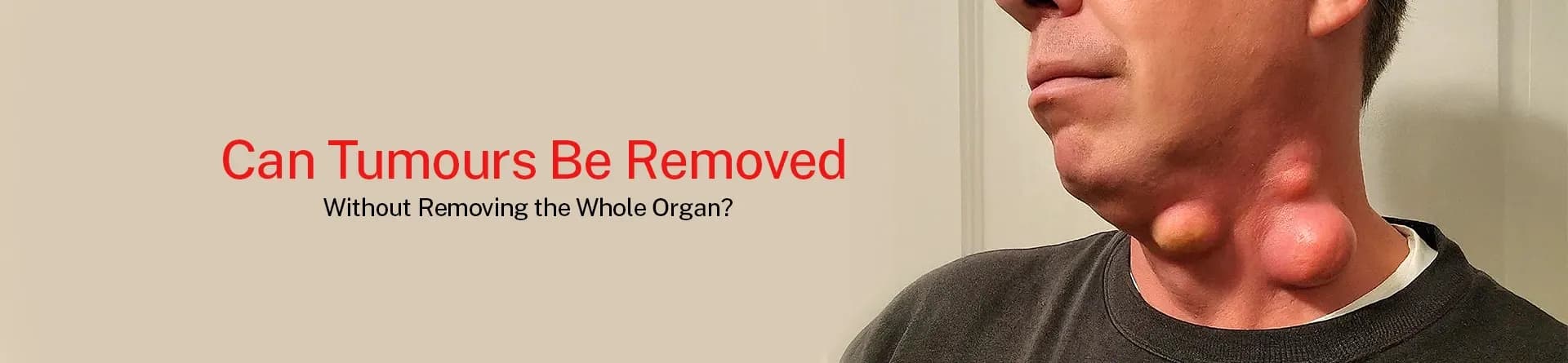
Yes, in some cases, doctors can remove a tumour without removing the whole organ. This approach is called organ-preserving cancer surgery. It focuses on removing the tumour while keeping as much of the healthy organ as possible.
Cancer surgery without organ removal may be an option for some people with breast, kidney, liver, brain and other cancers. The choice depends on the type, size and location of the tumour. The stage of cancer and your overall health also matter.
The main aim of tumour removal surgery is to remove the cancer safely. Organ preservation is considered when it can be done without affecting cancer control.
Organ-preserving cancer surgery removes the tumour while keeping the rest of the organ in place. It is also known as Cancer-Sparing Surgery.
During the procedure, the surgeon removes the tumour along with a small amount of healthy tissue around it. This helps remove cancer cells that may be close to the tumour.
The remaining healthy part of the organ is preserved when possible. In some cases, surgery may be combined with other cancer treatments. These may include radiation therapy, chemotherapy, targeted therapy or immunotherapy.
The type of tumour removal surgery depends on the cancer. For example, some people with breast cancer may have a lumpectomy. This removes the tumour while keeping most of the breast.
Organ preservation does not mean that the entire organ is always saved. Sometimes, doctors may need to remove part of the organ to remove the tumour safely.
Tumour removal without removing organ is possible for some cancers. The treatment depends on where the tumour is and how far the cancer has spread.
Some examples include:
Breast cancer: A lumpectomy or breast-conserving surgery may remove the tumour while keeping most of the breast. Radiation therapy may also be recommended after surgery.
Kidney cancer: Some small kidney tumours can be treated with partial nephrectomy. In this procedure, the surgeon removes the tumour and keeps the healthy part of the kidney.
Liver cancer: The liver can sometimes continue to work normally even after part of it is removed. This allows surgeons to remove the part affected by the tumour in selected cases.
Brain tumours: For some brain tumours, surgeons may remove as much of the tumour as possible while protecting important parts of the brain. The exact approach depends on the tumour's location and type.
Throat and voice box cancers: Some early cancers may be treated with surgery that preserves part of the voice box. This may help maintain functions such as speaking and swallowing.
Bone tumours: Limb-sparing surgery may be possible for some bone cancers. The surgeon removes the tumour while keeping the affected arm or leg. These are only some examples. Not every tumour can be treated with organ-preserving surgery.
When Is Organ-Sparing Surgery Possible?
Doctors consider organ-sparing surgery when they believe the tumour can be removed safely while leaving enough healthy tissue behind. They look at several factors before recommending this approach.
Tumour removal does not always mean removing the whole organ. Organ-preserving cancer surgery can remove the tumour while keeping healthy parts of the organ in selected cases.
The right treatment depends on the type, size and stage of cancer. Your doctor can explain whether cancer surgery without organ removal is safe and suitable for you.
For some cancers, organ-preserving surgery can provide similar cancer control to more extensive surgery when the right patients are selected.
For example, breast-conserving surgery followed by radiation therapy is an established treatment option for many people with suitable breast cancer.
However, this does not apply to every cancer. In some cases, removing the entire organ may be needed to remove the cancer completely or reduce the risk of it coming back.
The main goal of cancer surgery options is to control the cancer. Preserving the organ is considered when it can be done safely without reducing the chance of successful treatment.
Your cancer team may include surgeons, medical oncologists, radiation oncologists, radiologists and pathologists. They may work together to decide which treatment is most suitable for you.
There are several possible organ-preserving surgery benefits. The main one is that more of the healthy organ can be kept.
Other possible benefits include:
Preserving some or most of the organ's normal function
Keeping more healthy tissue
Avoiding removal of the entire organ when possible
Reducing some physical changes caused by extensive surgery
Supporting your quality of life after treatment
However, organ-preserving surgery also has some risks.
As with other types of surgery, there can be pain, bleeding, infection and other complications. There may also be a chance that cancer comes back in the preserved organ.
Some people may need additional treatment after surgery. This may include radiation therapy, chemotherapy, targeted therapy or hormone therapy.
In some cases, removing the entire organ may provide better cancer control. Your doctor will consider the risks and benefits before recommending the procedure.
Doctors use different tests and examinations before planning tumour removal surgery. These help them understand the tumour and decide whether it can be removed while preserving the organ.
Doctors may consider:
Type of cancer
Size of the tumour
Location of the tumour
Stage of cancer
Whether nearby lymph nodes are affected
Whether the cancer has spread
Your overall health
How much healthy organ tissue can be preserved
You may need imaging tests such as a CT scan, MRI, ultrasound or PET scan. A biopsy may also be done to identify the type of cancer.
Doctors also look at the margins around the tumour. A margin is the healthy-looking tissue around the tumour that is removed during surgery. The goal is to remove the tumour with a clear margin, which means no cancer cells are found at the edge of the removed tissue.
This helps doctors check whether the tumour has been completely removed.
In some cases, yes. Minimally invasive cancer surgery uses smaller cuts instead of one large opening. Laparoscopic and robotic surgery are examples.
These techniques may be used for some organ-preserving procedures. They can also be used for surgeries where the whole organ needs to be removed.
This means minimally invasive surgery and organ-preserving surgery are not the same thing. One describes how the surgery is performed, while the other describes what is preserved during surgery.
Your surgeon will decide which approach is suitable based on your cancer and overall health.
Treatment may not end after surgery. Some people need additional treatment to reduce the chance of cancer coming back.
The treatment depends on the type and stage of cancer. It may include radiation therapy, chemotherapy, targeted therapy or hormone therapy.
Regular follow-up is also important. Your doctor may recommend physical examinations, scans or other tests. These help monitor your recovery and check for signs of cancer.
Yes, cancer surgery without organ removal is possible in selected cases. Surgeons can sometimes remove the tumour while keeping part or most of the affected organ.
However, this approach is not suitable for everyone. The decision depends on the tumour, the stage of cancer, its location and whether it has spread.
The main goal is always to treat the cancer safely. If preserving the organ can provide effective cancer control, it may be considered as part of your treatment plan.
If you have been advised to undergo tumour removal surgery, ask your doctor if organ-preserving surgery is an option for you. Your doctor can explain the available cancer surgery options, their benefits and risks, and which approach may be suitable for your condition.
Written and Verified by:

Dr. Sayoni Bhanja is a highly skilled Medical Oncologist at CMRI Hospital with over a decade of experience in evidence-based cancer therapy and patient-focused care.
Similar Oncology Blogs
Book Your Appointment TODAY
© 2024 CMRI Kolkata. All Rights Reserved.


