Understand how robotic-assisted cancer surgery works and how surgeons use specialised instruments.
Explore cancers treated with robotic surgery, including prostate, kidney, bladder, colorectal and lung cancers.
Learn when robotic surgery may be recommended based on cancer type, stage and tumour location.
Discover potential benefits such as smaller incisions, reduced blood loss, less pain and faster recovery.
Understand possible risks, limitations and what to expect during post-surgical recovery.
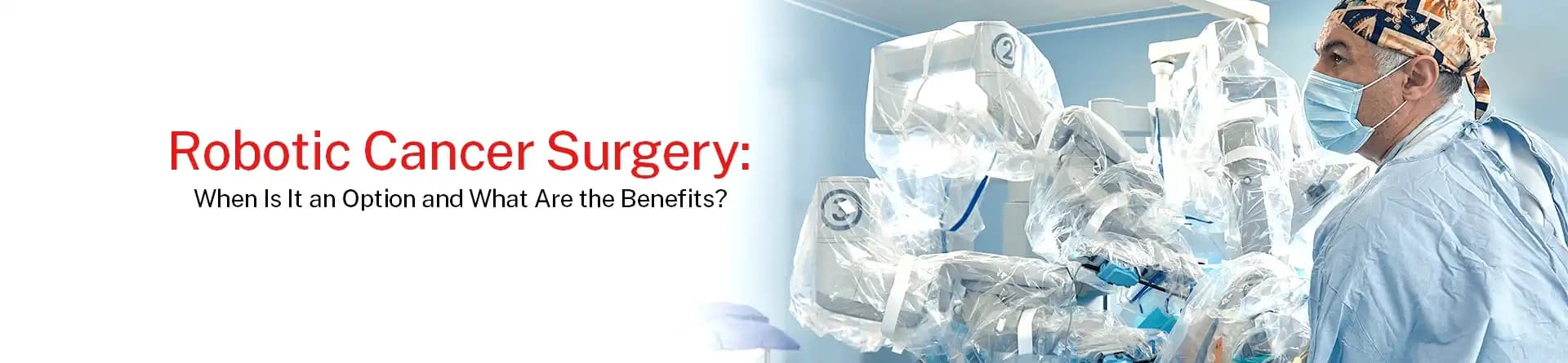
Robotic cancer surgery is a minimally invasive procedure that helps surgeons remove cancerous tumours through small incisions. It uses a robotic system with a 3D camera and special surgical instruments. The surgeon controls these instruments from a console during the operation.
This approach can be used to treat certain cancers, including prostate, kidney, bladder, colorectal, lung and gynaecological cancers. It may help reduce blood loss and post-surgical pain while shortening recovery time compared with some open surgeries. However, it is not suitable for every patient or type of cancer.
The choice of robotic cancer surgery depends on the location and stage of the cancer, the patient's overall health and the surgeon's assessment.
Robotic cancer surgery is a type of minimally invasive surgery. It allows surgeons to perform complex operations using robotic-assisted instruments instead of making one large incision.
The robotic system does not perform surgery on its own. The surgeon controls every movement of the instruments from a console in the operating room.
During the procedure, the surgeon makes a few small incisions in the affected area. The surgeon inserts a small camera and specialised surgical instruments through these openings.
The camera provides a magnified, 3D view of the surgical area. This helps the surgeon see tissues, blood vessels and nearby organs more clearly. The robotic instruments also allow controlled movements in areas that may be difficult to reach with conventional instruments.
Here is how robotic cancer surgery usually works:
The removed tissue is sent to a laboratory for examination. This examination helps determine whether cancer cells are present at the edges of the removed tissue and whether further treatment may be needed.
Robotic surgery can be used to treat certain solid tumours in different parts of the body. Its suitability depends on the cancer type, tumour size, location and stage. Some cancers that may be treated using robotic surgery include:
Not every cancer requires robotic surgery. Some tumours may be better treated with open surgery, chemotherapy, radiotherapy or a combination of treatments. Your cancer specialist will recommend an approach based on your diagnosis and treatment needs.
Robotic cancer surgery may be recommended when a tumour can be safely removed using a minimally invasive approach.
Your doctor will first evaluate the cancer and determine whether surgery is a suitable treatment option. They will also check whether robotic assistance is suitable for your type and stage of cancer.
You may be considered for robotic surgery for cancer when:
Robotic surgery may not be suitable if the tumour is too large, its location makes minimally invasive removal difficult or the cancer has spread in a way that makes surgery unsuitable.
In some cases, open surgery may offer better access to the tumour. Your doctor may also recommend chemotherapy or radiotherapy before surgery to help manage the cancer.
Robotic-assisted cancer surgery offers several benefits for patients who are suitable for this approach. Most of these benefits are related to smaller incisions, improved visualisation and controlled instrument movements.
Robotic surgery usually requires a few small incisions instead of one large cut. This may cause less disruption to the surrounding tissues in many procedures.
Smaller incisions may also result in less scarring and make wound care easier during recovery.
The robotic system provides a magnified, 3D view of the surgical area. This helps the surgeon see small structures, blood vessels and nearby tissues more clearly.
Better visualisation can be useful when operating in narrow or difficult-to-reach areas.
Smaller incisions and controlled surgical movements may help reduce blood loss during certain procedures.
However, the amount of blood loss depends on the type and complexity of the operation, as well as the patient's overall condition.
Smaller incisions generally cause less tissue disruption than large surgical cuts. As a result, some patients experience less pain after robotic surgery than after open surgery.
Your doctor may still prescribe pain-relief medicines to manage discomfort during recovery.
Many patients who undergo robotic-assisted surgery can leave the hospital sooner than those who have comparable open procedures.
The actual hospital stay depends on the type of surgery, recovery progress and whether any complications occur.
Smaller incisions may help patients resume normal activities sooner. Many patients are encouraged to walk and move around soon after surgery, depending on their condition.
However, complete recovery takes longer and varies with the procedure and individual health.
Robotic instruments can bend and rotate in ways that conventional straight surgical instruments cannot. They also filter out natural hand tremors.
This allows the surgeon to make controlled movements, particularly in confined surgical areas.
It is important to understand that robotic surgery does not guarantee better cancer control or a cure. The success of treatment depends on several factors, including the cancer stage, tumour biology and whether the cancer can be completely removed.
Like other major operations, robotic cancer surgery carries certain risks. These may vary depending on the type of procedure and your overall health.
Possible risks include:
Robotic surgery also has certain limitations. It may not be suitable for certain large tumours or cancers that have spread extensively, depending on their location and the treatment plan. The procedure can take longer in some cases and may not be available at every hospital.
The surgeon's training and experience with the robotic system are also important considerations.
Recovery after robotic cancer surgery depends on the type of operation, the cancer being treated and your general health.
The length of hospital stay varies depending on the type of surgery and your recovery. Some patients may be discharged earlier, while others need more time for observation and care.
Here is what you can generally expect during recovery:
Contact your healthcare team if you develop a fever, increasing pain, redness around the incision, unusual discharge or excessive bleeding.
Follow your doctor's instructions about medicines, wound care, diet and physical activity. Do not rush your recovery, even if you start feeling better within a few days.
Robotic cancer surgery can be an option for patients who need surgery for certain types of cancer. It uses small incisions, a magnified 3D view and specialised instruments controlled by the surgeon.
It may help reduce blood loss and post-surgical pain while shortening recovery time compared with some open procedures. However, it is not the right choice for every tumour or patient.
If you are considering robotic surgery for cancer treatment in Kolkata, consult a cancer specialist to understand your options. Your doctor can review your reports, assess the stage of cancer and explain whether robotic surgery is suitable for your condition.
Robotic cancer surgery can remove the entire tumour when the cancer is suitable for surgical removal. The surgeon may also remove a margin of surrounding healthy tissue and nearby lymph nodes when required. The final laboratory report helps determine whether cancer cells are present at the edges of the removed tissue.
Robotic-assisted surgery provides a magnified 3D view and allows controlled movements of surgical instruments. These features can help surgeons perform precise procedures. However, accuracy and cancer control also depend on the surgeon's experience, tumour location and cancer stage.
Many patients experience less pain after robotic surgery than after comparable open surgery because it uses smaller incisions. However, some discomfort is normal after an operation. Your doctor can prescribe medicines to manage it.
The duration depends on the type of cancer, the complexity of the operation and the patient's condition. Some procedures may take a few hours, while more complex surgeries can take longer.
Many patients stay for one to a few days after robotic cancer surgery. However, the hospital stay may be longer after complex procedures or if additional monitoring is needed.
Age alone does not determine whether someone can undergo robotic surgery. Doctors assess overall health, heart and lung function, other medical conditions and the ability to tolerate anaesthesia. Some elderly patients may be suitable candidates, while others may need a different treatment approach.
Written and Verified by:

Dr. Sayoni Bhanja is a highly skilled Medical Oncologist at CMRI Hospital with over a decade of experience in evidence-based cancer therapy and patient-focused care.
Similar Oncology Blogs
Book Your Appointment TODAY
© 2024 CMRI Kolkata. All Rights Reserved.