
Lymphoma is a type of blood cancer that affects the lymphatic system and may cause painless swelling in the neck, armpits or groin. Learn about the different types of lymphoma, its warning signs, causes, diagnosis and treatment options. Understand when swollen lymph nodes may indicate something more serious and why early medical evaluation is important.
Swollen lymph nodes are commonly caused by infections, but sometimes they can be an early sign of lymphoma, a type of blood cancer that affects the lymphatic system. Lymphoma develops when certain white blood cells, called lymphocytes, grow abnormally and multiply uncontrollably. One of its common warning signs is a painless lump in the neck, armpit or groin that does not go away.
However, not every swollen lymph node indicates cancer. Knowing the symptoms of lymphoma, understanding its causes and recognising when to seek medical advice can help you get the right diagnosis and treatment at the right time.
Lymphoma is a type of cancer that begins in lymphocytes, which are white blood cells that help your body fight infections. These cells are part of the immune system and are found in the lymph nodes, spleen, bone marrow and other lymphatic tissues.
When lymphocytes develop abnormal changes, they can multiply uncontrollably and form cancerous growths. These cells may collect in the lymph nodes and cause swelling. In some cases, they can also affect other organs and tissues.
There are two main types of lymphoma:
Both types can cause swollen lymph nodes, but their symptoms, behaviour and treatment approaches may differ.
The lymphatic system is a network of vessels, lymph nodes and organs that helps protect your body against infections and supports immune function.
It carries a clear fluid called lymph, which contains white blood cells and other substances. Lymph nodes act as filters, trapping germs and harmful substances before they spread through the body.
When lymphoma develops, abnormal lymphocytes begin collecting in the lymphatic tissues. As these cancer cells multiply, they can cause lymph nodes to become enlarged.
Lymphoma may affect lymph nodes in the neck, armpits, chest, abdomen and groin. It can also involve organs such as the spleen and bone marrow.
Since the lymphatic system extends throughout the body, lymphoma can cause symptoms beyond swollen lymph nodes, depending on the areas affected.
The early signs of lymphoma can be easy to overlook because some of them resemble common infections or other health conditions.
The most recognised warning sign is a painless lump or swelling in the lymph nodes. Other symptoms may develop as the condition progresses.
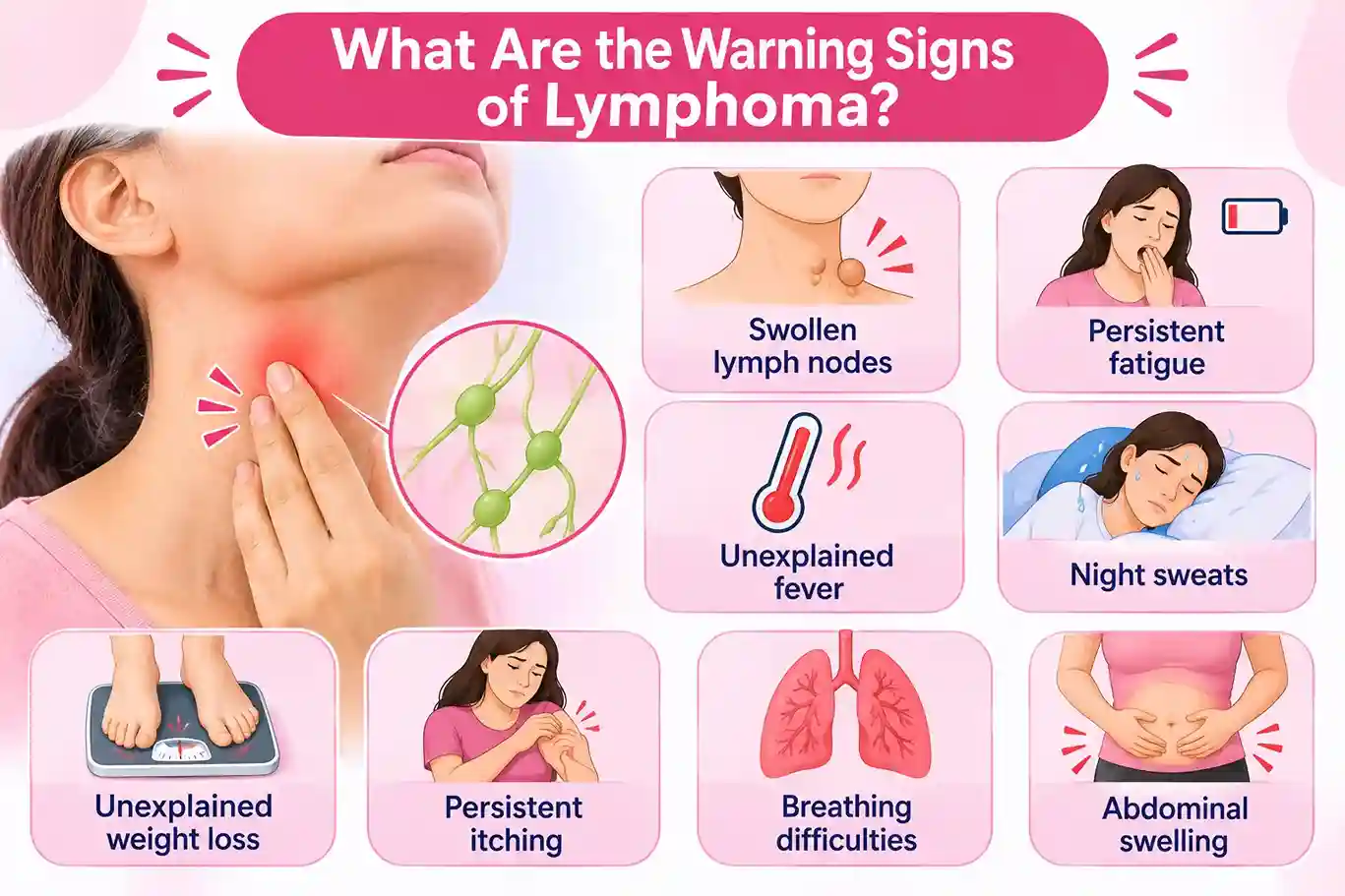
Watch out for the following signs:
Fever, drenching night sweats and unexplained weight loss are sometimes called B symptoms. Doctors consider these symptoms when assessing lymphoma and determining its stage.
Having one or more of these symptoms does not necessarily mean you have lymphoma. However, persistent or unexplained changes in your body should be medically evaluated.
Swollen lymph nodes are usually a sign that your immune system is responding to an infection or inflammation. For example, you may notice swelling in your neck during a throat infection or near your jaw when you have a dental infection.
Common causes of swollen lymph nodes include:
In lymphoma, abnormal lymphocytes collect inside the lymph nodes and cause them to enlarge.
But how can you tell when a swollen lymph node needs medical attention?
Pay attention to the following changes:
Lymphoma-related lymph nodes are often painless, while infection-related swelling may be tender or painful. However, pain alone cannot confirm or rule out lymphoma.
If you notice persistent or unexplained swelling, consult a doctor rather than trying to identify its cause yourself.
Lymphoma diagnosis involves a combination of physical examinations, blood tests, imaging and tissue examination. A biopsy is particularly important because it helps confirm whether abnormal lymphocytes are present.
Doctors may recommend the following tests:
Once lymphoma is confirmed, additional tests help determine its type and stage. This information guides the treatment plan.
Lymphoma treatment depends on several factors, including the type of lymphoma, its stage, how quickly it is growing, the patient's age and overall health.
Not every patient needs the same treatment. Some slow-growing lymphomas may only require regular monitoring initially, while others need treatment soon after diagnosis.
Common lymphoma treatment options include:
For some patients with slow-growing lymphoma and no significant symptoms, doctors may recommend active surveillance. This involves regular check-ups and tests to monitor the condition before starting treatment.
Yes, many types of lymphoma can be successfully treated, and some can be cured. However, the chances of recovery depend on the specific subtype, stage, response to treatment and overall health of the patient.
Some lymphomas respond very well to treatment, while others may require long-term management or additional treatment if they return.
Early and accurate diagnosis helps doctors choose the most appropriate treatment approach.
Lymphoma is a type of blood cancer that affects the lymphatic system and may first appear as painless swelling in the neck, armpit or groin. Although swollen lymph nodes are commonly linked to infections, persistent lumps and unexplained symptoms should not be ignored.
Timely medical evaluation, accurate diagnosis and the right treatment can make a significant difference in managing lymphoma. If you notice unusual swelling or other persistent symptoms, consult a specialist to understand the cause and discuss the next steps.
No. Most swollen lymph nodes develop because of infections, inflammation or other non-cancerous conditions. However, swelling that persists, increases in size or occurs with unexplained fever, night sweats or weight loss should be evaluated by a doctor.
Lymphoma-related lymph nodes are commonly painless and may feel like firm lumps under the skin. However, pain does not rule out lymphoma. The cause of swelling can only be determined through proper medical evaluation.
Yes. Lymphoma can affect lymph nodes in the neck, armpits, groin and other areas of the body. The location depends on where abnormal lymphocytes collect and multiply.
Yes. Infections can cause lymph nodes to enlarge, sometimes making them feel similar to lymphoma-related lumps. Infection-related swelling often improves as the infection settles. Persistent or unexplained swelling may need further investigation.
Blood tests can show changes in blood cell counts and other markers that may suggest lymphoma. However, they cannot confirm the disease on their own. A lymph node biopsy is usually needed to establish the diagnosis.
In most cases, yes. A lymph node biopsy allows doctors to examine the tissue under a microscope and identify abnormal lymphocytes. It also helps determine the specific type of lymphoma, which is important for selecting treatment.
Written and Verified by:

Dr Poulami Basu is a Consultant Medical Oncologist with over 10 years of experience and dual accreditation in Radiation and Medical Oncology. A President’s Gold Medal recipient in the DrNB Medical Oncology Examination, she specialises in the management of solid and haematological cancers, including breast, lung, gastrointestinal, genitourinary, head and neck and blood cancers. Her expertise includes systemic therapy, immunotherapy, targeted therapy and multidisciplinary cancer care, along with active involvement in national and international clinical trials and oncology research.
Similar Oncology Blogs
Book Your Appointment TODAY
© 2024 CMRI Kolkata. All Rights Reserved.


