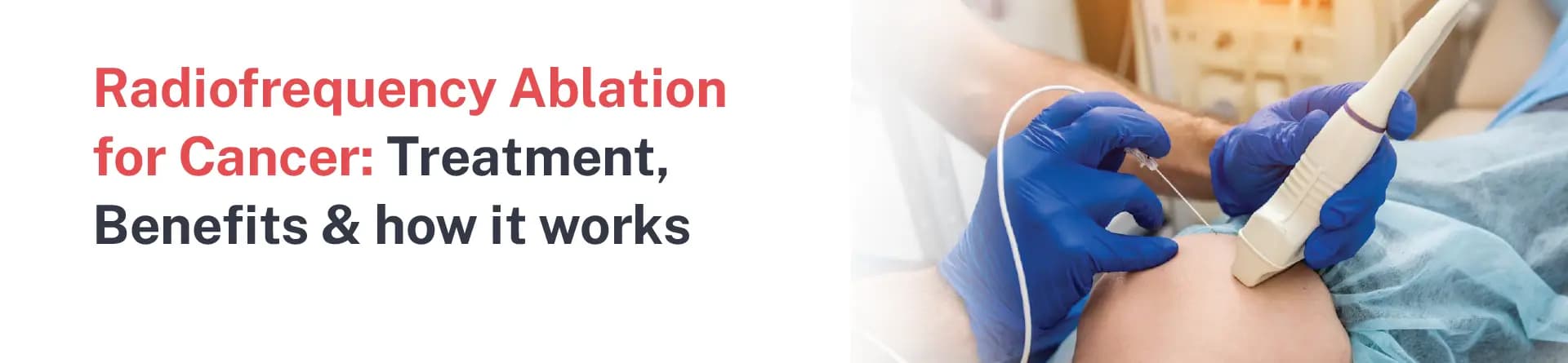
Radiofrequency ablation (RFA) is a minimally invasive cancer treatment that uses heat generated by radio waves to destroy cancer cells. It is commonly used for liver, lung, kidney, and bone tumours, especially when surgery is not suitable. The procedure offers targeted treatment, faster recovery, and less damage to surrounding healthy tissues.
Cancer treatment today is not just about surgery or chemotherapy. There are newer, safer, and less painful options available. One such advanced option is radiofrequency ablation.
This treatment is helping many patients recover faster and live more comfortably. In this blog, we will explain the radiofrequency ablation procedure, how it works, its benefits, and when it is recommended.
Radiofrequency ablation (RFA) is a minimally invasive cancer treatment that uses heat to destroy cancer cells.
In this method, doctors insert a thin needle (called a ‘probe’) directly into the tumour. Once the probe is in place, high-frequency electrical energy is passed through it. This energy produces heat, which destroys the cancer cells.
The radiofrequency ablation procedure is different from traditional surgery because it does not involve large cuts. It focuses only on the tumour and protects the surrounding healthy tissue. This makes it a safer and more comfortable option for many patients.
Radiofrequency ablation is used to treat different types of cancers, especially when tumours are small or surgery is not possible. It is commonly used for:
RFA is most effective for small tumours, usually less than 3–5 cm in size. In some cases, it may also be combined with chemotherapy, targeted therapy, or surgery as part of a broader cancer treatment plan.
Because of its flexibility, RFA is becoming an important part of modern cancer treatment.
The radiofrequency ablation procedure works by using heat to destroy cancer cells in a precise way. Here’s how it works in simple steps:
This method ensures that the tumour is treated effectively while keeping healthy tissues safe.
Most RFA procedures are completed within 1–3 hours, and many patients are discharged on the same day or within 24 hours, depending on the type and location of the tumour.
Doctors recommend radiofrequency ablation in specific situations based on the patient’s condition.
It is usually suggested when:
This makes RFA a very useful option for patients who cannot undergo major surgery.
There are many reasons why doctors and patients prefer radiofrequency ablation.
Because of these benefits, RFA is becoming a trusted option in cancer treatment.
If you are looking for Radiofrequency Ablation in Jaipur, choosing the right hospital plays an important role in your treatment and recovery. CK Birla Hospitals, Jaipur focuses on safe, advanced, and patient-friendly care.
Here’s what makes it a reliable choice:
Choosing the right medical team can make your cancer treatment journey safer, smoother, and more comfortable.
Radiofrequency ablation is a modern and effective way to treat certain types of cancer. It uses heat to destroy cancer cells without the need for major surgery. The radiofrequency ablation procedure is safe, precise, and offers faster recovery. It is especially helpful for patients who are not suitable for surgery or need relief from symptoms.
If you are exploring options for cancer treatment, especially Radiofrequency Ablation in Jaipur, it is important to consult an experienced oncologist in Jaipur to understand what is best for you. Making the right choice can help you move towards better health with confidence.
RFA is generally safe, but you may experience mild pain, a small risk of infection, bleeding, or, rarely, damage to nearby tissues.
It depends on your tumour size, location, and overall health, so your doctor will guide you on whether RFA is suitable for your condition.
You may have mild discomfort for a few days, and most patients return to normal activities within a week with follow-up checks.
Radiofrequency ablation (RFA) is usually not very painful, as it is performed under local anaesthesia or sedation. Some patients may experience mild discomfort or soreness after the procedure.
Yes, cancer can sometimes return after RFA, depending on the type, size, and stage of the tumour. Regular follow-ups are important to monitor recovery and detect any recurrence early.
Unlike surgery, RFA usually involves less pain, shorter hospital stays, and lower recovery time. However, the best treatment option depends on the type, stage,location of the cancer and the patient’s overall health.
RFA may not be suitable for patients with very large tumours, certain bleeding disorders, severe infections, or cancers located close to major organs or blood vessels.
Most patients recover within a few days to one week, depending on the area treated and their overall health.
RFA is commonly used for liver, kidney, lung, bone, and some small soft tissue tumours.
Patients with small or localised tumours, or those who cannot undergo surgery, may be suitable candidates for RFA after evaluation by a specialist.
Written and Verified by:

Additional Director Exp: 14 Yr
Radiation Oncology & Radiosurgery
Dr. Ruchir Bhandari is a highly experienced Clinical Oncologist with over 14 years of expertise in advanced cancer care.
Similar Oncology Blogs
Book Your Appointment TODAY
© 2024 RBH Jaipur. All Rights Reserved.


