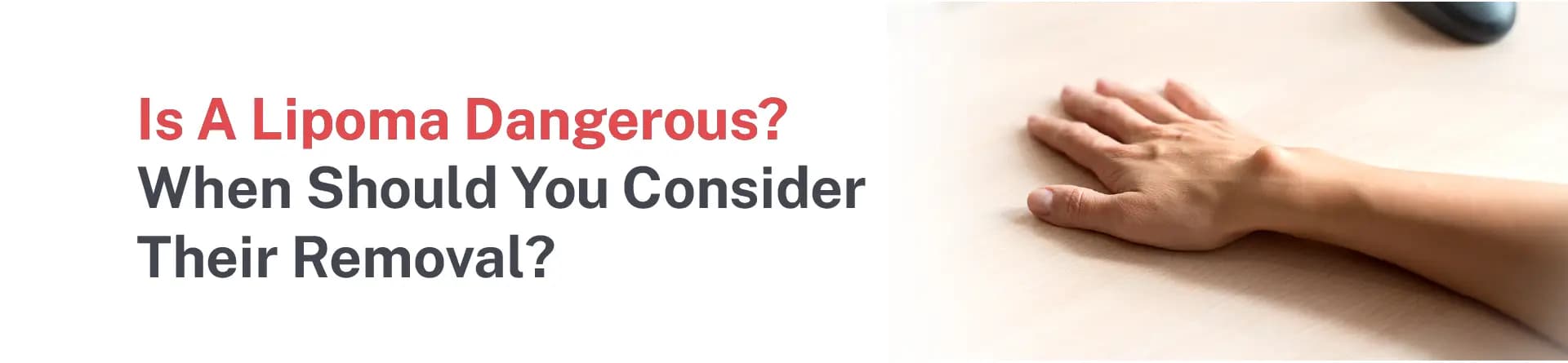
Lipomas are common benign lumps made of fat cells that typically grow slowly and do not cause serious health problems. Treatment or removal is considered only when the lump becomes painful, enlarges rapidly, or creates cosmetic concerns.
Finding a lump under your skin can be scary. Your mind may quickly jump to the worst possibilities. But in many cases, that soft lump could simply be a lipoma — a common and usually harmless condition.
Still, many people wonder: Is a lipoma dangerous? And if it isn’t, when should you think about lipoma removal?
In this blog, we’ll explain everything in simple, easy-to-understand language — what a lipoma is, what causes it, when to worry, and how it can be treated.
Let’s start with the basics: what is a lipoma?
A lipoma is a soft, slow-growing lump made up of fat cells. It usually forms just under the skin. Lipomas are non-cancerous (benign), which means they are not cancer.
They often:
Lipomas are very common, especially in adults between 40 and 60 years old. Some people may have just one lipoma, while others may develop several.
Many people ask about lipoma causes, but the exact reason why lipomas form isn’t fully understood.
However, doctors believe:
In most cases, a lipoma appears without a clear reason. It is not caused by lifestyle, diet, or infection.
Most lipoma symptoms are simple and easy to recognise. A typical lipoma:
Common areas where lipomas appear include:
In most cases, a lipoma doesn’t cause problems. But sometimes, depending on its size and location, it may press on nearby nerves or tissues and cause discomfort.
There are different types of lipoma, although most people have the simple, common type.
Some types include:
Even though there are different types of lipoma, the majority are harmless.
In most cases, the answer is no. A lipoma is not dangerous. It is benign and does not spread to other parts of the body.
However, there are rare situations where a lump that looks like a lipoma could be something more serious, like a liposarcoma (a rare cancer of fat tissue). That is why medical evaluation is important if the lump changes or behaves differently.
So while lipomas themselves are not dangerous, you should not ignore new or changing lumps.
You should see a doctor if you notice:
These signs don’t automatically mean something serious, but they do mean you should get it checked. Any lump that grows quickly or causes discomfort deserves medical attention.
Doctors usually diagnose a lipoma with a simple physical exam. They gently press on the lump to check:
If the lipoma looks unusual, your doctor may recommend imaging tests such as:
In rare cases, a biopsy may be done to confirm that the lump is not cancerous.
Diagnosis is usually straightforward, and most lipomas are confirmed quickly without complicated testing.
Since lipomas are harmless, you may wonder why someone would choose lipoma removal.
Here are the main reasons:
You don’t always need treatment. But if the lipoma bothers you physically or emotionally, discussing options with your doctor is reasonable.
If you’re wondering how to treat lipoma, there are several options.
The most common and effective treatment is lipoma surgery. This is a simple outpatient procedure.
Recovery is usually quick. Most people go home the same day. Once removed, lipomas rarely come back in the same spot. This is the most reliable form of lipoma treatment.
In some cases, liposuction may be used to remove fatty tissue. This leaves a smaller scar but may not remove the entire capsule of the lipoma, meaning it could return.
Some people look for lipoma treatment without surgery, but there is no proven medication that dissolves lipomas completely. Doctors generally recommend removal only if needed.
You may see claims online about home remedies for lipoma, such as herbal pastes or natural oils. However, there is no scientific proof that these methods remove lipomas. It’s important not to attempt cutting or draining a lipoma at home. This can cause infection or complications. If you are concerned about a lump, always consult a medical professional.
Recovery from lipoma removal is usually simple. You may experience:
Most people return to normal activities within a few days. Your doctor may advise avoiding heavy lifting for a short period. The scar is typically small and fades over time.
A lipoma is a common, harmless fatty lump under the skin. In most cases, it is not dangerous and does not require treatment.
However, you should see a doctor if:
Lipoma removal is safe and effective when needed. Whether for comfort, cosmetic reasons, or medical concerns, treatment options are available.
If you’ve discovered a lump, try not to panic. Most lipomas are benign and manageable. Getting a proper evaluation will give you peace of mind — and that’s always worth it.
A lipoma is usually harmless and non-cancerous, and most do not cause serious health problems.
The exact lipoma causes are unknown, but genetics and family history are believed to play a major role.
No, a lipoma is benign (non-cancerous) and does not spread to other parts of the body.
You should seek medical advice if the lump grows quickly, becomes painful, feels hard, or changes in size or shape.
After proper lipoma removal, it is uncommon for the same lipoma to grow back, though new ones may form elsewhere.
Lipoma surgery is usually done under local anaesthesia, so you shouldn’t feel pain during the procedure, and recovery discomfort is typically mild.
Written and Verified by:

Dr. Asma Akhlaq is a Consultant in Dermatologist Dept. at CK Birla Hospital, Jaipur, with over 7 years of experience. She specializes in treating acne, pigmentation, hair loss, eczema, and offers advanced cosmetic dermatology procedures.
Similar Dermatology Blogs
Book Your Appointment TODAY
© 2024 RBH Jaipur. All Rights Reserved.


