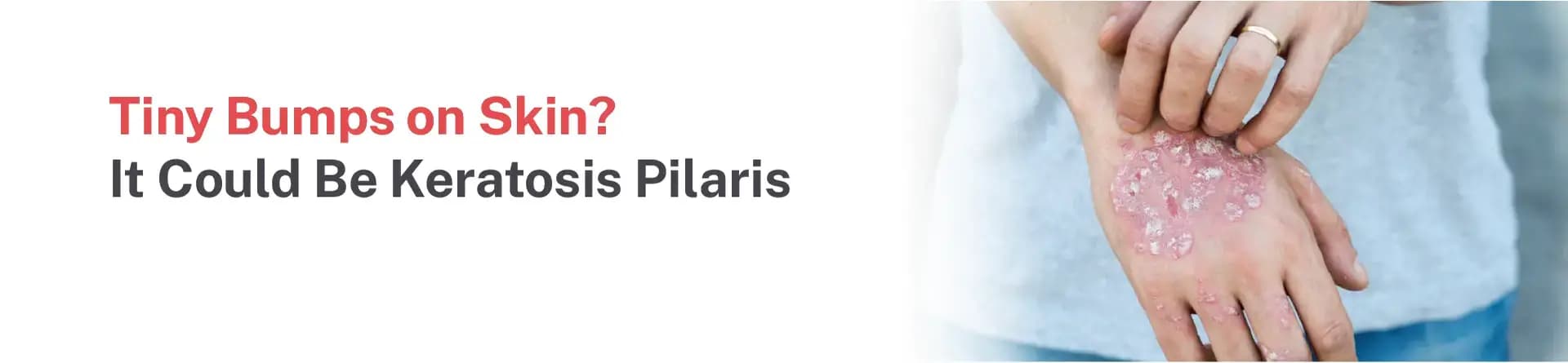
Keratosis pilaris is a common, harmless skin condition that causes tiny, rough bumps on the arms, thighs, cheeks, or buttocks due to excess keratin blocking hair follicles. It is not contagious and often improves with age. Although there is no permanent cure, daily moisturising, gentle exfoliation, and dermatologist-recommended treatments containing urea, lactic acid, salicylic acid, or ceramides can help smooth the skin and reduce bumps. Consult a dermatologist if the bumps become inflamed, itchy, or do not improve with regular skincare.
Have you ever noticed tiny, rough bumps on your arms, thighs, or cheeks that just won't go away? They may look like acne or dry skin, but they could be something entirely different. This common skin condition is called keratosis pilaris. The best thing is that keratosis pilaris is harmless, not contagious, and often improves with age. So, let's understand what it is, what causes it, and the treatment options available.
Keratosis pilaris is a common and harmless skin condition that causes tiny, rough bumps on the skin. It most commonly affects the upper arms, thighs, buttocks and cheeks, making the skin feel rough or sandpaper-like. Because of its appearance, keratosis pilaris is often referred to as "chicken skin" or "strawberry skin".
It is one of the most common skin conditions worldwide, affecting an estimated 50–80% of adolescents and 30–50% of adults. Although it can occur at any age, it is more frequently seen during childhood and adolescence. In many people, the condition gradually improves with age.
Keratosis pilaris is completely harmless. It is not contagious, cannot spread from one person to another, and is not caused by poor hygiene. While it doesn't usually cause pain or serious health problems, many people seek treatment to improve their skin's texture and appearance.

Tiny skin bumps develop when your skin produces more keratin than it can naturally shed. Keratin is a protective protein that helps strengthen your skin, hair and nails. Normally, old skin cells are continuously shed and replaced with new ones.
In people with keratosis pilaris, excess keratin collects around the openings of hair follicles instead of shedding naturally. This buildup forms tiny plugs that block the follicles, creating the rough, raised bumps that are typical of the condition.
Sometimes, a hair becomes trapped beneath the keratin plug instead of growing through the skin. This may lead to ingrown hairs and mild inflammation, which is why some bumps appear red or slightly darker than the surrounding skin.
The following factors can make the bumps more noticeable:
Although there is no permanent cure, regular moisturising, gentle exfoliation and dermatologist-recommended treatments can help reduce the appearance of the bumps and improve the skin's texture over time.
Keratosis pilaris symptoms are usually mild. The condition mainly affects the appearance and texture of the skin.
Common symptoms include:
Many people notice that their skin becomes rougher during winter. This happens because dry air can make the condition more noticeable. Unlike acne, keratosis pilaris does not usually cause pus-filled pimples. The bumps are also painless in most cases.
The exact cause of keratosis pilaris is not fully understood. However, experts believe that keratosis pilaris develops when excess keratin, a protein that helps protect the skin, builds up and blocks the openings of hair follicles. This creates the tiny, rough bumps that are characteristic of the condition.
While anyone can develop keratosis pilaris, some people are more likely to experience it than others. The risk is higher if you have:
Although these factors increase the likelihood of developing keratosis pilaris, the condition is harmless and can usually be managed with regular skincare and appropriate treatment.
Many people search for ways to get rid of keratosis pilaris. While there is no permanent cure, the right skincare routine can significantly improve the skin's texture and reduce the appearance of the bumps. The goal of treatment is to soften the keratin plugs, keep the skin well moisturised and prevent excessive dryness. Here are some skincare tips that can help:
Moisturise daily: Daily moisturising is one of the most effective ways to manage keratosis pilaris. Choose moisturisers that contain ingredients such as:
These ingredients help soften keratin buildup, smooth rough skin and lock in moisture.
If over-the-counter products do not improve your symptoms, consult a dermatologist. They may prescribe creams or other treatments based on the severity of your condition.
Many people try home remedies and self-care measures before seeking medical advice for keratosis pilaris. While these methods cannot cure the condition, they can help improve the skin's texture and make the bumps less noticeable.
The following self-care measures may help:
A commonly recommended home remedy is using moisturising creams that contain lactic acid or urea. These ingredients help soften the keratin plugs, reduce roughness and improve the overall texture of the skin.
While these measures can improve the skin's texture and reduce the appearance of the bumps, they may not eliminate them completely. If your symptoms persist or become bothersome, consult a dermatologist for appropriate treatment.
Keratosis pilaris is usually harmless and often does not require medical treatment. However, it is a good idea to see a dermatologist if:
A dermatologist can confirm whether you have keratosis pilaris and recommend the most suitable treatment. Depending on the severity of your condition, they may prescribe medicated creams, topical retinoids or other therapies to improve your skin's texture.
Keratosis pilaris is a common and harmless skin condition that causes tiny, rough bumps when excess keratin blocks the hair follicles. It most commonly affects the upper arms, thighs, cheeks and buttocks.
Although there is no permanent cure, the condition often improves with age. A consistent skincare routine that includes regular moisturising, gentle exfoliation and dermatologist-recommended products can help smooth the skin and reduce the appearance of the bumps.
If the bumps become persistent, itchy or begin to affect your confidence, don't ignore them. Consult a dermatologist for an accurate diagnosis and a personalised treatment plan to keep your skin healthy and comfortable.
No, keratosis pilaris is a harmless skin condition. It is not contagious and cannot spread from one person to another.
Yes, keratosis pilaris often improves with age. In many people, the bumps become less noticeable over time.
Yes, regular moisturising can help soften the skin and reduce the appearance of bumps caused by keratosis pilaris.
Yes, keratosis pilaris is more common in people with dry skin. Symptoms often become worse during cold or dry weather.
Keratosis pilaris most commonly affects the upper arms, thighs, cheeks and buttocks. It can appear anywhere hair follicles are present.
Written and Verified by:

Dr. Asma Akhlaq is a Consultant in Dermatologist Dept. at CK Birla Hospital, Jaipur, with over 7 years of experience. She specializes in treating acne, pigmentation, hair loss, eczema, and offers advanced cosmetic dermatology procedures.
Similar Dermatology Blogs
Book Your Appointment TODAY
© 2024 RBH Jaipur. All Rights Reserved.


