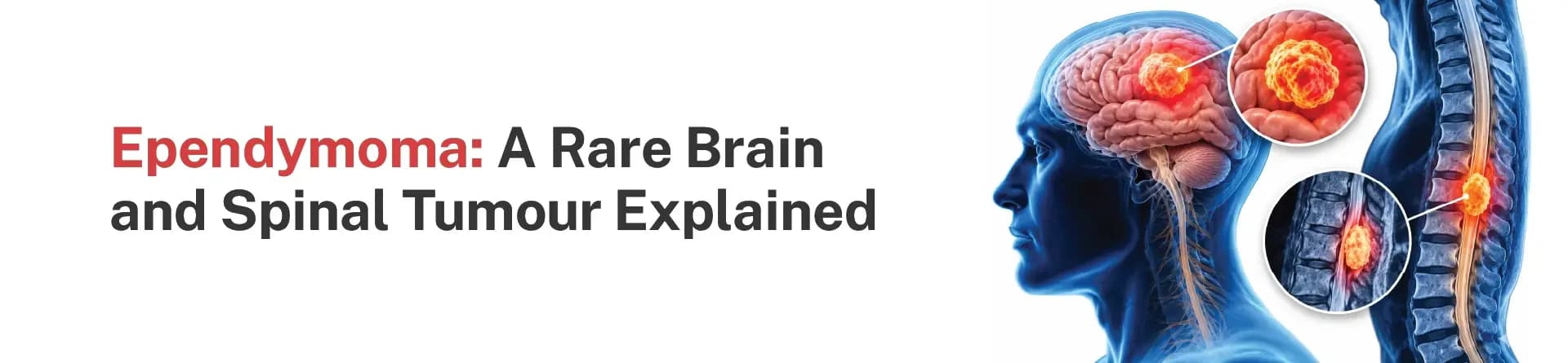
An ependymoma is a rare type of tumour that develops in the brain or spinal cord. It begins in ependymal cells, which line the fluid-filled spaces inside the brain and the central canal of the spinal cord. These cells help produce and circulate cerebrospinal fluid (CSF), the fluid that surrounds and protects the brain and spinal cord.
An ependymoma can grow slowly or behave more aggressively, depending on its type and other features. It may cause symptoms by pressing on nearby brain or spinal cord tissues. Early diagnosis helps doctors plan the right treatment and manage the condition.
Ependymoma is a primary central nervous system (CNS) tumour. This means it starts in the brain or spinal cord rather than spreading there from another part of the body.
It can develop in different areas, including:
The location of the tumour affects the symptoms a person may experience. For example, a brain tumour may cause headaches or seizures, while an ependymoma in the spinal cord may lead to back pain, weakness or changes in bladder control.
Doctors classify ependymomas based on where they develop, their cell features and their molecular changes. They also assess the tumour's grade, which gives information about how its cells look and may behave.
Some recognised types include:
Ependymomas have traditionally been described using three grades:
The latest classification also considers molecular features. Therefore, doctors do not rely on the grade alone to understand how a tumour may behave.
Symptoms depend on the tumour's size, location and growth. Some tumours may not cause noticeable symptoms at first.
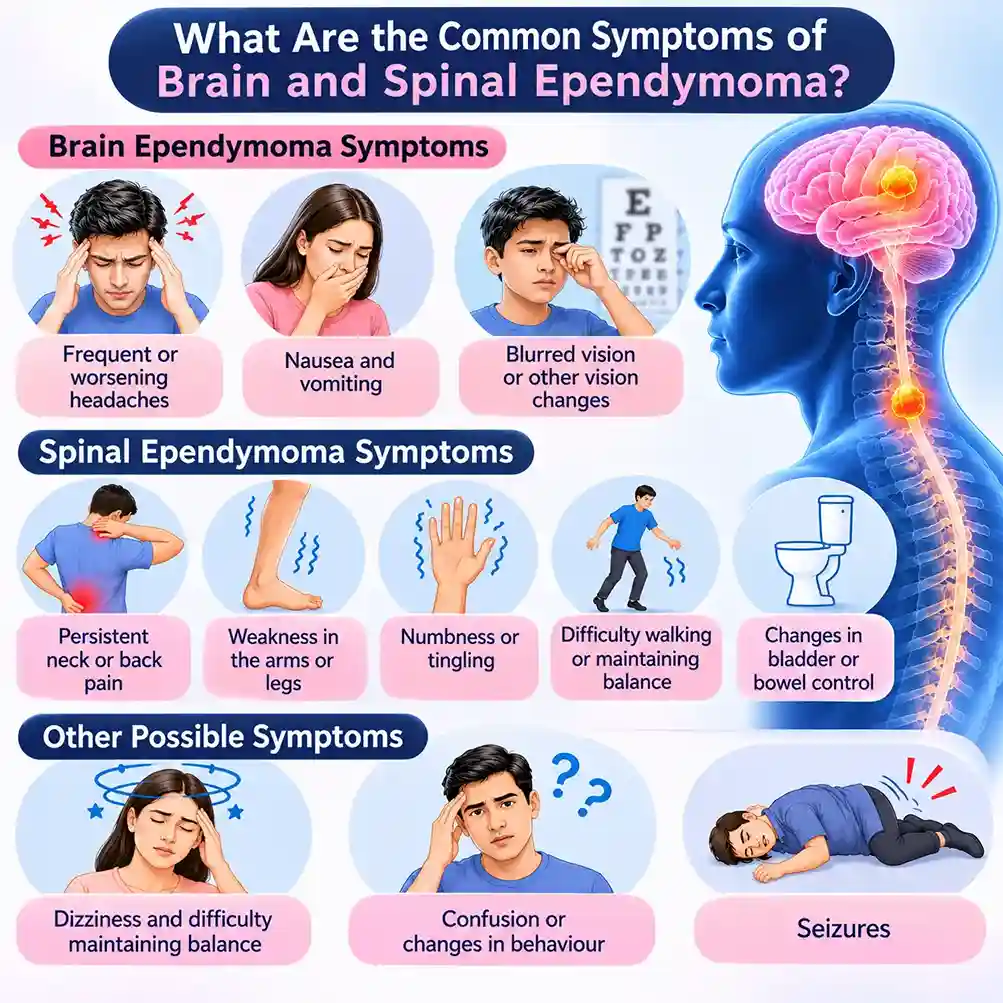
Brain ependymoma symptoms may include:
A brain tumour may cause seizures if it affects the brain's normal electrical activity. However, having a seizure does not necessarily mean you have a brain tumour.
Spinal ependymoma symptoms may include:
These symptoms can also occur due to other health conditions. However, persistent or worsening symptoms need medical assessment.
The exact brain tumour causes behind ependymoma are not known. Researchers believe that changes in the genes of ependymal cells may play a role in their abnormal growth.
Ependymoma can develop in both children and adults. Brain ependymomas are more commonly diagnosed in children, while spinal ependymomas are more common in adults.
Some people with neurofibromatosis type 2 (NF2), a genetic condition that causes certain tumours to develop in the nervous system, may have a higher risk of ependymoma. However, most people diagnosed with this tumour do not have a known inherited risk factor.
Doctors begin by asking about your symptoms and medical history. They may also perform a neurological examination to check your vision, balance, muscle strength, reflexes and coordination.
The following tests may help confirm the diagnosis:
Unlike many other cancers, ependymoma is not usually described using the standard stages 1 to 4. Doctors assess its location, grade, molecular features and whether it has spread to other areas of the central nervous system. MRI scans of the brain and spine may be recommended to check for spread through the cerebrospinal fluid.
Treatment depends on the tumour's location, size, grade, molecular features and how much of it can be safely removed.
Surgery: Surgery is usually the main treatment. The aim is to remove as much of the tumour as possible while protecting nearby brain and spinal cord tissues. The removed tissue is also examined to confirm the diagnosis.
Radiation therapy: Radiation therapy uses high-energy radiation to destroy tumour cells. Doctors may recommend it after surgery if some tumour remains, or if the tumour has features that increase the risk of recurrence.
Chemotherapy: Chemotherapy uses medicines to destroy or control cancer cells. It may be considered in selected cases, particularly when the tumour returns or other treatments are not suitable.
Regular monitoring: Some slow-growing tumours may only need regular MRI scans after surgery. Follow-up helps doctors check for tumour growth or recurrence.
Your treatment team will discuss the most suitable approach based on your diagnosis and overall health.
Ependymoma is a rare tumour that can develop in the brain or spinal cord. Its symptoms and behaviour depend on its location and type. If you experience persistent headaches, unexplained seizures, back pain, weakness or changes in bladder control, consult a doctor. Early assessment can help identify the cause and guide timely treatment.
It depends on the type and grade. Some ependymomas are slow-growing and considered low-grade, while others are malignant (cancerous) and may grow more aggressively.
Ependymoma can affect both age groups. Tumours in the brain are more common in children, while spinal ependymomas are more frequently diagnosed in adults.
Yes. Spinal ependymoma can develop within the spinal cord. It may cause back pain, muscle weakness, numbness and problems with bladder or bowel control.
Yes. A brain ependymoma may cause headaches, nausea, vomiting and seizures, especially if it increases pressure inside the skull or affects nearby brain tissue.
Ependymoma rarely spreads outside the central nervous system. However, tumour cells can sometimes spread to other areas of the brain or spinal cord through cerebrospinal fluid.
Yes. An MRI can help identify an ependymoma and show its size and location. However, a biopsy may be needed to confirm the diagnosis and determine its type.
Written and Verified by:

Dr. Amit Chakrabarty is the Director of Neurosurgery Dept. at CK Birla Hospital, Jaipur, with over 18 years of experience. He specializes in Neuro Vascular Surgery, Micro neurosurgery, Brain Tumours and Neurotrauma etc.
Similar Neurosciences Blogs

Book Your Appointment TODAY
© 2024 RBH Jaipur. All Rights Reserved.


