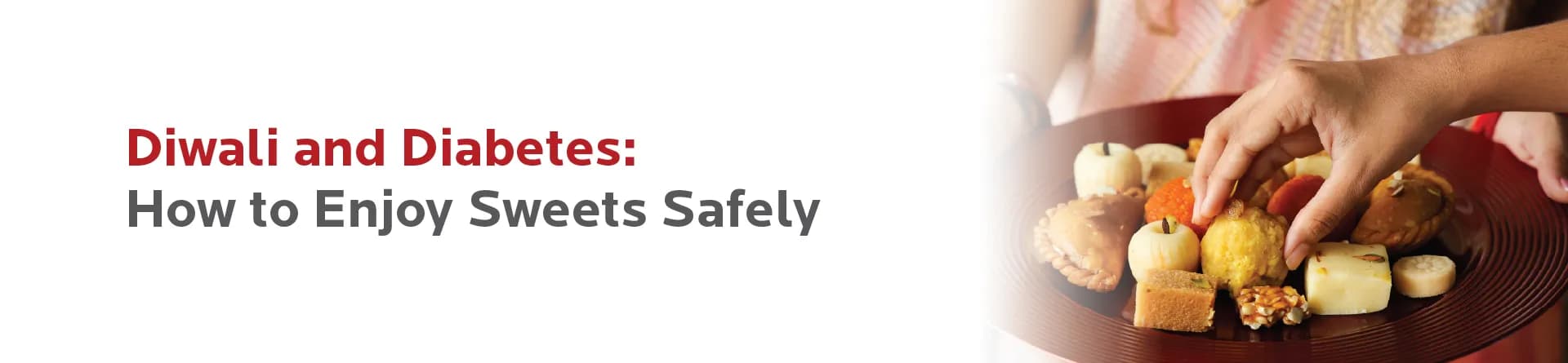
Celebrate Diwali without compromising your health. Discover smart ways for diabetics to enjoy festive sweets safely — with portion control, healthy alternatives, and mindful eating.
Diwali is a festival of happiness, celebrated with lights, firecrackers, and delicious sweets. It’s the time when everyone looks forward to enjoying their favourite treats. But for people living with diabetes, extra care is needed — especially during this festive season.
Most traditional sweets are rich in sugar and fat, which can cause blood sugar spikes, affect weight control, and increase cholesterol levels. This Diwali, focus on celebrating with healthier choices so you can enjoy the festivities without worrying about your sugar levels.
Here are some simple ways to enjoy the festival while keeping your blood glucose in check.
You don’t need to avoid sweets completely. Following a few simple tips can help you enjoy the festive season safely:
There’s a common myth that eating sugar directly causes diabetes. The truth is a bit different. While sugar can raise blood glucose levels, it’s actually carbohydrates in general that affect blood sugar and play a bigger role in diabetes management.
Since sugar is made of carbs, people with diabetes are often advised to limit sweets—but that doesn’t mean you can’t enjoy a dessert during festive times. The key is to choose diabetic-friendly alternatives that are lower in sugar and carbs but still delicious.
Here are some tasty options you can try:
Lauki, or bottle gourd, is a nutritious vegetable that can double as a healthy dessert. Lauki halwa is low in calories and carbohydrates, yet rich in nutrients. Its natural sweetness makes it a perfect choice for diabetics who want to enjoy something traditional without spiking their blood sugar.
Kheer is one of India’s favourite desserts. You can make it diabetic-friendly by using jaggery instead of refined sugar. Jaggery is a natural sweetener that has a lower carbohydrate impact than sugar while still giving your kheer that classic, comforting sweetness.
Greek yoghurt is creamy, nutritious, and naturally low in carbs. Adding fruits like mango or strawberry adds flavour without drastically increasing the carbohydrate content. This makes it a healthy, protein-rich dessert option that’s gentle on blood sugar.
Caramel custard can be enjoyed even if you reduce the sugar a little. Using low-fat milk and a smaller amount of sugar keeps it creamy and delicious while making it friendlier for blood sugar control.
Apple pancakes are a great dessert choice because they are high in fibre and low in fat. Using whole wheat flour instead of refined flour adds extra nutrients and slows down the sugar absorption, making it a smart dessert option for diabetics. The sweetness of apples keeps it naturally tasty without added sugar.
Besides choosing the right sweets, simple daily habits can make a big difference:
It’s important to know when sweets or festival meals are affecting your health. Consult your doctor if you notice:
Your doctor can adjust your medication, recommend safe portion sizes, or provide personalised diabetes management tips for the festival season.
Diwali doesn’t have to be stressful if you have diabetes. With the right planning, healthy choices, and simple habits, you can enjoy sweets and celebrate without guilt. Few things that you need to take care of are choosing diabetic-friendly sweets or sugar-free sweets for diabetics. Practise portion control, Include foods that control blood sugar and Stay active and hydrated
By following these steps, you can enjoy the lights, the laughter, and yes—the sweets—while keeping your blood sugar control in check. Celebrate smart, and make this Diwali both joyful and healthy.
Yes, but in small portions and after a balanced meal to avoid sudden blood sugar spikes.
Opt for sugar-free sweets, fruit-based desserts, or nuts and seeds laddoos made with natural sweeteners.
Eat sweets in moderation, pair them with protein- or fibre-rich foods, and stay active after meals.
Yes, homemade sweets are better because you can control sugar, ingredients, and portion size.
Check your blood sugar more frequently—before and after festive meals—to keep levels in control.
Written and Verified by:

Dr. Sudip Kumar Mukherjee is a Consultant in Endocrinology Dept. at CMRI, Kolkata, with over 23 years of experience. He specializes in diabetes management, including gestational diabetes, and other endocrine disorders.
Similar Endocrinology Blogs
Book Your Appointment TODAY
© 2024 CMRI Kolkata. All Rights Reserved.