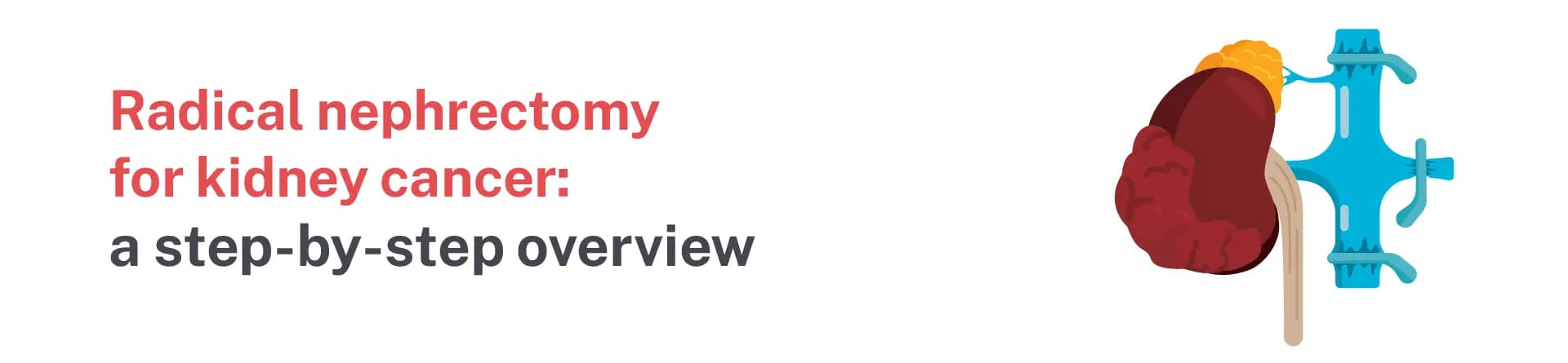
A radical nephrectomy is a surgical procedure performed to treat kidney tumours, cancer, and other kidney conditions. It is carried out by uro surgeons, who remove the entire kidney, surrounding fat, the adrenal gland, and nearby lymph nodes. This procedure helps ensure that the disease is completely treated and does not spread to other parts of the body.
Have you ever noticed blood in your urine, a dull pain in your lower back that just won’t go away, or felt unusually tired without any clear reason? These symptoms can be easy to ignore at first. Many people ignore them as minor issues or everyday stress. But sometimes, they can be early warning signs of something more serious — like kidney cancer. Let’s understand what this condition is, its symptoms and treatment options.
A radical nephrectomy is a surgical procedure performed to treat kidney tumours, cancer, and other kidney conditions. It is carried out by uro surgeons, who remove the entire kidney, surrounding fat, the adrenal gland, and nearby lymph nodes. This procedure helps ensure that the disease is completely treated and does not spread to other parts of the body.
A radical nephrectomy is recommended when serious disease affects the kidney and it cannot be treated with smaller procedures. Hence, doctors suggest this surgery in the following situations:
When there is a large tumour in the kidney
When kidney cancer is confirmed
When the tumour has grown into nearby tissues, such as blood vessels or surrounding fat
When the kidney is severely damaged due to infection, injury, or long-term disease and is no longer working properly
When other treatments, such as partial surgery or medication, are not suitable or have not worked
The aim of this surgery is to remove all diseased tissue. This helps stop the condition from spreading and protects overall health.
Before a radical nephrectomy, your doctor and medical team will prepare you for the surgery. Here’s everything you need to know.
Before the surgery, your doctor will recommend a few basic tests to check how well your kidneys are working. Your blood group is tested in case blood is needed during surgery. Your overall health will be checked, such as the following:
Based on these tests, your doctor will understand your condition and plan the surgery accordingly.
You need to tell your doctor about all the medicines you are taking. This includes:
Some medicines, especially blood thinners and certain painkillers, can increase the risk of bleeding.
You should inform your doctor if you have any allergies, such as:
This helps the medical team avoid anything that could cause a reaction during surgery.
You will be given clear instructions about eating and drinking before the surgery. Usually, you must not eat or drink anything for 6 to 8 hours before the procedure. This is because food in the stomach can cause complications during anaesthesia.
Your doctor will explain the following:
They will also explain what to expect during and after the procedure.
A radical nephrectomy is performed in a hospital. Your surgical team will guide you through each step to ensure your safety and comfort.
When you arrive at the hospital, your care team will prepare you for surgery. They will check your vital signs, such as blood pressure, pulse and temperature. You may receive fluids or medicines through an IV line. Your doctor will review your reports and confirm the procedure. They will also verify which kidney will be removed.
You will receive general anaesthesia before the procedure starts. This means you will be asleep and will not feel any pain during surgery. An anaesthesiologist will monitor you closely throughout the procedure.
Your surgeon will begin the operation by making an incision. The type and size of the cut depend on the surgical method:
These openings allow the surgeon to access the kidney.
The surgeon carefully moves surrounding tissues to reach the kidney. They will locate the kidney, nearby blood vessels, and surrounding structures. Special care is taken to avoid damage to nearby organs.
The surgeon will remove the entire kidney. They may also remove surrounding fat, the adrenal gland, and nearby lymph nodes if needed. This step helps ensure that all diseased tissue is removed.
After removing the kidney, the surgeon will check for bleeding. They will seal blood vessels and make sure everything is stable. The incision is then closed using stitches or surgical staples. A dressing is placed over the wound.
You will be moved to a recovery room. Your care team will monitor your condition as you wake up from anaesthesia. They will check your breathing, heart rate, and pain levels. Once stable, you will be shifted to your hospital room.
Nephrectomy is the surgical procedure to remove a kidney. There are three main types of nephrectomy:
|
Feature |
Open Nephrectomy |
Laparoscopic Nephrectomy |
Robotic Nephrectomy |
|
Incision size |
Large |
Small |
Small |
|
Surgical access |
Direct |
Camera-assisted |
Robot-assisted |
|
Recovery time |
Longer |
Faster |
Faster |
|
Pain after surgery |
More |
Less |
Less |
|
Hospital stay |
Longer |
Shorter |
Shorter |
|
Suitability |
Complex cases |
Selected cases |
Selected & complex cases |
Recovery after a nephrectomy takes time. Open surgery usually takes longer to heal than laparoscopic or robotic surgery.
A radical nephrectomy is an inpatient surgical procedure used to treat kidney tumours and other kidney-related conditions. During this surgery, the surgeon removes the entire kidney along with the surrounding fat. In some cases, the adrenal gland and nearby lymph nodes may also be removed. Most patients recover fully within 8 to 12 weeks.
It usually takes about 2 to 4 hours, depending on the complexity of the case and the surgical method used.
Yes, most people can live a normal, healthy life with one kidney if they follow medical advice and maintain a healthy lifestyle.
Robotic surgery often allows quicker recovery and less pain, but the best option depends on the patient’s condition and the surgeon’s recommendation.
Doctors typically recommend blood tests, urine tests, imaging scans like CT or MRI, and sometimes a biopsy.
Dialysis is usually not needed if the remaining kidney is healthy and functioning well.
A balanced diet with low salt, adequate hydration, and limited processed foods is generally recommended.
Age can influence recovery speed, but overall health and fitness levels play a more important role.
Written and Verified by:

Dr. Devendra K. Sharma is Director of Urology & Renal Transplant Dept. at CK Birla Hospital, Jaipur with over 22 years of experience. He specializes in renal transplantation, laparoscopic urology, female urology and paediatric urology.
Similar Oncology Blogs
Book Your Appointment TODAY
© 2024 RBH Jaipur. All Rights Reserved.


