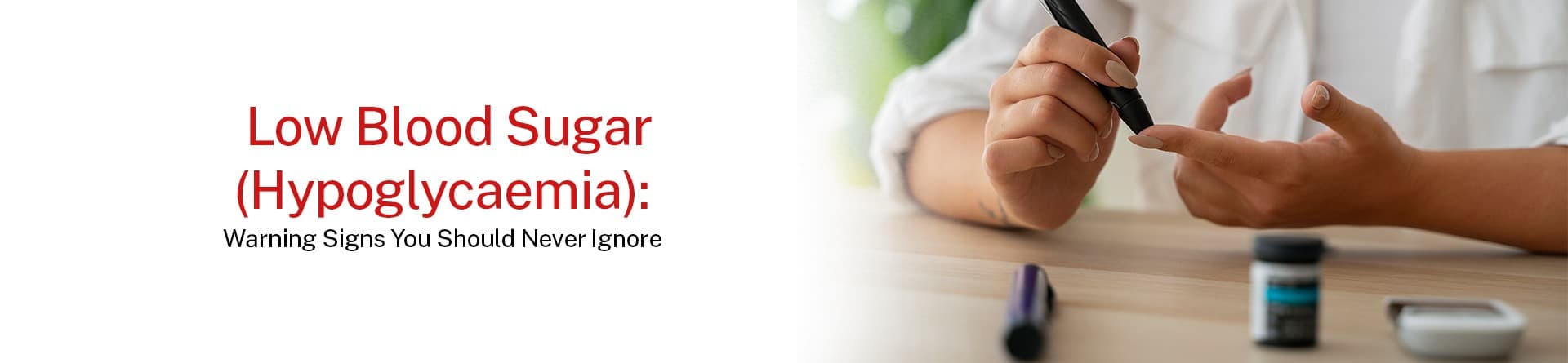
Hypoglycemia (low blood sugar) occurs when blood glucose falls below 70 mg/dL, most commonly in people with diabetes. Early symptoms include shaking, sweating, hunger, dizziness, and a fast heartbeat. If left untreated, it can lead to confusion, seizures, or loss of consciousness. Prompt treatment with fast-acting carbohydrates and regular blood sugar monitoring can help prevent serious complications.
Low blood sugar, also called hypoglycemia, is a condition where the glucose level in your blood drops below normal. Glucose is the main source of energy for your brain and body. Hypoglycemia is common in people with diabetes, especially those taking insulin or other medicines. But it can also sometimes affect people without diabetes.
When blood sugar drops, the body may show warning signs like sweating, shaking, dizziness, and hunger. You should treat low blood sugar quickly by consuming fast-acting carbohydrates. If it is left untreated, severe hypoglycemia can become life-threatening.
Hypoglycemia is usually defined as a blood sugar level below 70 mg/dL (3.9 mmol/L). This is considered the first warning range for most people with diabetes.
A dangerously low level is below 54 mg/dL (3.0 mmol/L). At this stage, brain function can be affected because the brain depends on glucose for energy.
When blood sugar drops, the body releases stress hormones like adrenaline. These hormones cause early symptoms such as shaking, sweating, and a fast heartbeat. Hypoglycemia is not uncommon in people with diabetes.
There are several causes of hypoglycemia, including:
The body usually gives early signals before blood sugar becomes dangerously low. Recognizing these hypoglycemia symptoms can prevent complications.
These are early symptoms of low blood sugar and should not be ignored.
As sugar levels continue to drop, symptoms may worsen:
At this stage, immediate action is needed.
If untreated, hypoglycemia can become life-threatening:
This is considered dangerously low blood sugar and requires emergency care.
Understanding what causes low blood sugar helps in prevention. The most common causes include:
Studies show that nearly 30–40% of people with insulin-treated diabetes experience hypoglycemia episodes regularly.
If hypoglycemia is left untreated, the brain does not get enough glucose. This can lead to serious complications, such as:
The brain depends heavily on glucose. Even short periods of extremely low blood sugar can affect cognitive function. That is why early recognition of low blood sugar symptoms is critical.
If you notice early symptoms, quick action can prevent complications. This is the basic hypoglycemia treatment approach recommended by doctors.
This method helps restore blood glucose safely.
Knowing what to eat for low blood sugar is important for quick recovery and prevention.
Eat a small balanced meal to stabilize sugar levels:
This helps prevent another drop.
A simple low blood sugar level chart helps understand severity:
Regular monitoring is especially important for people on diabetes medication.
Preventing hypoglycemia is better than treating it repeatedly.
Doctors recommend consistent monitoring because repeated episodes increase the risk of severe hypoglycemia over time.
Hypoglycemia is a condition that should always be taken seriously. While mild episodes are common, severe drops in blood sugar can become dangerous if ignored.
Understanding early hypoglycemia symptoms, knowing what causes low blood sugar, and taking immediate action can prevent complications.
With proper diet, regular monitoring, and timely hypoglycemia treatment, most people can manage blood sugar levels effectively and live a healthy life.
Yes. Although it's more common in people with diabetes, hypoglycemia can also occur due to prolonged fasting, certain medications, excessive alcohol intake, or underlying medical conditions.
Common causes include skipping meals, taking too much diabetes medication or insulin, intense exercise, drinking alcohol on an empty stomach, or certain health conditions.
A blood sugar level below 70 mg/dL (3.9 mmol/L) is considered low, while levels below 54 mg/dL (3.0 mmol/L) are severe and require immediate treatment.
Consume 15–20 grams of fast-acting carbohydrates, such as glucose tablets, fruit juice, regular soda, or candy, then recheck your blood sugar after 15 minutes.
Yes. Severe hypoglycemia can affect brain function, leading to confusion, loss of consciousness, seizures, or even coma if not treated promptly.
Seek emergency medical care if the person is unconscious, having a seizure, unable to swallow, or if blood sugar remains dangerously low despite treatment.
Written and Verified by:
-Dr.-Kallyan-Kumar-Gangopadhya-(-Endocrinology-).webp&w=256&q=75)
Consultant - Diabetes & Endocrinology Exp: 34 Yr
Endocrinology
Dr. Kalyan Kumar Gangopadhyay is a Consultant in Diabetes & Endocrinology Dept. at CMRI Hospital, Kolkata. He specializes in diabetes management, thyroid disorders, lipid disorders, and metabolic diseases.
Similar Endocrinology Blogs
Book Your Appointment TODAY
© 2024 CMRI Kolkata. All Rights Reserved.