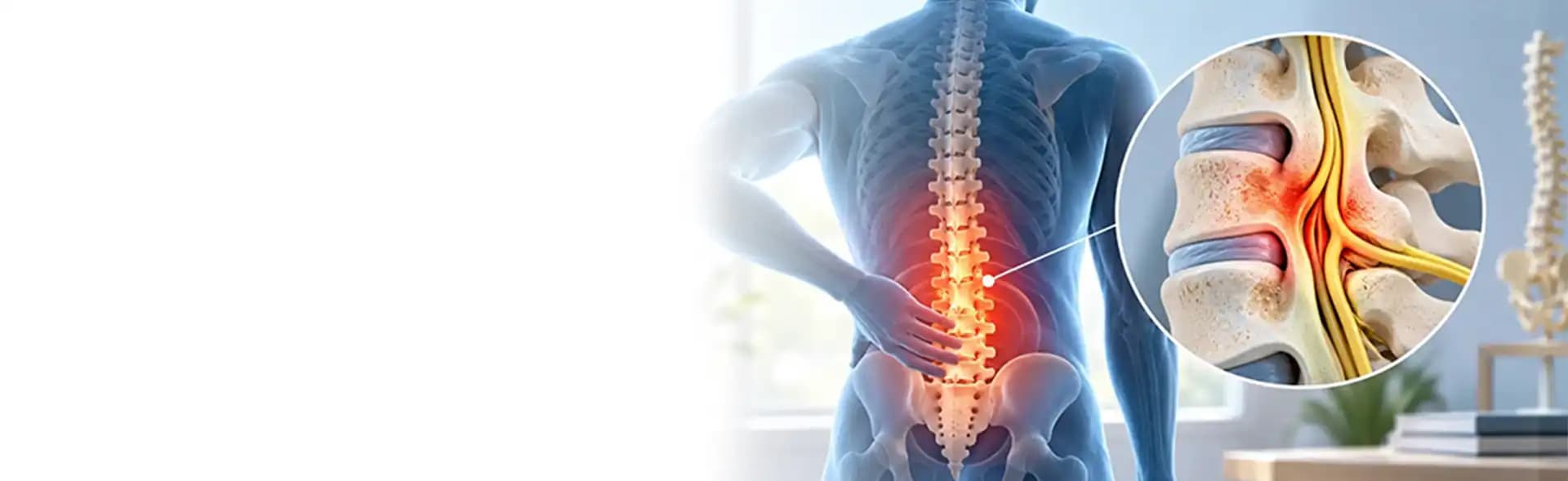
Spinal stenosis happens when the space inside your spinal canal becomes too narrow. This puts pressure on your spinal cord or the nerves branching off it. It can cause back or neck pain, numbness, tingling or weakness in your arms and legs. The condition can develop for several reasons, including age-related changes in the spine. There are several treatment options to manage its symptoms and improve movement.
At the CK Birla Hospitals, Kolkata, our specialists evaluate spinal conditions and recommend suitable treatment based on the cause, location and severity of spinal stenosis.
Your spine is made up of small bones called vertebrae. These bones form a protective passage called the spinal canal, which contains your spinal cord and nerves.
The spinal stenosis meaning is the narrowing of this canal. When the space becomes smaller, it can press on the spinal cord or nearby nerves. This may affect how these nerves send messages between your brain and different parts of your body.
For example, narrowing in your lower back can cause pain or weakness in your legs. Narrowing in your neck can affect your arms, hands and legs. Some people may have spinal stenosis without experiencing any symptoms.
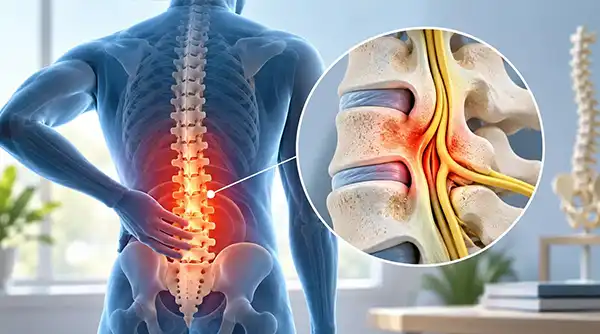
Spinal stenosis symptoms often develop gradually. They depend on which part of your spine is affected and how much pressure is placed on the nerves.
Spinal stenosis can develop due to several reasons. These include:
The types of spinal canal stenosis depend on the part of your spine where narrowing occurs.
Doctors may also describe spinal stenosis as mild, moderate spinal stenosis or severe spinal stenosis. This classification depends on the extent of narrowing seen during imaging tests. However, the severity of symptoms does not always match the degree of narrowing.
Your doctor will first ask about your symptoms, when they started and how they affect your daily activities. They may also check your muscle strength, reflexes, sensation and ability to walk.
You may need one or more of the following tests:
These tests help your doctor identify the location and extent of spinal narrowing and plan your treatment.
Spinal stenosis treatment aims to relieve pressure-related symptoms, reduce pain and improve movement. Your doctor will recommend treatment based on your symptoms, scan findings and overall health.
Most people can start with non-surgical treatment. Common spinal stenosis therapies include:
Your doctor may prescribe painkillers or anti-inflammatory medicines to reduce pain and discomfort. Medicines for nerve-related pain may also be recommended in some cases.
Physiotherapy helps strengthen the muscles that support your spine. It may include stretching, strengthening exercises and posture training. These exercises can improve flexibility and make everyday movements easier.
Your doctor may recommend steroid injections near the affected nerves. These injections help reduce inflammation and may provide temporary pain relief.
Maintaining a healthy weight and avoiding activities that worsen your symptoms can help. Your doctor may also suggest suitable exercises and walking aids if you have difficulty walking.
Surgery may be recommended if medicines, physiotherapy and other treatments do not provide enough relief. It may also be needed if nerve compression causes increasing weakness, difficulty walking or other serious neurological problems.
Some common surgical options include:
Not everyone with spinal stenosis needs surgery. Your surgeon will explain the available options and help you understand which procedure may be suitable for your condition.
Spinal stenosis can affect your ability to walk, work and perform everyday activities. Getting the right treatment can help you manage these problems and improve your quality of life.
At the CK Birla Hospitals, Kolkata (CMRI), our Neurosciences team provides care for spinal conditions, including spinal stenosis. Our approach focuses on accurate diagnosis and suitable treatment.
Here is what you can expect:
Our goal is to help you manage pain, improve mobility and return to your daily activities with the right medical support.
Spinal stenosis can often be managed without surgery. Medicines, physiotherapy, steroid injections and lifestyle changes can help control symptoms. However, these treatments do not reverse the narrowing of the spinal canal.
It can range from mild to severe. Some people have no symptoms, while others experience pain, numbness or weakness. Severe nerve compression can cause lasting nerve damage. Sudden loss of bladder or bowel control needs immediate medical attention.
Yes. Walking or standing for long periods can worsen symptoms, especially with lumbar spinal stenosis. Sitting or leaning forward may help reduce the discomfort.
Sleeping on your side with a pillow between your knees may help keep your spine comfortable. You can also sleep on your back with a pillow under your knees. Choose a position that reduces your discomfort.
Yes. Pressure on the nerves in your lower back can cause pain, tingling, numbness or weakness in your legs and feet. Consult a specialist if these symptoms persist or become worse.
Yes. Spinal stenosis is more common in adults above 50 years of age. Age-related changes, such as arthritis, bone spurs and thickened ligaments, can gradually narrow the spinal canal.
© 2024 CMRI Kolkata. All Rights Reserved.


