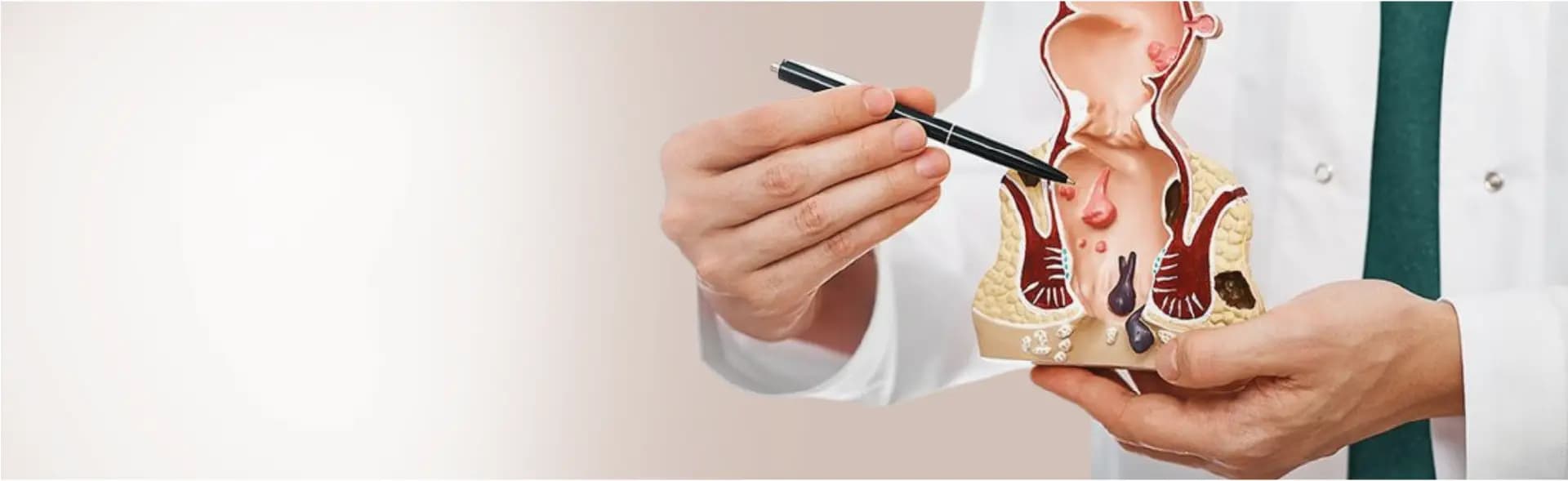
Anal fissure surgery is an operation performed to reduce muscle tension around the anus. The surgery involves making a small cut in one of the anal sphincter muscles to help it relax. This improves blood flow and reduces pain. Anal fissure surgery is usually recommended when medications do not provide relief.
An anal fissure is a small tear or crack in the inner lining of the anus or the anal sphincter muscle. It most commonly happens when hard or large stools pass during bowel movements, causing strain and injury to the area.
Anal fissures can affect people of all ages and happen in both men and women. Based on how long they last, anal fissures are classified as acute, which usually heal within six weeks, and chronic, which last longer than six weeks and may not heal on their own.
When an anal fissure causes persistent pain, bleeding, or discomfort during bowel movements and does not improve with medications or lifestyle changes, surgery may be recommended. Anal fissure surgery aims to remove scarred or damaged tissue and relax the tight anal sphincter muscle to promote healing.
Today, doctors prefer laser surgery for anal fissures, also known as laser fissurectomy. This minimally invasive procedure uses a focused laser to remove fibrotic tissue and gently loosen the internal sphincter muscle. By reducing muscle tension, the surgery improves blood flow, relieves pain, and supports faster and more comfortable healing.

Not every anal fissure needs surgery, but when medicines don’t work, surgery becomes the best option. Doctors may recommend chronic anal fissure surgery if:
Anal fissures (also called anorectal fissures) are grouped into two types, depending on how long the tear has been present:
Acute anal fissures are short-term fissures that last less than six weeks. In most cases, they heal on their own with basic care such as diet changes, fluids, and medications. Symptoms are usually mild to moderate, and healing often happens within a few weeks without the need for any surgical treatment.
Chronic anal fissures last longer than six weeks and tend to cause more discomfort over time. The pain, muscle spasms, and bleeding during bowel movements may gradually worsen. While a small number of people may heal without further treatment, most chronic fissures do not resolve on their own. In such cases, additional medical or surgical management may be needed to fully treat the condition.
Our team will guide you through the process so that you feel comfortable and informed. You may be asked to:\
The surgery itself is usually quick and minimally invasive. During the procedure:
There are various benefits associated with anal fissure surgery, including:
For chronic cases, surgery provides the best chance of complete healing.
At CK Birla Hospitals, Kolkata, we understand how uncomfortable and distressing anal fissures can be. Our hospital offers safe, advanced and patient-focused care to help you find lasting relief and heal comfortably.
What Makes CK Birla Hospital a Trusted Choice?
At CK Birla Hospitals, Kolkata, care goes beyond treatment—we focus on helping you heal with comfort, confidence, and compassion.
Laser surgery may offer less pain and faster recovery in selected cases, but traditional surgery remains the most proven and effective option for chronic fissures.
Many acute fissures heal with medicines and lifestyle changes, but chronic fissures often need surgery for permanent relief.
Most patients experience mild to moderate discomfort for a few days, which is usually well controlled with pain medicines.
Most people can return to light daily activities within 2–3 days and resume normal routines in about a week.
Yes. Anal fissure surgery is generally safe for elderly patients when performed after proper medical evaluation.
Avoid spicy, oily, and low-fibre foods; focus on soft, high-fibre foods and plenty of fluids to prevent constipation.
If dissolvable stitches are used, they usually dissolve on their own within 2–4 weeks.
© 2024 CMRI Kolkata. All Rights Reserved.


